
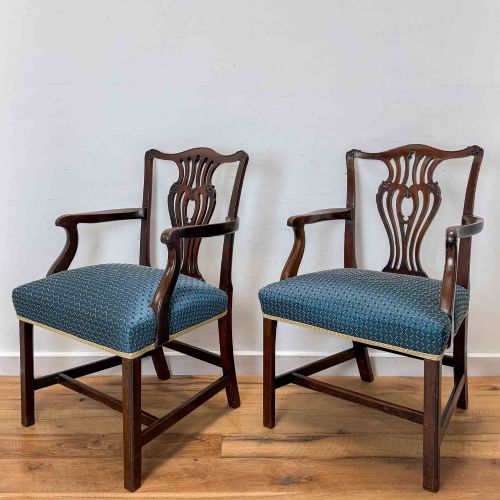
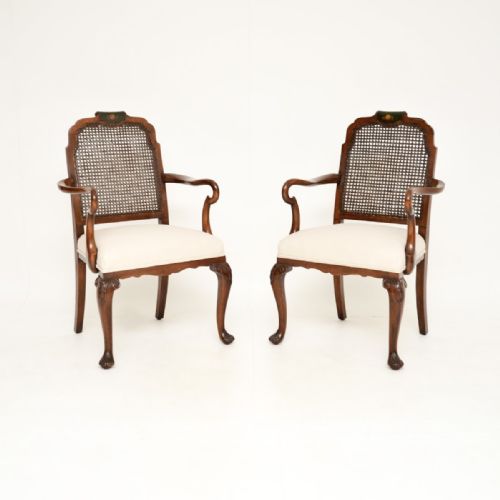
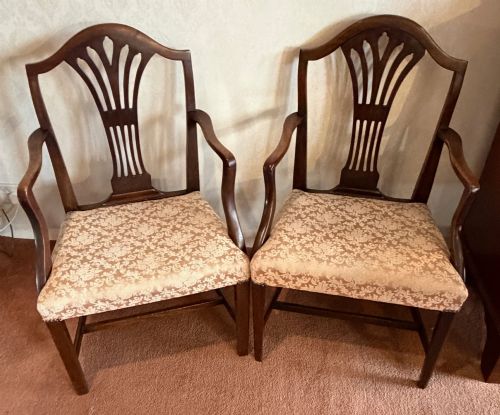
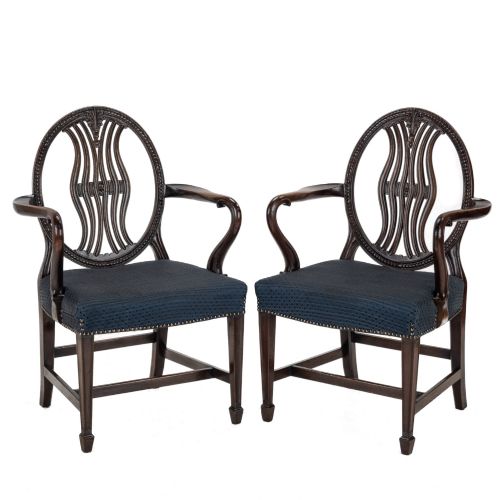
Pair Upholstered Carver Chairs
When you search for pair upholstered carver chairs, you find seated furniture designed with armrests for the head of a dining table or a desk.
Pair Upholstered Carver Chairs
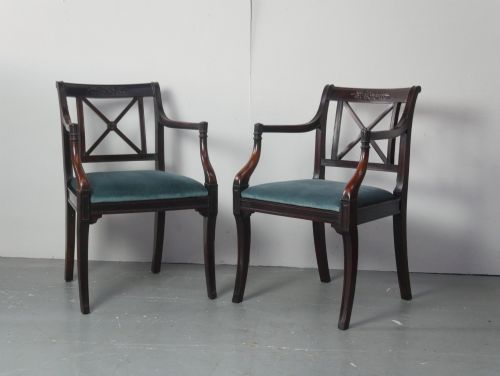
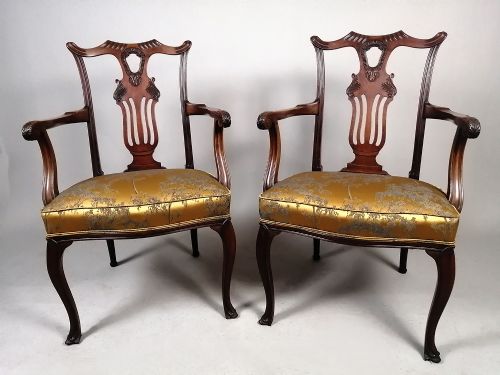
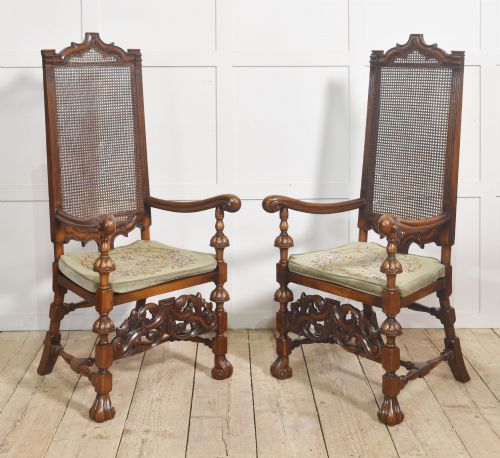
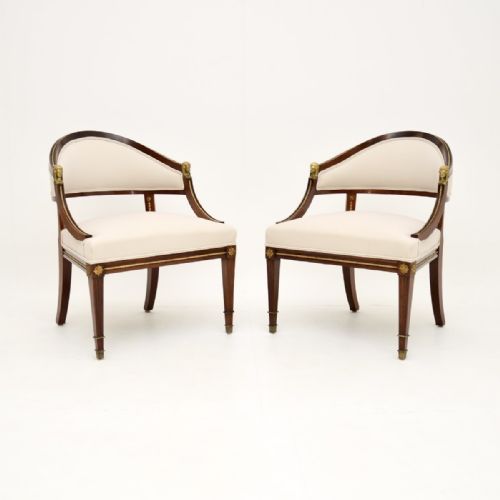
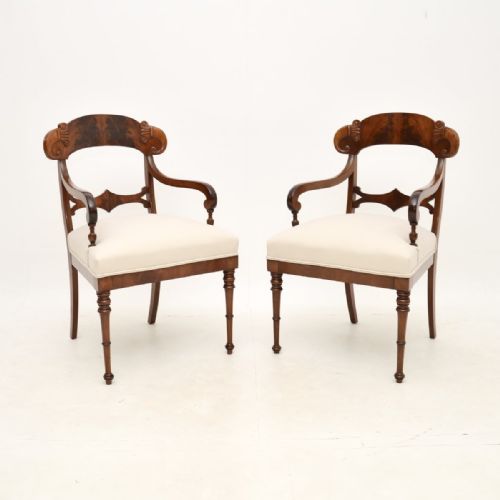
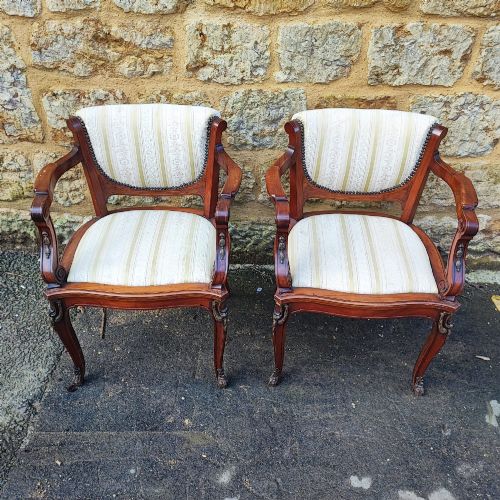
These pieces are matching sets of armchairs designed historically for dining tables, studies or drawing rooms, providing a supportive seat with armrests for daily use. When exploring pair upholstered carver chairs on this page, the options span formal dining carvers, desk armchairs and occasional seating matched as pairs. The selection draws on periods stretching from the eighteenth century through the Victorian era into the early twentieth century.
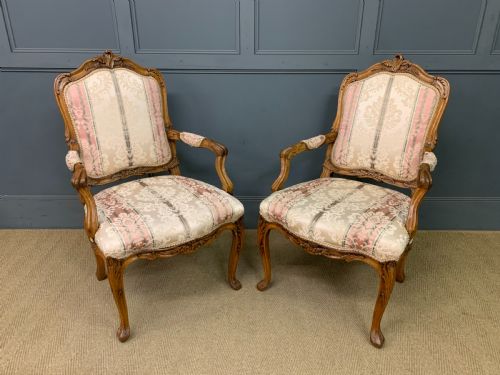
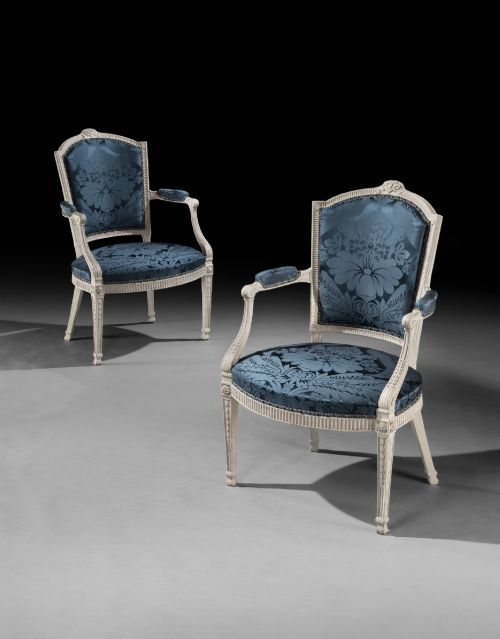
The forms originate from distinct stylistic movements, including George III, Regency, William IV, Victorian and Edwardian periods alongside revival designs like Chippendale and Hepplewhite styles. Regional variations also appear, including Swedish Neoclassical and French walnut designs, offering diverse aesthetic choices for period interiors. Most examples function as dining or desk carvers, while others serve as occasional or salon armchairs.
How they were made
Cabinetmakers constructed the frames primarily using solid hardwoods such as mahogany, walnut, oak and elm, often shaping timber through carving, turning or steam-bending. Structural elements relied on traditional joinery techniques to secure the arms and legs to the seat frame.
Upholstery methods involved securing supportive webbing and stuffing directly to the seat or back frames before covering the piece in fabric, leather, velvet or cane panels. Brass studs, gilt detailing and lacquered finishes frequently provided the final decorative touches to the wooden and upholstered surfaces.
Mahogany and walnut dominate the timber selections across these listings, accompanied by oak, elm, satin birch and giltwood.
What varies in quality
The degree of craftsmanship in the woodcarving and the choice of primary timber distinguish different examples, with dense, finely figured mahogany and walnut marking higher standards of production. Structural integrity depends upon the tightness of the original joints and the proportion of the arm supports relative to the seat.
The execution of the upholstery work, the authenticity of period materials and the retention of original surface patination significantly influence the character of each pair. Variations in decorative restraint, from simple turned members to elaborate carved shield backs or gilt highlights, reflect the original commission level.
J. & T. Scott
The Pair Upholstered Carver Chairs Glossary
- Carver chair
- An armchair, traditionally placed at the head of a dining table, featuring integral armrests. These chairs match standard dining chairs in height and style but offer additional support.
- Shield back
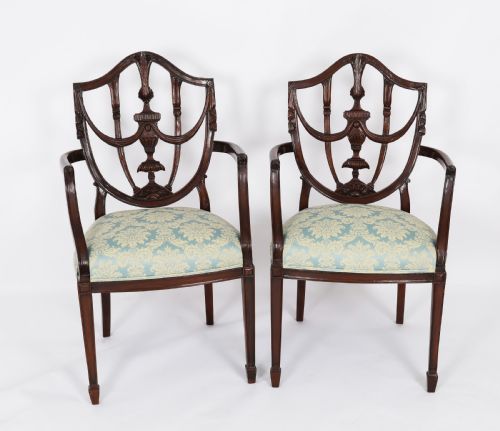
- A chair back design shaped in the outline of a heraldic shield, popularised during the late eighteenth century by makers like Hepplewhite. The wooden frame encloses pierced splats or upholstered panels.
- Lyre back
- A chair back featuring an open splat shaped in the form of a classical musical lyre. This motif appeared frequently on Regency and nineteenth-century seating.
- Fauteuil
- An open-armed upholstered armchair originating in France, characterised by exposed wooden arm supports and upholstered elbow pads. The frame is typically carved and polished.
- Biedermeier
- A central European style dating from the first half of the nineteenth century, focusing on clean lines and utilitarian comfort rather than excessive ornamentation. Satin birch and walnut were common timbers.
Pair Upholstered Carver Chairs: Frequently Asked Questions
Where were pair upholstered carver chairs placed?
These armchairs were traditionally positioned at the head and foot of a dining table for the hosts, or placed alongside desks and in formal reception rooms. Their armrests provided a more commanding presence than standard dining chairs.
Today, buyers frequently use them as end chairs for a dining setting, as occasional seating in a living room, or paired at a partner's desk in a study.
How do I date a pair of carver chairs?
Dating relies on examining the timber species, structural joinery, carving styles and upholstery methods characteristic of different periods. For instance, George III pieces display classical restraint, while Victorian examples often feature heavier proportions and balloon backs.
Comparing the stretcher arrangement and leg configuration against established design periods helps narrow down the decade of manufacture.
Are these chairs comfortable for daily use?
Most period carver chairs were built with supportive padded seats and upright backrests suited for formal dining or working at a desk. The inclusion of armrests offers additional physical support compared to side chairs.
Many antique pairs have been reupholstered over time to ensure modern seating comfort while retaining their historical wooden frames.
How do I match carver chairs with a table?
Matching a pair of carvers to an existing table involves comparing the wood species, such as mahogany or walnut, and ensuring the arm height clears the underside of the table apron. Stylistic consistency, such as pairing Regency chairs with a Regency table, creates a cohesive appearance.
Alternatively, contrasting a revival style carver with a simpler table creates a deliberate focal point in a dining room.