
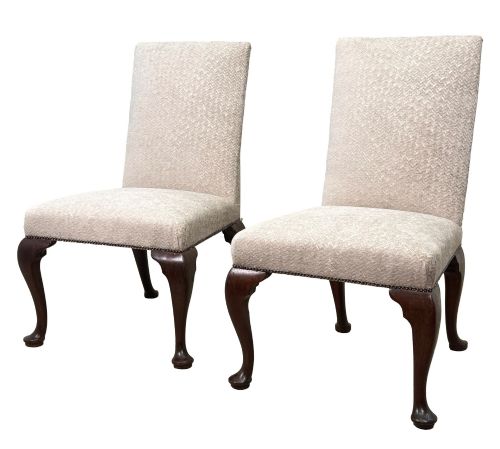
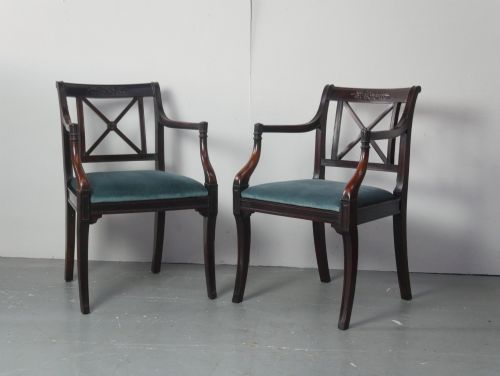
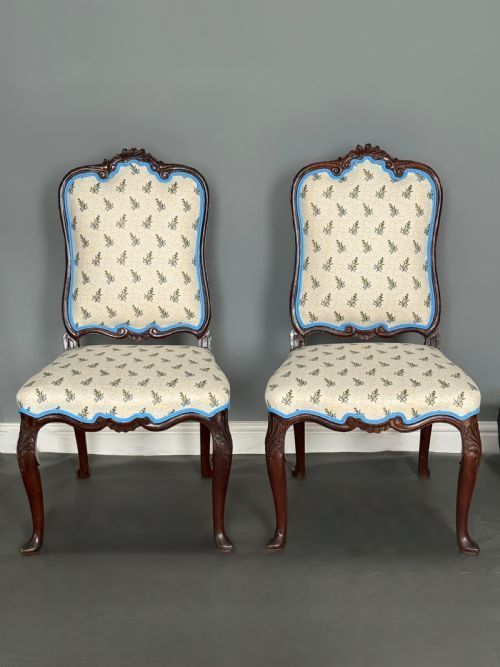


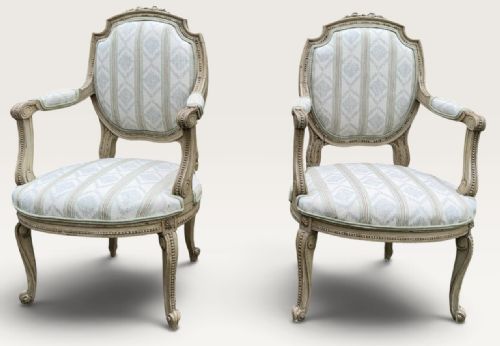
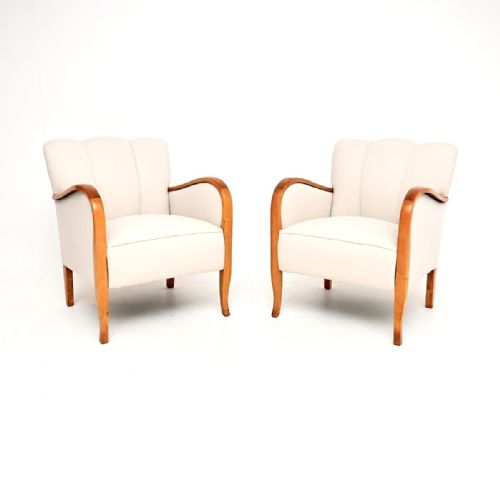
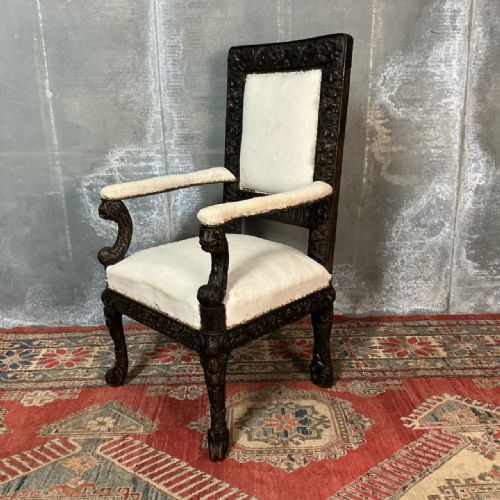
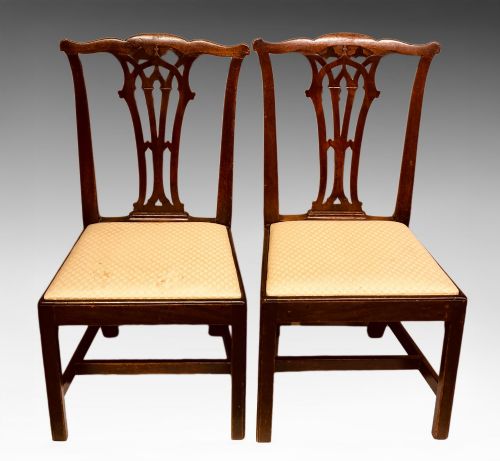
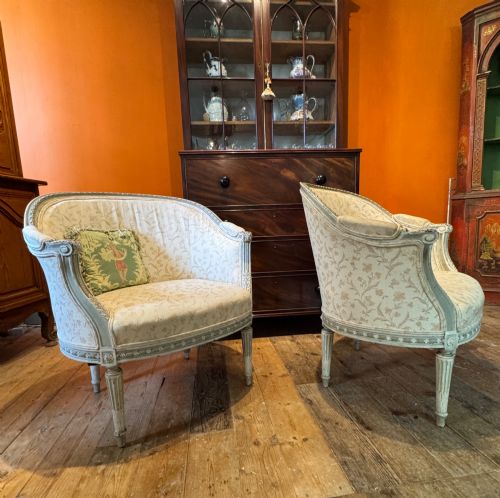
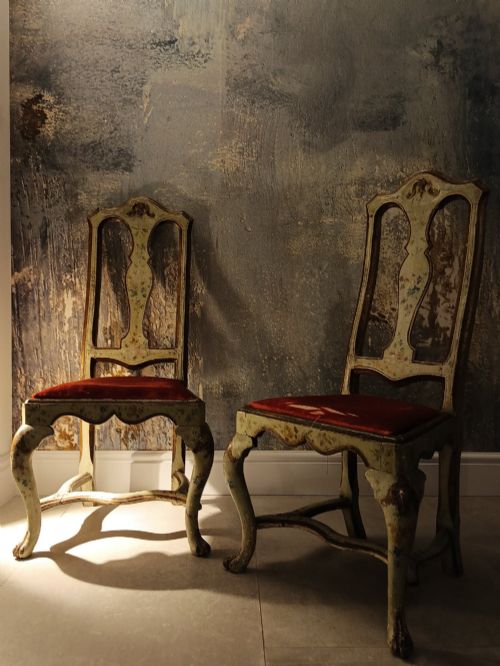
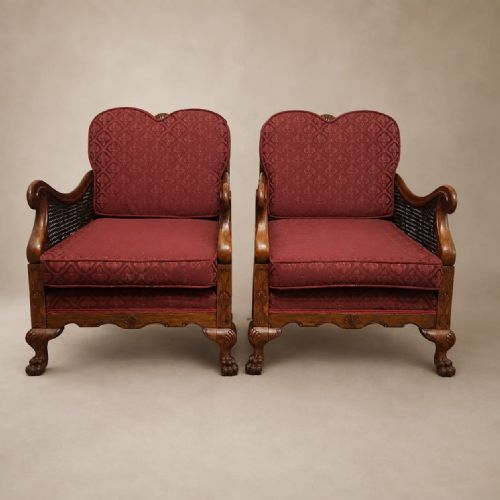
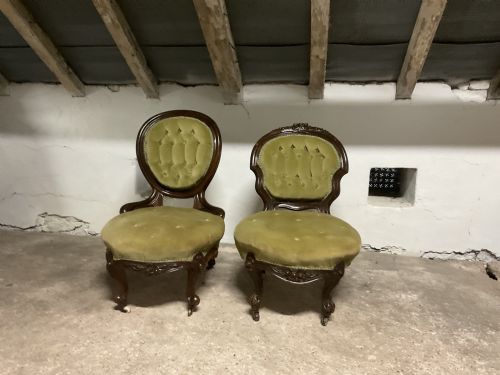
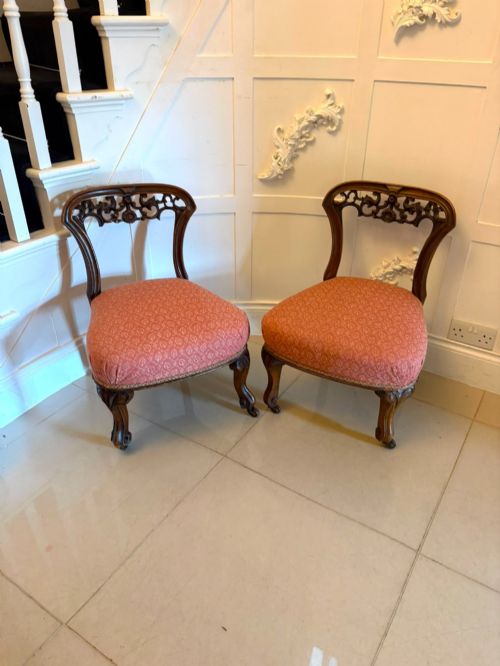
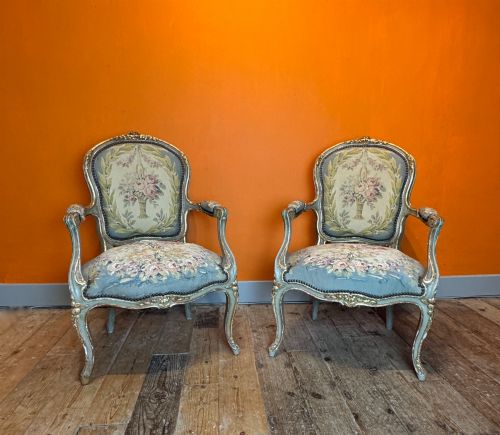
Pair Upholstered Accent Chairs
These pair upholstered accent chairs bring matched seating and period character into a room, spanning styles from Georgian to Art Deco.

Pair Upholstered Accent Chairs
When you search for pair upholstered accent chairs, you encounter matched sets designed for sitting in comfort or accenting a specific corner of a room. The selections on this page range from compact nursing and bedroom chairs to substantial Victorian armchairs and French bergere models.
The forms include side chairs, occasional chairs, and open armchairs spanning the 18th, 19th, and early 20th centuries. French regional designs, English revival pieces, and Art Deco satin birch creations make up the core of what is available.
Materials and construction
Makers built these frames using dense hardwoods like walnut, mahogany, oak, and beech, often shaped with hand-carved details or painted finishes. Joinery relied on traditional methods such as mortise and tenon to ensure the structural integrity of the timber supports.
Upholstery utilised fabrics, velvet, tapestry, and textiles secured over webbing and traditional stuffing materials. Some examples preserve split cane panels or original paint schemes alongside contemporary or period textile covers.
Eras represented include Georgian, Victorian, and Art Deco alongside various 19th-century revival movements.
Distinguishing quality
Quality in these seating pairs rests on the crispness of the timber carving and the architectural proportion of the frame. Finer examples display deeply sculpted walnut or mahogany, balanced joinery, and upholstery that respects the period profile of the chair.
Subtleties such as preserved original paint, finely woven cane, and matching grain patterns across both chairs elevate an item. Lesser pieces often exhibit replacement elements or heavy restoration that masks the original maker's hand.
Charles Tozer·Howard and Sons
The Pair Upholstered Accent Chairs Glossary
- Bergere
- An enclosed upholstered armchair with wooden framing and cane or upholstered sides. This French form dates back to the 18th century.
- Side chair
- A chair without arms, originally designed to be placed against a wall or pulled up to a dining table.
- Spoonback
- A chair with an oval, padded backrest shaped to resemble the bowl of a spoon, popular during the Victorian era.
- Parcel gilt
- Woodwork decorated with thin layers of gold leaf applied to specific raised carved details. It creates a contrasting accent against painted or polished timber.
Pair Upholstered Accent Chairs: Frequently Asked Questions
How do I use pair upholstered accent chairs?
These chairs work well placed opposite a fireplace, flanking a console table, or positioned in bedroom corners. Their matched nature creates symmetry in interior arrangements.
They offer comfortable seating while introducing distinct period silhouettes into domestic spaces without requiring a full suite of furniture.
What periods do these chairs cover?
The inventory encompasses pieces from the 18th century through the Georgian and Victorian eras, extending into early 20th-century Art Deco and revival styles.
Each period brings distinct carving traits, wood choices, and upholstery treatments that reflect the design priorities of its time.
How can I tell French styles apart?
French chairs often feature exposed walnut or painted frames with carved floral motifs, cabriole legs, and sweeping armrests. Styles range from the curved lines of Louis XV to the later revival designs of the 19th century.
Examining the specific carving depth and structural symmetry helps identify the regional or dynastic French influence.
Are original upholstery and paint common?
Original finishes appear occasionally, though many period pieces have undergone reupholstery to ensure structural usability. Surviving original paint or textile work provides significant historical context.
Buyers often balance the preservation of original surfaces against the practical need for durable, modern fabric.