



Pair Tiered Plant Stands
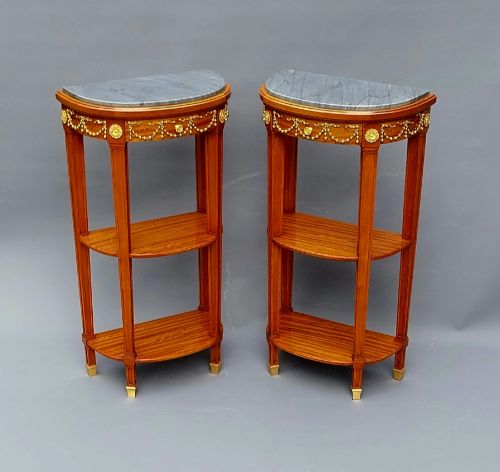
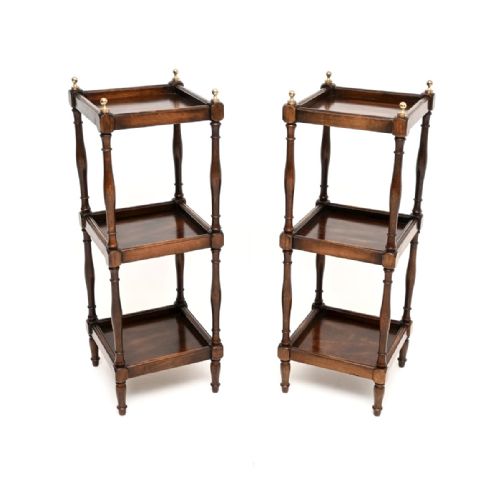
Pair tiered plant stands bring vertical display to rooms, offering stacked surfaces fashioned from hardwood, mahogany, and marble across Victorian, Edwardian, and Regency periods.
Pair Tiered Plant Stands
Pair tiered plant stands present dual levels for display, functioning primarily as plant stands, side tables, occasional tables, and etageres. The selection spans the nineteenth century, Victorian, and Edwardian eras, alongside Regency and 1910 examples.
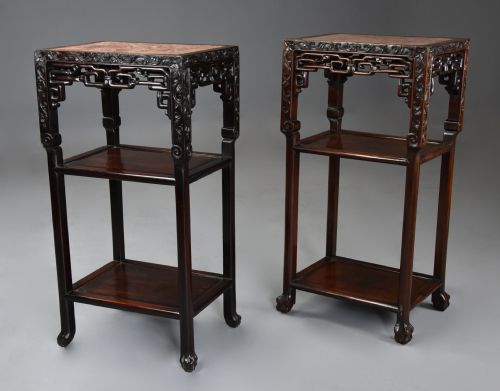
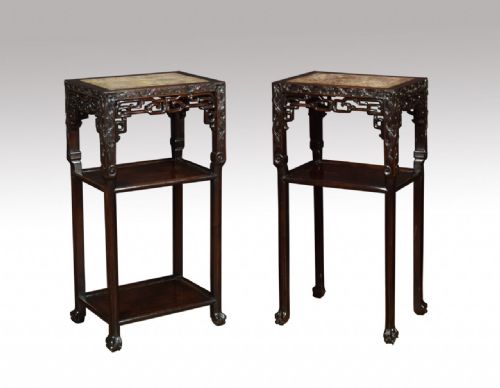
Buyers frequently encounter Chinese hardwood and rosewood pot stands alongside mahogany occasional tables and inlaid étagères. Styles stretch from Qing Dynasty carving and French Rococo Revival to Aesthetic Movement and Victorian Rustic.
How they were made
Construction relies on timbers such as mahogany, oak, rosewood, satinwood, and general hardwood, often enhanced with marquetry inlay and brass details. Surfaces frequently incorporate inset marble panels designed to support heavy pots and planters safely.
Carpenters utilised traditional joinery to build multi-tiered structures like etageres, whatnots, and pedestal stands. Carving techniques range from intricate Chinese Qing Dynasty motifs to French Vernis Martin finishes and rustic oak treatments.
Design styles span Qing Dynasty, French Rococo Revival, Aesthetic Movement, and Victorian Rustic.
What varies in quality
Quality rests upon the selection of timber and the precision of decorative techniques such as marquetry inlay and hand-carving. Superior examples display refined execution in styles derived from makers like E W Godwin or Donald Ross.
The integrity of matched pairs depends on consistency in wood grain, proportion, and tiered construction across both pieces. Finer execution is evident in dense hardwoods, unblemished marble inserts, and sophisticated period styling.
The Pair Tiered Plant Stands Glossary
- Étagère
- A piece of furniture consisting of a set of open shelves for displaying small objects. These tiered structures appear in French nineteenth-century marquetry designs and English whatnots.
- Whatnot
- An open multi-shelved piece of furniture used for storage or display. Regency examples in oak demonstrate this form.
- Vernis Martin
- A type of simulated Japanese lacquer developed in eighteenth-century France. The finish recurs on twentieth-century stylistic revivals.
- Aesthetic Movement
- A late nineteenth-century design style emphasising visual and compositional beauty over narrative. Pieces after E W Godwin reflect this ethos.
Pair Tiered Plant Stands: Frequently Asked Questions
What are pair tiered plant stands used for?
These pieces provide elevated surfaces to display plants, ceramics, and decorative objects in pairs. The multi-tiered design allows for vertical arrangement within a room.
They function equally well as occasional tables or end tables in living spaces. The dual levels maximise display capacity without demanding excessive floor space.
How do I identify a Victorian plant stand?
Victorian stands typically exhibit dense hardwoods, heavy turned supports, or rustic oak treatments. Stylistic influences often draw upon French revival or Aesthetic Movement principles.
Construction from this era frequently incorporates detailed carving or inset marble tops. The materials and structural proportions align with nineteenth-century manufacturing methods.
What is the difference between an etagere and a whatnot?
Both terms describe multi-tiered shelving units designed for display, though regional and stylistic names vary. Etageres often carry French associations with marquetry and decorative inlays.
Whatnots tend to describe English iterations, such as Regency oak tiered frameworks. Both serve identical functions for stacked display.
Are these stands suitable for actual plants?
Many period stands feature marble inserts specifically chosen to withstand moisture and soil from plant pots. Hardwood and rosewood variants also accommodate heavy planters securely.
Care should be taken with polished wood surfaces to prevent water damage from pots. Using protective saucers preserves the historical finish of the tiers.