



Rosewood Tier Etagere
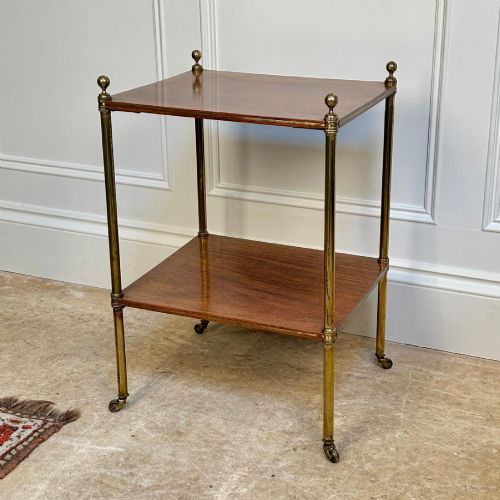
These pieces of rosewood tier etagere offer open tiered display for books and ornaments, bringing distinct timber grain to a room.
Rosewood Tier Etagere
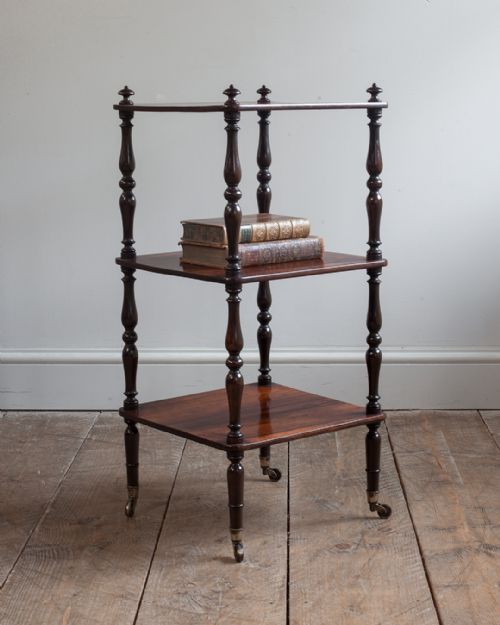
A rosewood tier etagere is a multi-shelved stand designed for holding small decorative items, books, and silver in reception rooms. The most common form met on this page is the freestanding Victorian or Regency multi-tier whatnot, often featuring three or four open shelves supported by slender uprights.
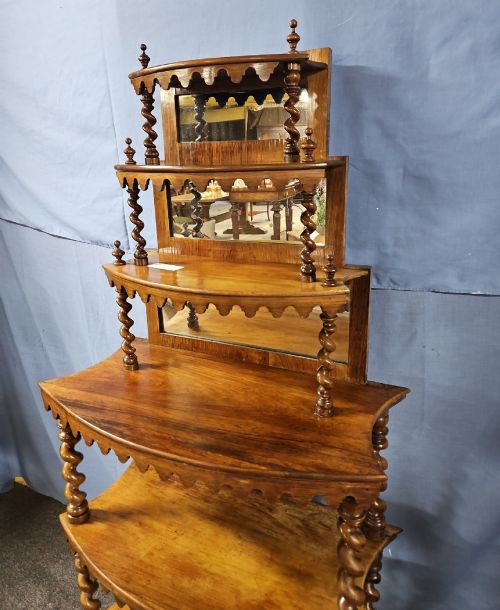
Makers produced these pieces across several periods, spanning Georgian, William IV, Victorian, and Edwardian eras, alongside French influences like Napoleon III styles. Variations include corner units, pieces with drawers at the base, and tabletop versions intended for surface display.
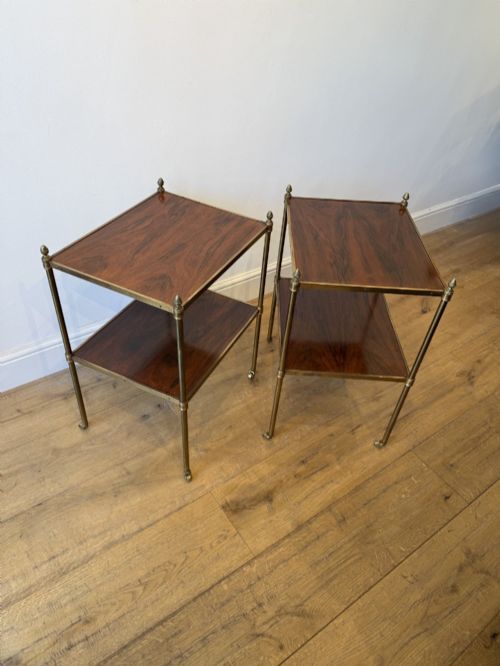
The form functions primarily as a display surface rather than enclosed storage, with open tiers allowing light and objects to be seen from multiple angles. Pieces range from simple two-tier occasional tables to substantial six-tier stands.
How they were made
Cabinet makers built these structures using solid rosewood and rosewood veneers laid over secondary timbers, frequently highlighting the rich grain with polished finishes. Brass mounts, ormolu details, and turned supports add structural definition to the corners and uprights.
Decorative elements involve intricate inlay work, combining satinwood, fruitwood, bone, ebony, and marquetry to create floral or geometric patterns across the shelves and friezes. Glass panels and mirrored backs occasionally appear within French-influenced or display-focused variants.
Several examples include tiny drawers beneath the shelves, perfectly sized for hiding secret letters or stray dominoes.
What varies in quality
The sophistication of the timber selection and the precision of the marquetry inlay mark the separation between standard production and finer workshops. Crisp turning on the upright supports and the integration of secondary materials like brass or ormolu indicate higher standards of craftsmanship.
Proportion and scale dictate the visual success of the piece, with neatly balanced tiers and tight joints maintaining structural integrity over decades of use. Pieces attributed to recorded makers or specific stylistic traditions display greater refinement in edge moulding and joinery.
Mallett·Edwards & Roberts·Samson & Son London·Donald Ross
The Rosewood Tier Etagere Glossary
- Etagere
- A piece of furniture consisting of a set of open shelves for displaying small objects. They appear in two-tier, three-tier, and taller configurations across various nineteenth-century styles.
- Whatnot
- An alternative term for an etagere, functioning as a multi-shelved open stand for ornaments. These often incorporate small drawers at the base or standing buffets.
- Marquetry
- Decorative veneer work forming pictures or patterns by arranging small pieces of wood, satinwood, and fruitwood. This technique frequently decorates the surfaces of Edwardian and French-influenced pieces.
- Ormolu
- Gilt bronze mounts applied to furniture for decorative enrichment. They provide metallic contrast against dark rosewood surfaces on mid-nineteenth-century examples.
- Regency
- A stylistic period spanning the early nineteenth century characterised by classical restraint and architectural lines. Pieces from this era often feature clean tiers and neat proportions.
Rosewood Tier Etagere: Frequently Asked Questions
Where were etageres placed?
These stands occupied drawing rooms and parlours where hosts displayed ceramics, silver, and decorative books. Corner versions made use of unassigned room angles.
Their open construction allowed light to pass through, keeping the furniture from dominating smaller sitting spaces.
How do I clean rosewood?
Dust the tiers regularly with a dry, soft cloth to prevent particulate buildup in the grain. Avoid chemical sprays that can degrade historic polish.
Feed the timber occasionally with appropriate wax to maintain the natural lustre of the rosewood veneer.
Can these hold heavy books?
The slender uprights and multi-tier construction mean these pieces suit lighter decorative items and slender volumes rather than heavy reference sets. Placing excessive weight on upper shelves compromises stability.
Distribute any heavier items on the lowest tier to keep the centre of gravity low.
How do I distinguish Regency from Victorian pieces?
Regency examples typically exhibit restrained classical lines, simpler turned supports, and darker solid timbers or early veneers. They rely on proportion rather than dense surface ornament.
Victorian pieces frequently introduce more elaborate turnings, intricate marquetry inlay, and varied tier counts, reflecting changing tastes in mid-century display.