




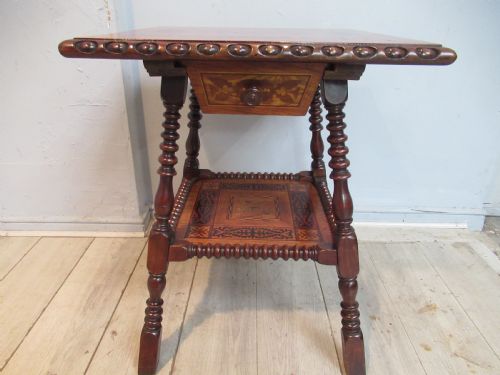


Parquetry Tier Table
A parquetry tier table combines tiered surfaces with geometric wood veneers, offering functional display space with distinct decorative grain patterns.
Parquetry Tier Table
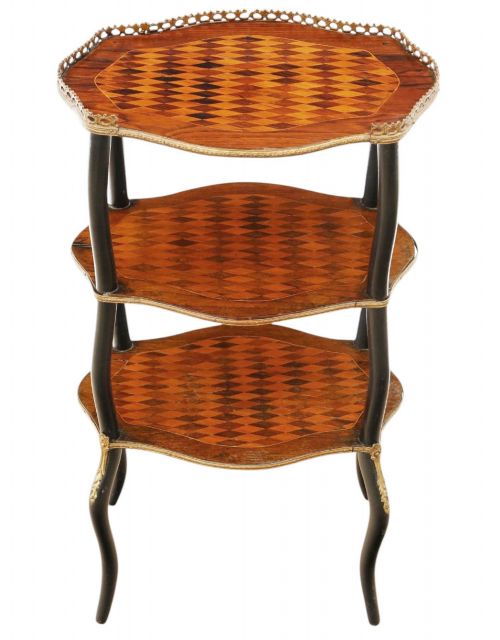
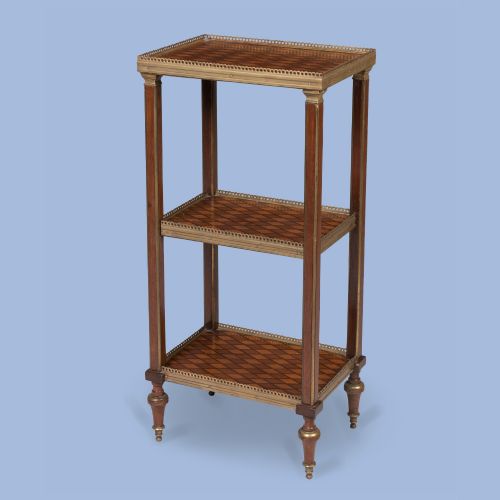
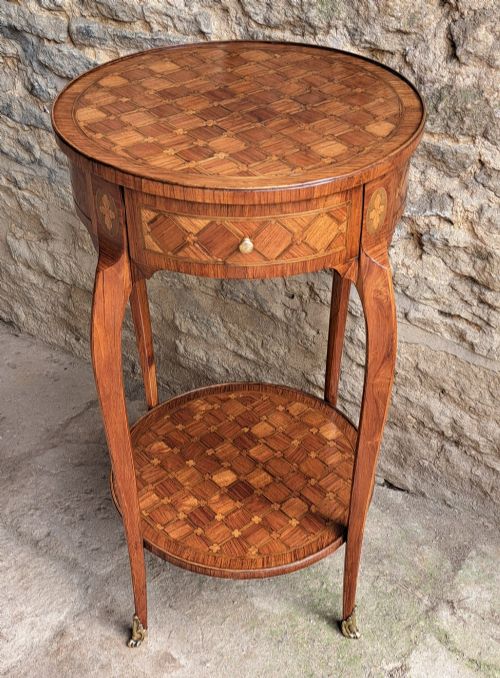
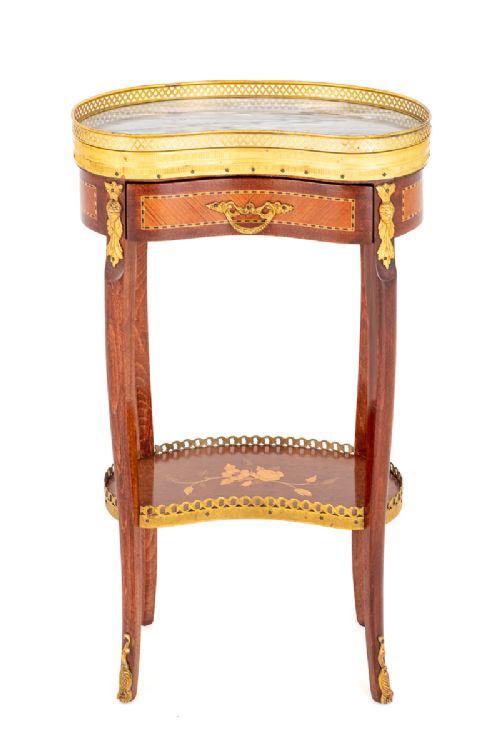
A parquetry tier table provides multiple levels of surface area arranged in tiers, designed for display and occasional use. When you examine a parquetry tier table on this page, you encounter forms ranging from two-tier etageres and side tables to nesting sets and kidney-shaped occasional tables.
The surviving pieces span the nineteenth century into the nineteen-thirties, reflecting both Victorian output and French revival movements. These tables appear most frequently in French Louis XV and Louis XVI styles, incorporating distinct geometric wood surfaces across multiple levels.
Materials and Construction
Cabinet makers utilised a foundation of solid timbers such as mahogany, walnut, or rosewood, applying fine parquetry veneers across the top surfaces. The decorative geometric patterns rely on contrasting woods including kingwood and walnut veneer arranged meticulously within the framework.
Mounts in cast brass and ormolu often accent the edges, while galleried borders secure the tiers on specific etagere and side table forms. Structural stability relies on careful joinery supporting multiple levels without obscuring the grain patterns of the veneer.
One revolving bookcase lets you spin your entire library with a gentle nudge.
Judging Quality and Finish
The standard of craftsmanship shows in the precision of the veneer work and the integration of secondary timbers. Tables of higher ambition display complex geometric parquetry aligned seamlessly across curved surfaces like kidney-shaped tiers.
Hardware and mounts distinguish the output of individual workshops. Finely chased ormolu mounts and delicate brass galleries elevate a piece beyond standard production, reflecting the standards seen in exhibition-quality nineteenth-century examples.
Collingson and Lock·Donald Ross·Morison of Edinburgh
The Parquetry Tier Table Glossary
- Parquetry
- A geometric mosaic of wood veneers used to cover furniture surfaces. It creates patterned floors and table tops using contrasting timber pieces.
- Etagere
- A piece of furniture consisting of open shelves for displaying small objects or books. These tiers provide vertical storage on slender supports.
- Ormolu
- Gilded bronze used for decorative mounts and furniture hardware. Makers cast and chased this material to accent French revival pieces.
- Kingwood
- A dense, richly figured timber imported from South America. Cabinet makers prized this wood for contrasting veneers during the eighteenth and nineteenth centuries.
- Galleried
- Having a low raised rail or border around the edge of a shelf or table top. This metal or wooden rim prevents items from sliding off upper tiers.
Parquetry Tier Table: Frequently Asked Questions
How do I style a parquetry table?
The geometric wood patterns work well when paired with neutral upholstery or simple surfaces that allow the grain to remain visible.
Use the upper and lower tiers to display small decorative objects, porcelain, or books, taking advantage of the multiple levels for arrangement.
What is the difference between parquetry and marquetry?
Parquetry consists of geometric patterns constructed from angular veneer pieces like squares, triangles, and lozenges. Marquetry forms pictorial or curvilinear designs using varied woods and organic shapes.
Both techniques appear across nineteenth-century French and English furniture on this page.
Are these tables sturdy enough for daily use?
Most occasional tables and etageres from the nineteenth and early twentieth centuries are built with solid internal frames supporting the veneered tiers. They handle everyday placement of lamps and small items safely.
Avoid placing excessive weight on delicate multi-tiered structures or exposing them to direct heat sources that affect veneer.