

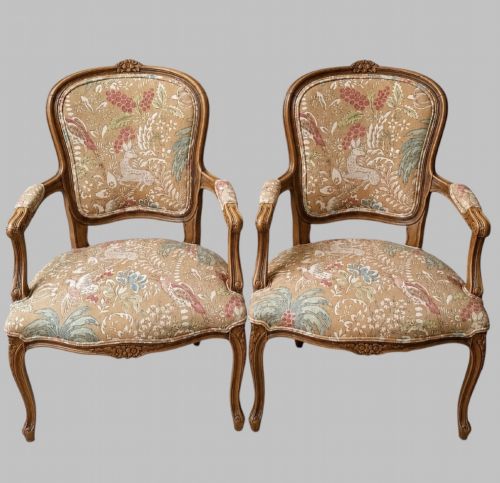


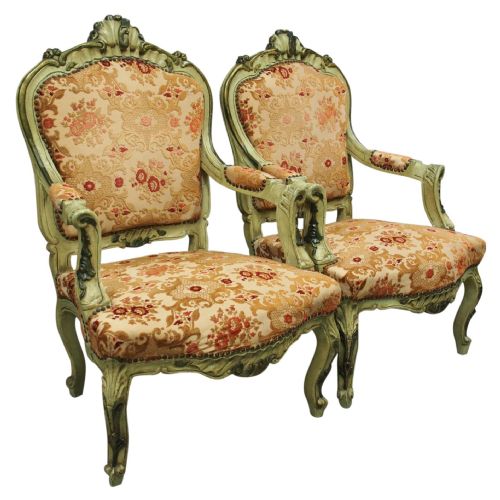


Pair Tapestry Fauteuils
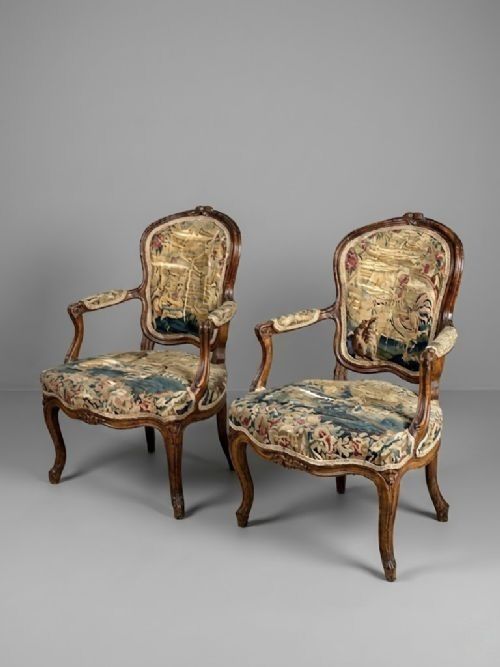
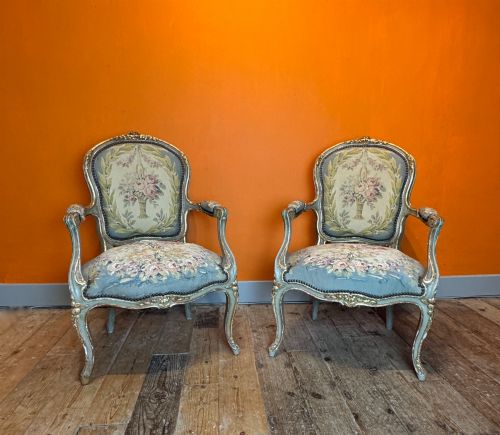
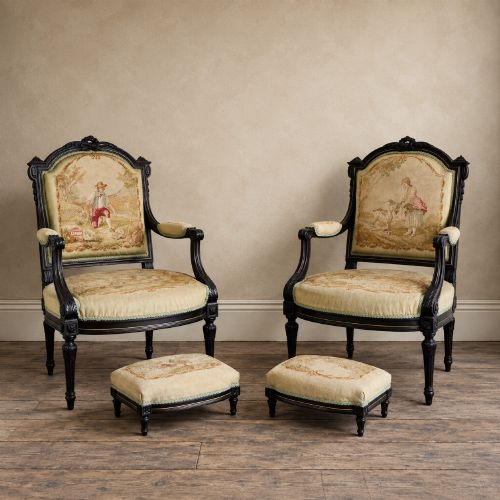
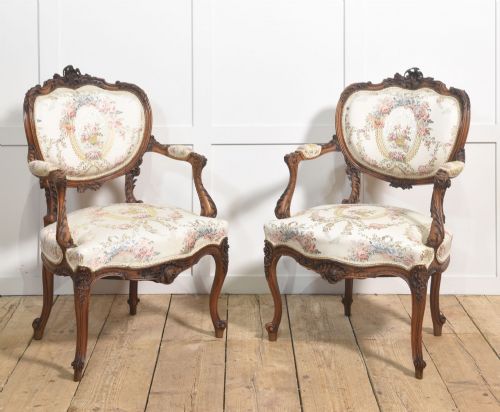
These pair tapestry fauteuils are French open armchairs clothed in woven panels, bringing historic textile art directly into the seating of a grand salon.
Pair Tapestry Fauteuils
When you search for pair tapestry fauteuils, you are looking at matched sets of open-armed French seating covered in pictorial or botanical woven textiles. These seating forms span several centuries of design, with the nineteenth century producing many revival interpretations alongside genuine eighteenth-century examples.
The pieces on this page lean heavily towards French traditions, including Louis XV and Louis XVI styles, alongside Neo-Rococo expressions. Walnut, beech, and giltwood provide the structural support for the upholstered components.
Armchairs of this description function as statement seating in formal reception rooms. The matching nature of the pair ensures symmetry in interior placement.
Distinctions in Quality
The refinement of the carved woodwork dictates the initial tier of quality, separating vigorous hand-carved walnut and crisp giltwood from simpler painted beech frames. Superior examples exhibit deep relief carving along the cabriole legs and frame rails.
The integrity and origin of the tapestry or needlework upholstery set the finer pieces apart. Hand-stitched needlepoint and Aubusson textile panels woven in wool carry more artistic weight than later machine-printed cotton textiles.
The inventory spans the eighteenth and nineteenth centuries, alongside twentieth-century revival interpretations.
The Pair Tapestry Fauteuils Glossary
- Fauteuil
- An open-framed French armchair with upholstered back and armrests, leaving the wooden sides exposed. This seating type originated in seventeenth-century France.
- Aubusson
- A town in central France famous for manufacturing woven tapestries and carpets. Covers from this region frequently adorn high-end period armchairs.
- Giltwood
- Timber coated with a thin layer of gold leaf or gesso. This decorative finish appears on formal salon seating from various centuries.
- Needlepoint
- A type of canvas work embroidery executed with wool yarn. Many chairs feature needlework upholstery produced in historical workshops.
- Neo-Rococo
- A nineteenth-century revival style drawing upon earlier eighteenth-century asymmetrical decorative motifs. It influences the curved lines found on many later salon chairs.
Pair Tapestry Fauteuils: Frequently Asked Questions
How do I spot an Aubusson cover?
Aubusson covers display pictorial pastoral scenes or floral bouquets woven directly into the wool textile rather than stitched as surface embroidery.
Examine the texture closely to observe the flat weave characteristic of historic tapestry looms from central France.
Are these chairs meant for daily sitting?
Historical open armchairs function best as decorative seating or occasional resting places in low-traffic rooms.
The antique frames and delicate textile covers require gentle treatment to preserve their structural integrity over time.
How do I date a walnut armchair?
Dating relies on joinery methods, tool marks left on the timber frame, and the specific contour of the carved arm supports.
Comparing the stylistic vocabulary against documented eighteenth and nineteenth-century examples clarifies the period of origin.