


Walnut Tapestry Armchair
When you handle a walnut tapestry armchair, you touch centuries of carving and textile artistry that bring warmth and character into any room.
Walnut Tapestry Armchair
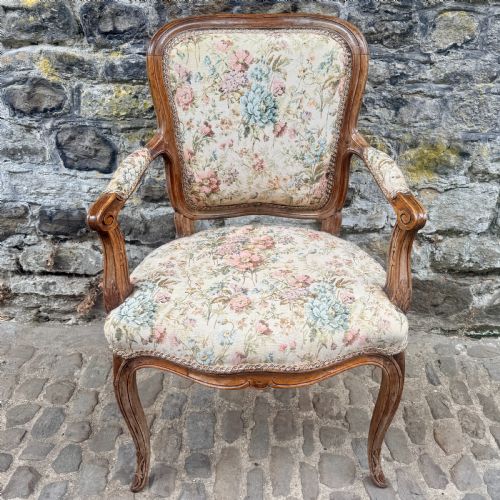
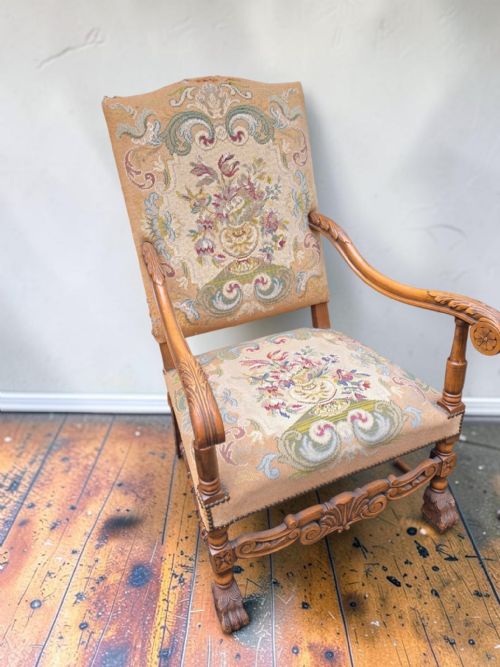
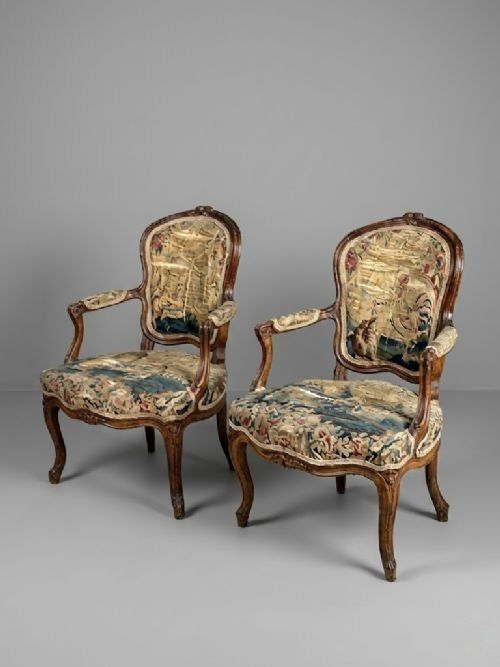
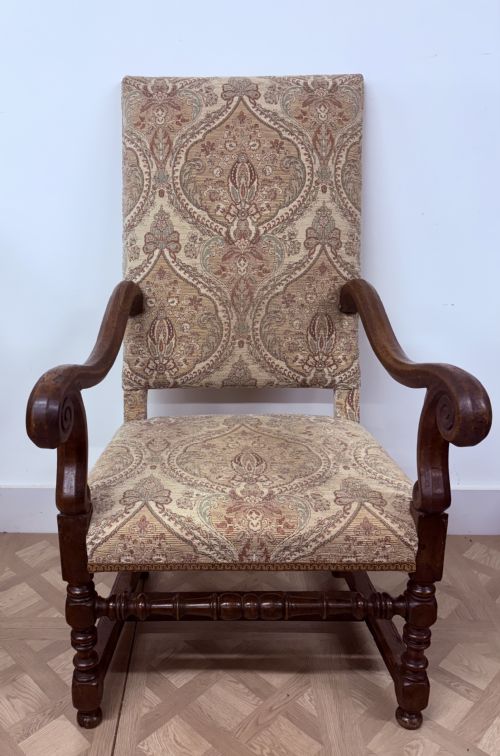
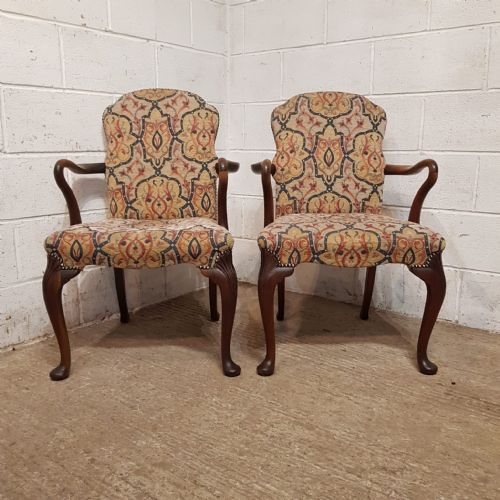
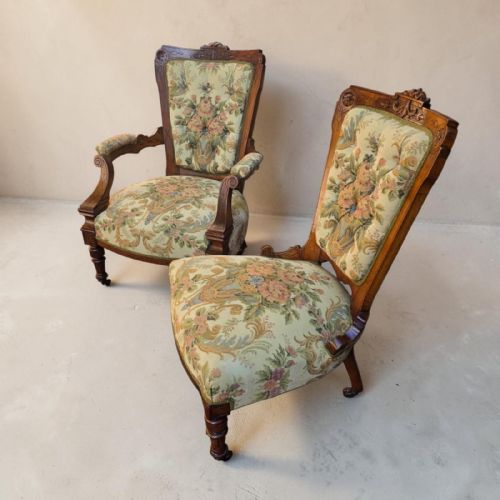
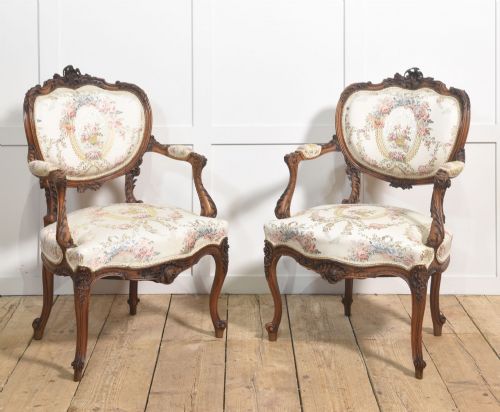
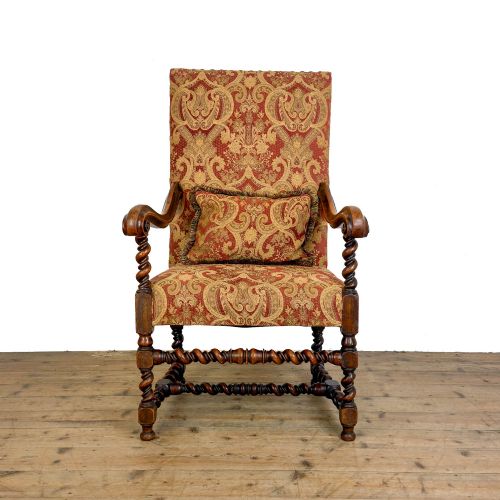
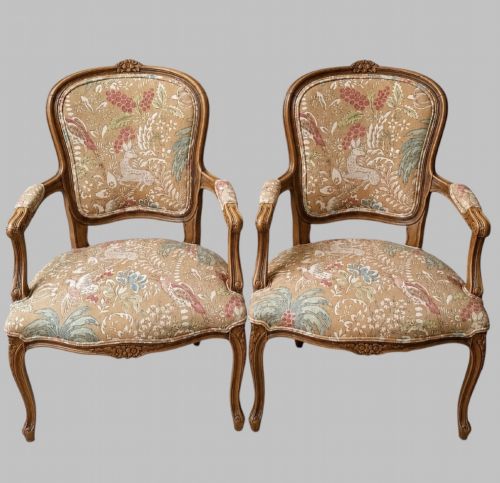
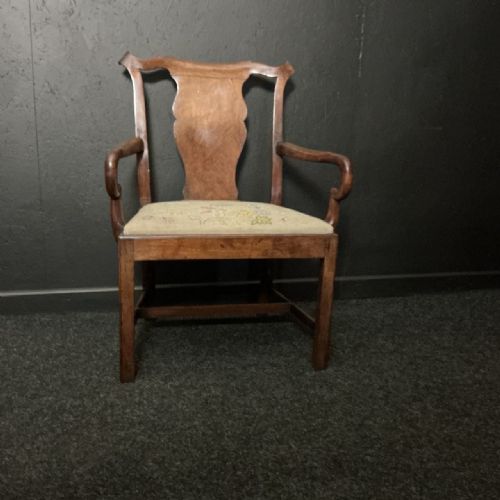
A walnut tapestry armchair combines a carved timber frame with textile upholstery, forming a functional seat of distinct visual weight. When buyers search for a walnut tapestry armchair, they encounter pieces ranging from continental salon chairs to English library seats.
The most common examples on this page date from the nineteenth century, reflecting revival styles such as Louis XV and Victorian Rococo. These pieces frequently appear as open armchairs, fauteuils, or wingbacks constructed to anchor a study or formal drawing room.
Origins span English workshops and French provincial ateliers, resulting in diverse interpretations of structural support and arm design. The combination of dense hardwood and stitched textile creates an enduring form designed for both display and repose.
Materials and construction
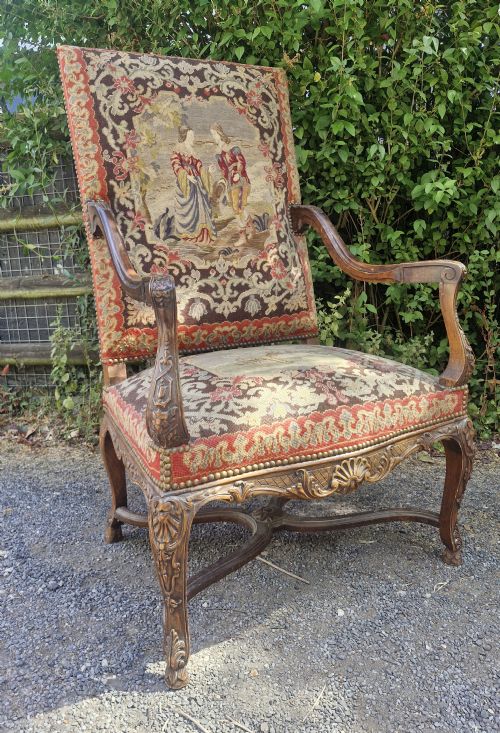
Makers utilised solid walnut for the structural frames, allowing for deep relief carving along the crest rails, arms, and cabriole legs. This dense timber accepted intricate detailing without splitting, supporting the tension of upholstered seats.
Textile panels of wool and heavy fabric were secured to the frames using traditional tacks, often featuring petit point or needlepoint stitching executed by hand. Internal stuffing relied on natural fibres layered over webbing or coil springs depending on the period.
Walnut Tapestry Armchair Retail Price Guide 2026
Typical asking prices for walnut tapestry armchair among the pieces listed under this phrase on Sellingantiques today, from the lower quarter to the upper quarter. They describe what is for sale here now, not the wider market.
Listings feature walnut frames paired with wool, brass accents, and hand-stitched tapestry across centuries ranging from the seventeenth to the twentieth.
Determinants of quality
The definition of quality rests in the crispness of the timber carving and the density of the joinery within the frame. Superior examples display hand-cut botanical or scroll motifs integrated directly into the walnut structure rather than applied composition ornaments.
The condition and execution of the textile cover dictate much of the piece's standing, with finely worked needlepoint retaining tighter tension and more complex pictorial detail. Original upholstery surfaces that survive with balanced proportions show the maker's intent more clearly than later replacements.
Howard and Sons·William Morris
The Walnut Tapestry Armchair Glossary
- Fauteuil
- An open-armed wooden armchair with upholstered back and seat, originating in France during the seventeenth century. The wooden frame remains largely exposed around the padded elements.
- Petit point
- A fine stitch executed on single-mesh canvas that allows for high photographic detail in needlework. This technique produces dense pictorial scenes on chair backs and seats.
- Cabriole leg
- A furniture leg that curves outward in a convex arc and then bends inward in a concave arc, ending in a pad or claw foot. This form derives from ancient furniture designs and re-emerged strongly during the eighteenth century.
- Needlework
- General term for decorative stitching applied to fabric with a needle, including wool and silk threads. Such textile covers frequently define the primary decorative surface of antique seating.
Walnut Tapestry Armchair: Frequently Asked Questions
How do I date a walnut tapestry armchair?
Dating relies on examining the timber colour, tool marks left by the cabinetmaker, and the stylistic cues of the carved ornamentation. French revival pieces often incorporate specific nineteenth-century interpretations of earlier royal reigns.
The textile cover also provides evidence, though covers are frequently replaced. Comparing the joinery construction methods against known historical periods yields the most reliable date.
Are these chairs suitable for daily seating?
Most antique examples function well for gentle daily use provided the internal webbing and joints remain sound. Professional conservation can stabilise older frames without losing their historical integrity.
Heavier sitters should exercise caution with eighteenth-century frames due to natural timber fatigue over centuries. Placing them in low-traffic areas helps preserve fragile wool tapestry panels.
What is the difference between a fauteuil and an open armchair?
A fauteuil specifically denotes a French chair design featuring exposed carved wooden arms with padded elbow rests. English open armchairs often follow distinct regional proportions and decorative motifs like the wingback or library chair style.
Both types utilise walnut frames and tapestry upholstery, but their silhouette reflects the country of origin.
How should I care for the tapestry upholstery?
Protect antique textiles from direct sunlight to prevent fading of the wool and silk threads over time. Gentle surface cleaning with a soft brush removes dust without abrading the delicate fibres.
Avoid chemical cleaning agents unless handled by a textile conservator. Maintaining stable room humidity prevents the timber frame from shrinking and loosening the fabric tension.