



Barley Twist Open Armchairs
Barley twist open armchairs combine sturdy timber frames with spiralling turned supports, offering robust seating steeped in historical revival styles.
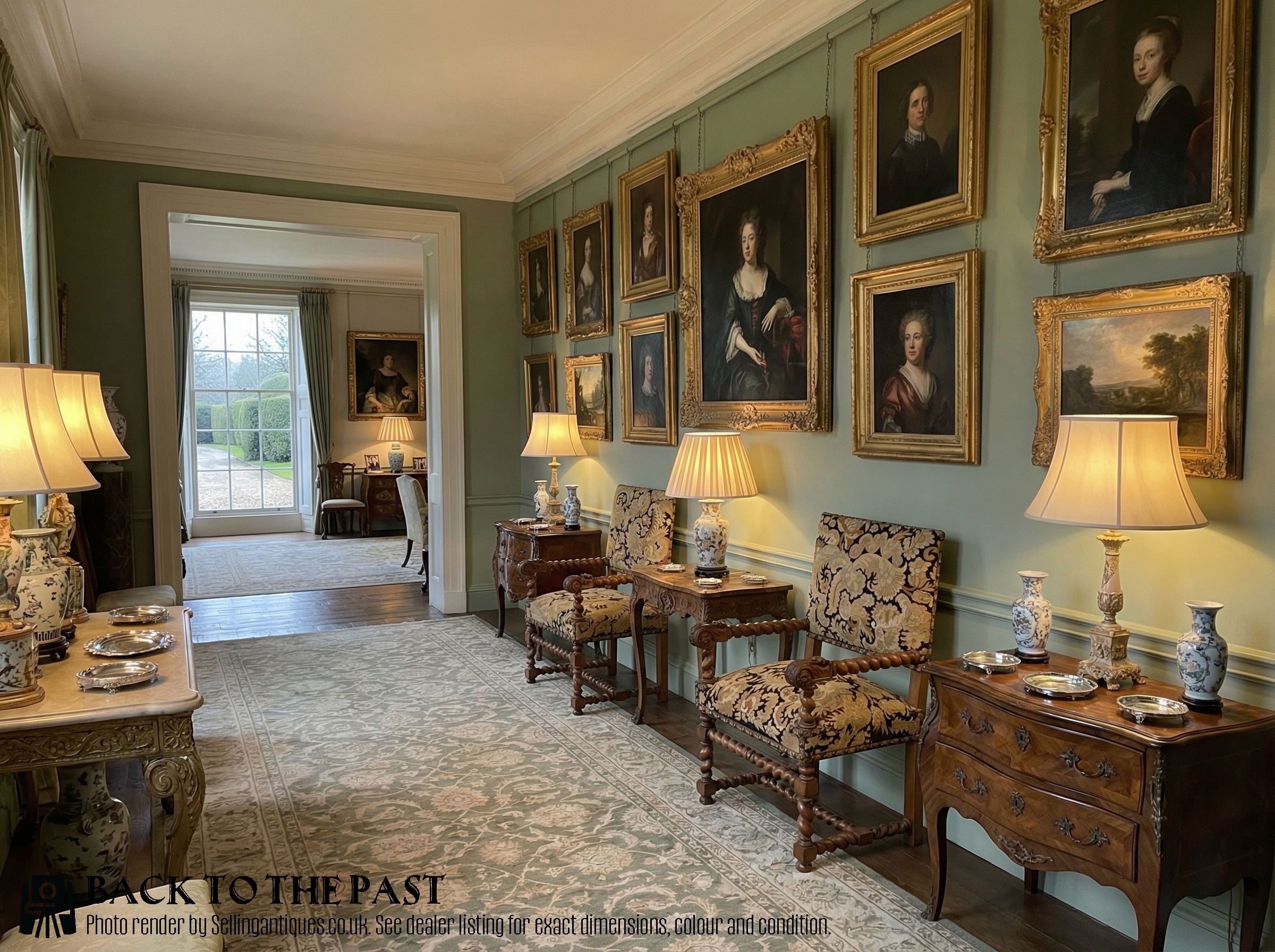
Barley Twist Open Armchairs
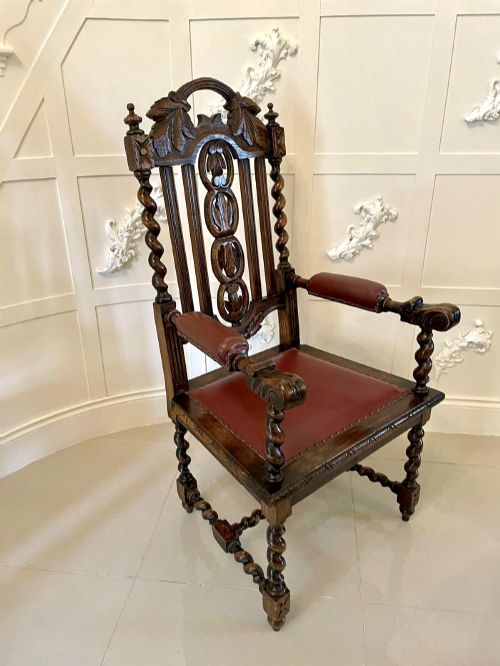
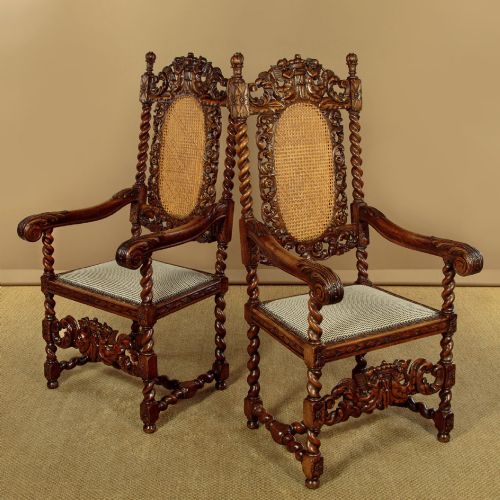
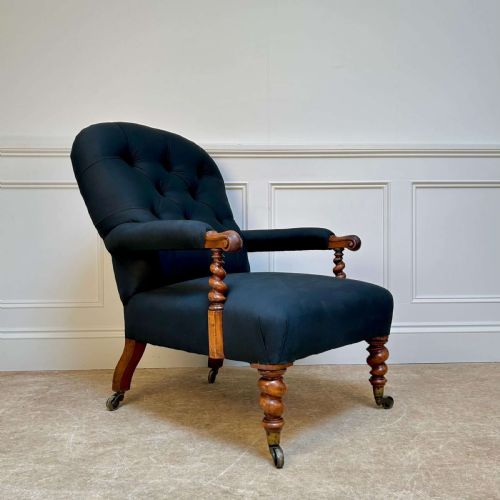
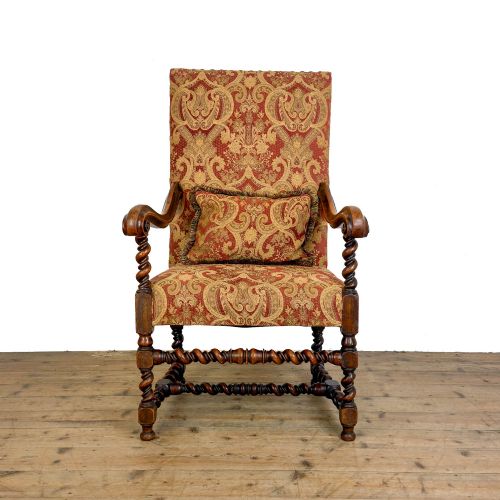
Barley twist open armchairs take many forms across different centuries, ranging from seventeenth-century walnut originals to twentieth-century revival interpretations in oak and laburnum. A buyer browsing barley twist open armchairs will encounter pieces styled in Jacobean Revival, Carolean, and Victorian aesthetic traditions, often featuring upholstered seats or tapestry coverings.
The construction relies on sturdy wooden frames with open arms, functioning as carver chairs, elbow chairs, or grand throne armchairs. Most examples utilise oak or walnut, occasionally paired with cane, brass, leather, velvet, or wool tapestry.
How they were made
Makers shaped the characteristic spiral stems using lathe turning techniques on solid hardwoods like oak and walnut, alongside rarer timbers such as laburnum. Frames incorporated carved details, joined securely to support upholstered panels, fabric pads, or woven cane.
Upholstery methods varied from simple drop-in pads to elaborate needlework, tapestry fabric, and leather secured with brass elements.
Materials documented across the pieces include oak, walnut, laburnum, cane, brass, velvet, leather, and wool tapestry.
What varies in quality
Quality rests in the crispness of the timber turnings and the selection of primary woods, where dense walnut or figured oak command attention. The integration of period textiles, such as wool tapestry or quality leather, elevates a piece beyond standard utilitarian seating.
The proportion and weight of the frame dictate the character of the chair, distinguishing heavy throne armchairs from lighter elbow variants.
Hindley & Sons
The Barley Twist Open Armchairs Glossary
- Carver armchair
- A chair with arms designed to sit at the head of a dining table or serve as an occasional seat. These feature open arm structures and often incorporate turned woodwork.
- Barley twist
- A spiralling decorative turning resembling a twisted rope, carved or lathed into wooden furniture legs and stretchers. It gained immense popularity during the seventeenth century and subsequent revival periods.
- Jacobean Revival
- A nineteenth-century stylistic movement copying the heavy, carved oak furniture forms of the early seventeenth century. Pieces from this era frequently utilise dark finishes and elaborate turnings.
- Elbow chair
- An alternative term for an armchair, denoting a seat fitted with low armrests intended to support the elbows. They appear frequently in nineteenth-century domestic settings.
- Throne armchair
- A high-backed, imposing seat designed with grand proportions and substantial carved decoration. These heavy wooden chairs often feature upholstered backrests and seats.
Barley Twist Open Armchairs: Frequently Asked Questions
What periods do these armchairs come from?
The pieces span several centuries, including seventeenth-century originals from the Carolean era alongside later nineteenth-century revivals and twentieth-century interpretations.
Craftsmen recreated these historical designs across successive eras, meaning revival pieces from the Victorian period are just as common as earlier examples.
Which woods were used for the frames?
Makers predominantly chose solid oak and walnut for their durability and attractive grain patterns. Rarer timbers like laburnum also appear in specific seventeenth-century pieces.
These hardwoods provided the structural strength necessary to support elaborate spiralled turnings and heavy upholstery.
How do revival styles differ from originals?
Seventeenth-century pieces display authentic age-related patination and construction methods specific to their era. Revival pieces manufactured during the nineteenth or twentieth centuries emulate those earlier aesthetics using contemporary workshop techniques of their own time.
Both categories share the distinctive spiral woodwork, though timber preparation and joinery details reflect the distinct period of manufacture.
What types of upholstery are found on them?
Surviving examples feature a variety of coverings including wool tapestry, velvet, leather, and woven cane inserts. Some chairs retain fabric panels that match the period of the wooden frame, while others show later reupholstery.
The choice of covering ranges from simple leather pads to intricate hand-worked tapestries.