


Pair Tapestry Armchairs
Pair tapestry armchairs bring historic textile artistry and supportive seating together, offering matched historic character for formal rooms.
Pair Tapestry Armchairs
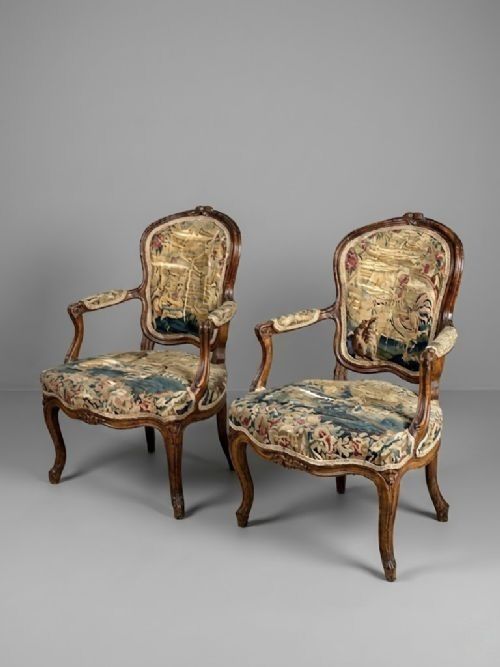
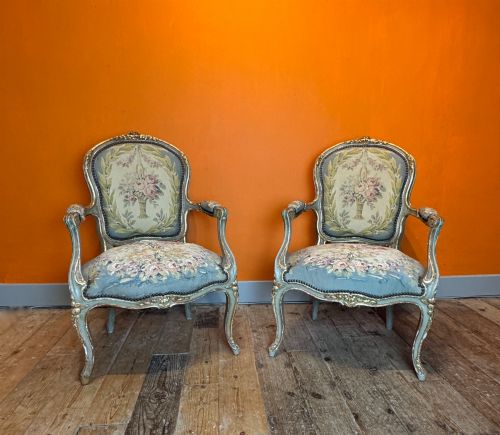
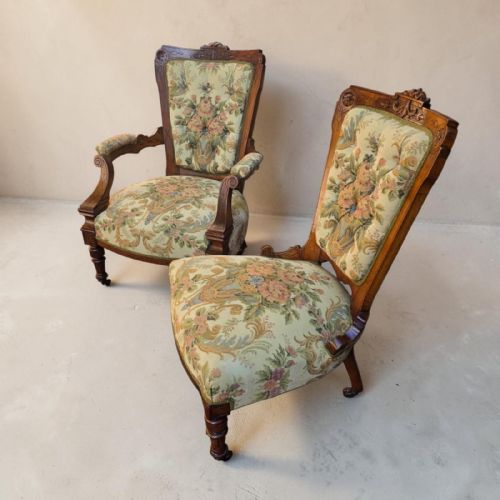
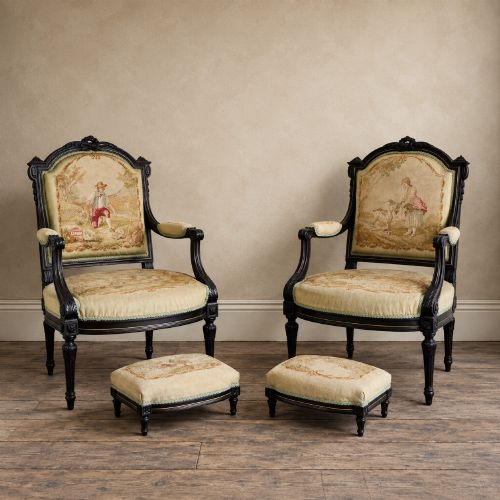
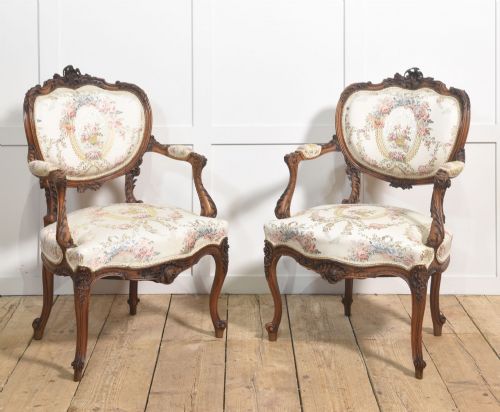
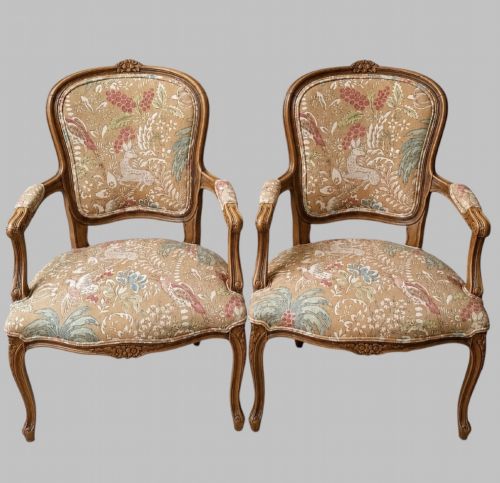
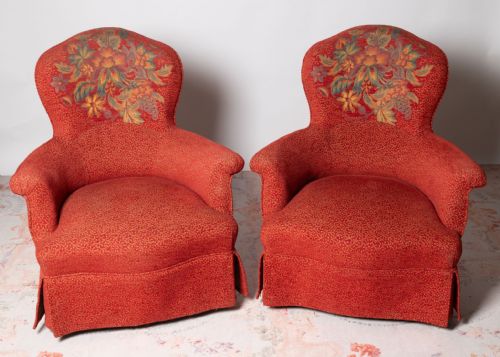
When looking for pair tapestry armchairs, buyers encounter matched seating upholstered in woven pictorial or floral textiles, frequently originating from French and English workshops. These seating pieces span centuries of design, encompassing formal salon chairs, library wingbacks, and heavy carved frames from the eighteenth, nineteenth, and early twentieth centuries.
The most common examples on this page are nineteenth-century walnut or giltwood frames adhering to Louis XV and Louis XVI revival styles. These pieces combine elaborate carved wooden armchairs with woven needlepoint, petit point, or Aubusson covers depicting botanical, figurative, or geometric motifs.
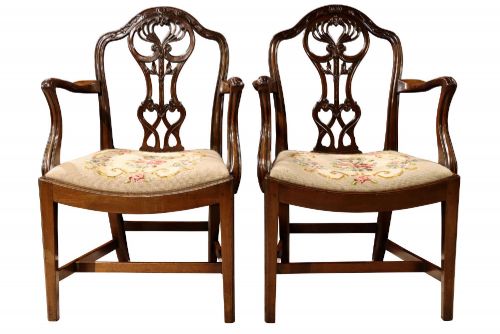
Buyers also find substantial oak and mahogany frames from the Edwardian and Victorian eras alongside earlier eighteenth-century examples. The pairing ensures symmetrical placement in drawing rooms, hallways, or libraries, matching timber frames with complementary textile panels.
How they were made
The structural frames rely on traditional cabinetmaking timbers including walnut, mahogany, oak, beech, and giltwood. Carpenters shaped these hardwoods using mortise and tenon joinery, applying hand-carved ornamentation, ebonisation, or parcel gilt highlights to the finished woodwork.
Upholstery techniques involve heavy woven tapestry fabric, needlework, or Aubusson covers stretched over internal webbing, horsehair stuffing, and supporting springs or pad layers. The textile panels are secured to the wooden frames using decorative brass tacks or piping that follows the structural contours of the chair.
Listings feature walnut, mahogany, and oak frames paired with hand-woven tapestry, needlework, and Aubusson upholstery across the eighteenth, nineteenth, and early twentieth centuries.
What varies in quality
Quality differences depend largely on the crispness of the timber carving and the density of the woven textile. Hand-carved walnut and giltwood frames display sharp, deep relief work, whereas lower tiers show softer moulding or simpler turned components.
The integrity of the tapestry cover dictates overall value, with tightly woven needlepoint and hand-knotted Aubusson wools outlasting loose factory-printed pile fabrics. Original covers paired with structurally sound hardwood frames represent the highest standard available.
White, Allom & Co.·William Morris
The Pair Tapestry Armchairs Glossary
- Aubusson
- A style of hand-woven tapestry traditionally produced in the French town of Aubusson, noted for floral and pictorial scenes. These covers frequently adorn high-end revival armchairs.
- Fauteuil
- An open-arm armchair with upholstered back and armrests, possessing exposed wooden sides. This French form is common among nineteenth-century salon seating.
- Petit point
- A fine stitch needlework executed on single-mesh canvas, allowing for intricate detail in figurative tapestry covers. It distinguishes superior textile work from coarser cross-stitch.
- Parcel gilt
- A decorative treatment where selected portions of a wooden frame are gilded with gold leaf while other areas remain painted or polished. This finish highlights specific carved details on nineteenth-century chairs.
- Wingback
- An armchair featuring protective side panels attached to the backrest, designed to shield occupants from drafts. These heavy chairs frequently utilise tapestry or needlework upholstery.
Pair Tapestry Armchairs: Frequently Asked Questions
How are pair tapestry armchairs cleaned?
Textile covers require gentle surface vacuuming through a mesh attachment to lift accumulated dust without snagging the wool or silk threads. Professional textile cleaning is recommended for deeper maintenance to protect the historic fibres.
Wooden frames need only a dry dusting or occasional application of appropriate furniture wax. Moisture should be kept away from both the antique timber and the vintage upholstery weave.
Can tapestry armchairs be used daily?
These seating pieces function well in domestic settings provided they receive moderate, careful use. Placing them away from direct sunlight prevents the woven tapestry threads from fading over time.
Sturdy hardwood frames support regular sitting, but fragile nineteenth-century textiles benefit from occasional rotation or gentle treatment. Heavier oak and walnut library chairs handle heavier daily wear than delicate giltwood salon seats.
How do I identify French revival styles?
French revival pieces incorporate curved cabriole legs, carved floral crests, and exposed walnut or giltwood frames that mimic eighteenth-century court furniture. Louis XV styles show asymmetrical flowing lines, while Louis XVI versions display straighter fluted legs and neoclassical symmetry.
The tapestry covers on these revival chairs often depict pastoral scenes or floral urns framed by decorative borders. Checking the timber construction and joining techniques helps confirm whether a piece dates to the nineteenth-century revival period.
Are original tapestry covers common?
Many surviving armchairs retain their original nineteenth-century needlepoint or Aubusson covers, though some have undergone period re-upholstery. Original textiles exhibit natural fading and wear consistent with age, which collectors often prefer over modern replacements.
When replacement occurs, workshops frequently utilise antique needlework or period-appropriate tapestry fabric to match the style of the wooden frame. Examining the tack holes and internal webbing reveals whether the upholstery has been updated.