



Pair Swedish Bedside Tables
Pair Swedish bedside tables bring calm, balanced proportion to a bedroom, offering practical surface space and enclosed storage in unified twin forms.
Pair Swedish Bedside Tables
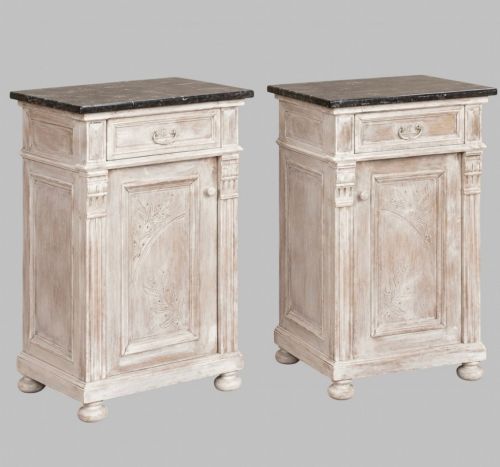
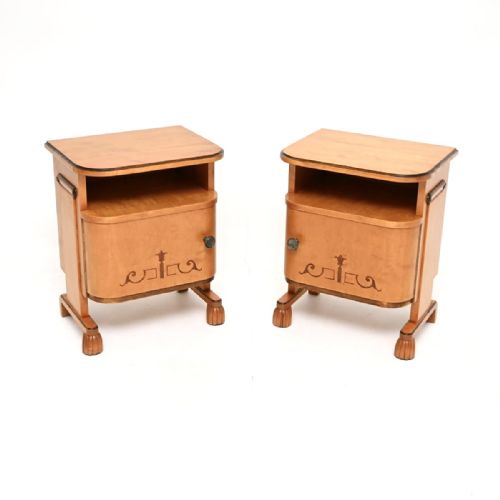
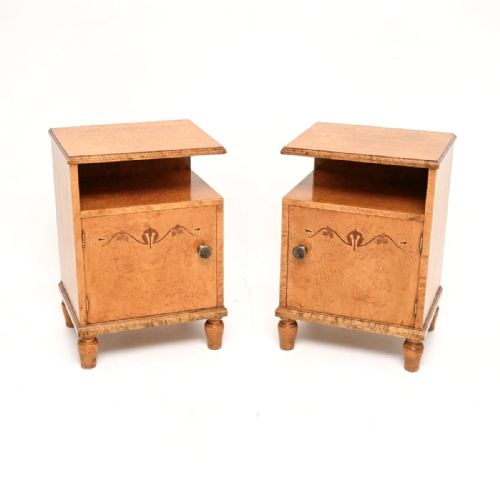
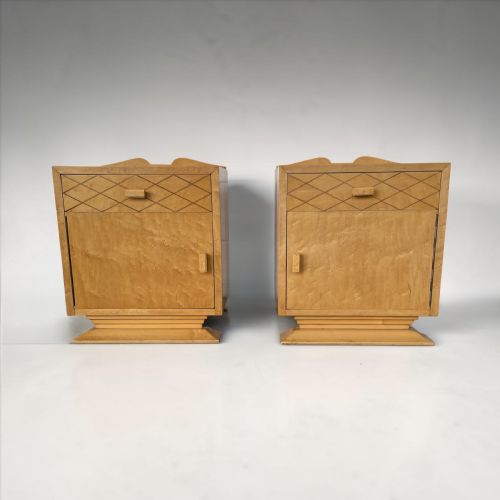
Pair Swedish bedside tables encompass matched sets from the nineteenth century up through the nineteen-thirties, spanning several distinct Scandinavian movements. The selection includes painted country chests of drawers, satin birch cabinets with marble tops, and streamlined art deco designs.
Buyers encounter traditional painted commodes alongside architectural Gustavian influenced pieces and compact side tables. These twin items serve bedside duties with surface tops for lighting and drawers or cupboards for concealed storage.
How they were made
Cabinetmakers utilised sturdy pine as a structural timber, often finishing surfaces with layers of traditional hand paint or dark ebonised treatments. Faux marble finishes also appear on timber tops alongside genuine stone slabs.
Finer examples employ warm birch veneer or solid satin birch, sometimes accented with brass hardware. Construction relies on traditional joinery methods suited to domestic furniture production across Swedish workshops.
Pair Swedish Bedside Tables Retail Price Guide 2026
Typical asking prices for pair swedish bedside tables among the pieces listed under this phrase on Sellingantiques today, from the lower quarter to the upper quarter. They describe what is for sale here now, not the wider market.
Listings feature pine, birch veneer, satin birch, and marble across nineteenth-century and early twentieth-century periods.
What varies in quality
The distinction between standard utility pieces and finer examples rests in the crispness of proportion and the treatment of surface materials. Original painted finishes carry an honest patina, while marble tops and satin birch veneer show distinct grain selection and depth.
Architectural detailing such as Gustavian influenced moulding or art deco geometry separates simpler country forms from more ambitious design periods. Hardware integrity and the condition of timber or painted surfaces dictate overall refinement.
The Pair Swedish Bedside Tables Glossary
- Gustavian
- A neoclassical Swedish design style characterised by restraint, light proportions, and subtle classical ornamentation. This aesthetic emerged during the late eighteenth century and influenced furniture production well into the nineteenth century.
- Satin Birch
- A pale hardwood timber featuring a natural sheen and distinct grain patterns, frequently utilised for veneered or solid cabinet surfaces. It provides a bright, warm finish popular in Scandinavian furniture.
- Commode
- A low cabinet or chest of drawers designed with a flat top and enclosed storage space. These pieces often function as bedside storage or secondary living room furniture.
- Ebonised Wood
- Timber treated with a chemical stain or black finish to imitate expensive ebony. This technique creates a dramatic, dark surface contrast against lighter interior schemes.
Pair Swedish Bedside Tables: Frequently Asked Questions
How do I use a pair in a modern bedroom?
Place matching bedside tables on either side of the bed to ground the room with symmetrical form. Their compact footprints accommodate reading lamps while providing enclosed storage for nighttime essentials.
Mixing painted finishes or satin birch with contemporary textiles adds textural contrast without disrupting the tranquil proportion typical of Scandinavian furniture.
What is the difference between Gustavian and Art Deco pieces?
Gustavian influenced furniture draws on neoclassical symmetry, featuring restrained classical details and pale painted surfaces. These designs reflect eighteenth-century restraint.
Art Deco examples from the nineteen-thirties favour streamlined geometry and warm timber veneers. Both styles offer twin formats but represent very different periods of Scandinavian design.
Are marble tops original to these cabinets?
Many nineteenth-century bedside cabinets feature either genuine marble slabs or painted faux marble surfaces designed to resemble stone. Both variants served practical purposes by protecting the timber from spills.
Examining the edge profiles and how the top integrates with the cabinet structure helps determine whether a stone slab is original to the piece.
How do I care for painted Swedish furniture?
Maintain painted surfaces by dusting gently with a dry, soft cloth and avoiding harsh chemical cleaners that can degrade historic finishes. Preserving the original patina protects the character of the piece.
Keep wooden furniture away from direct heat sources and strong sunlight to prevent timber movement and finish fading over time.