



Pair Porcelain Candle Holders
These pair porcelain candle holders bring symmetry and candlelight to a room, spanning eighteenth-century figures and nineteenth-century revival styles.
Pair Porcelain Candle Holders
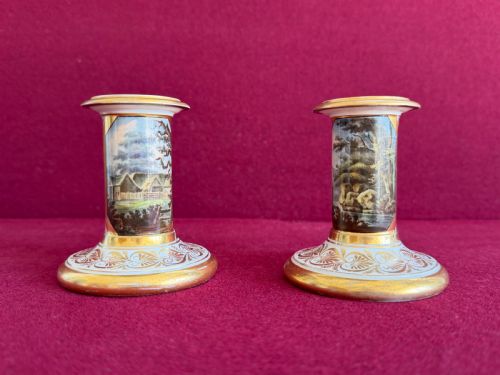
When you search for pair porcelain candle holders, you encounter matching pairs designed to light rooms or adorn mantelpieces. The selections span English factories from Derby and Royal Worcester alongside continental works from Meissen and Sitzendorf.
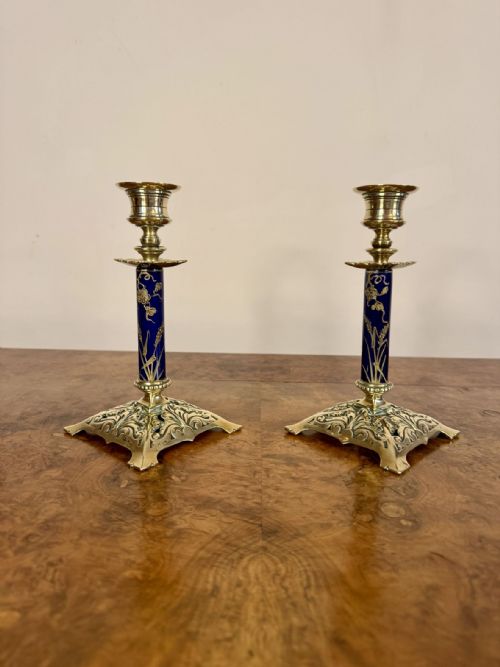
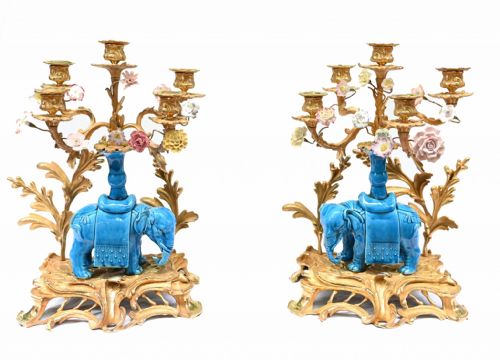
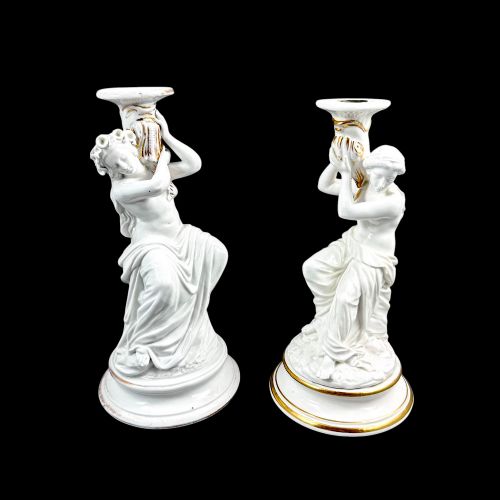
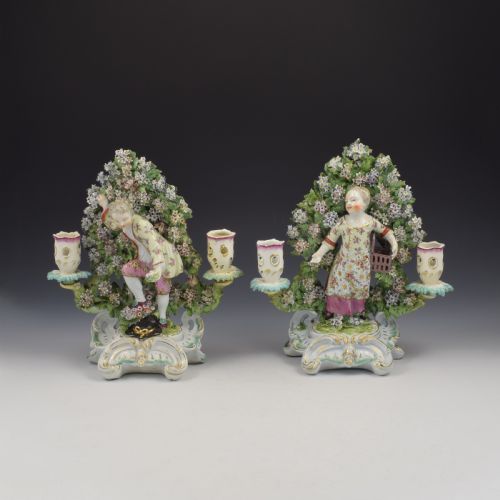
Forms range from simple foliage stems and go-to-beds to elaborate figural compositions featuring musicians, children, and allegorical figures. Many examples incorporate bocage foliage backgrounds or metal mounts such as ormolu and brass.
The styles shift from eighteenth-century Rococo through Georgian and Victorian periods up to later nineteenth-century revivals. Figures and candelabra branches dominate the heavier and more ornate end of the surviving items.
Materials and technique
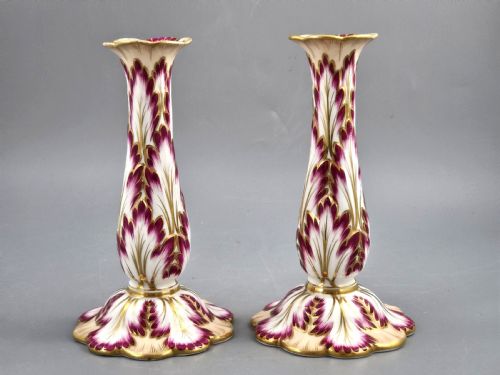
Potters shaped these objects using hard and soft paste porcelain, finished with glazes and enamels. Artisans frequently applied gold leaf, gilding, and gilt bronze mounts to enhance the ceramic bodies.
Figural models required intricate hand-modelling, particularly for floral bocage elements and detailed clothing. Many pieces combine moulded porcelain bases with painted surface decoration fired at high temperatures.
Pair Porcelain Candle Holders Retail Price Guide 2026
Typical asking prices for pair porcelain candle holders among the pieces listed under this phrase on Sellingantiques today, from the lower quarter to the upper quarter. They describe what is for sale here now, not the wider market.
Listings feature hard and soft paste porcelain alongside earthenware, decorated with hand-painted enamels, gilding, and applied ormolu mounts across several centuries.
What varies in quality
The refinement of the modelling dictates the distinction between standard production and exceptional work. Crisp detail in human faces, foliage, and applied flowers separates superior figures from heavier, blunter castings.
The precision of the hand-painted enamel colours and the quality of the gilding contribute significantly to the visual weight of each pair. Integration with metal components like ormolu or brass mounts also marks the tier of the piece.
Nymphenburg·Ridgway·Barr Flight And Barr·Derby·Royal Worcester·Sitzendorf·Chelsea·Minton·Meissen·Sevres·Bow·Dresden
The Pair Porcelain Candle Holders Glossary
- Bocage
- An applied background of carved and painted foliage or leaves framing ceramic figures. This fragile technique appears frequently on eighteenth-century figures.
- Ormolu
- Gilt bronze mounts used to support or frame porcelain sections. French workshops utilised this technique extensively during the nineteenth century.
- Blanc de Chine
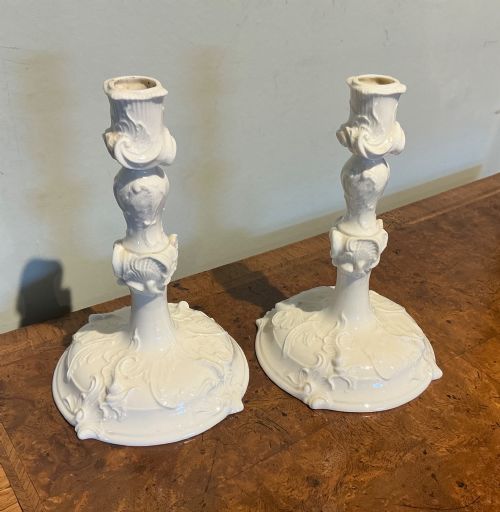
- A pure white glaze applied to hard paste porcelain without surface enamel colours. Derby and Sitzendorf produced notable examples in this finish.
- Patch-mark
- Small unglazed spots on the underside of early Derby figures caused by kiln supports. Collectors use these marks to date pieces securely.
- Go-to-bed
- A small portable chamber candlestick designed for carrying to a bedroom. These diminutive items often take figurative forms such as putti.
Pair Porcelain Candle Holders: Frequently Asked Questions
What is bocage on porcelain?
Bocage is the leafy, trellised background applied behind figures on candlesticks. It gives the piece a dense, garden-like setting.
Craftsmen modelled these leaves by hand before attaching them to the main body prior to firing, making surviving examples prone to delicate losses.
How do I date an antique porcelain candlestick?
Dating relies on factory marks, glaze characteristics, and stylistic clues such as Rococo curves or Victorian ornamentation. Painters and modellers often left subtle clues in the paste.
Examining the base for patch-marks or blue underglaze stamps provides a reliable starting point for establishing the production era.
Were these holders meant for daily use?
Most of these decorative pairs served formal entertaining spaces and mantelpieces rather than heavy everyday lighting. Their elaborate figural designs made them display objects.
Wealthy households placed them in reception rooms where candlelight would reflect off the enameled surfaces and gilt bronze mounts.
Why do some items feature metal mounts?
Ormolu and brass mounts provided structural stability and added decorative splendour to porcelain bodies and candelabra arms. French makers favoured this combination.
These metal additions often elevate the visual presence of the piece, bridging ceramic art with metalwork.