



Antique Figural Porcelain Candleholders
These antique figural porcelain candleholders bring sculptural presence and decorative charm to a room, cast in human and natural forms from past centuries.
Antique Figural Porcelain Candleholders
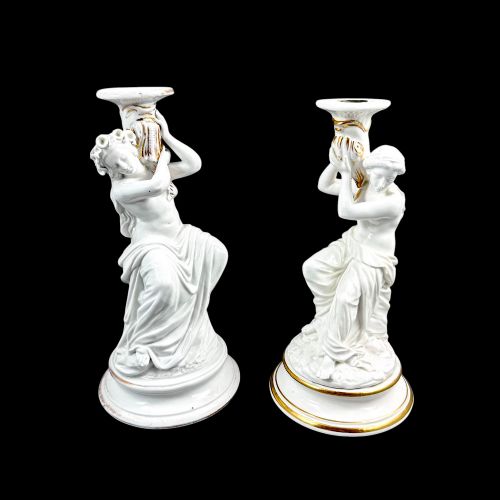
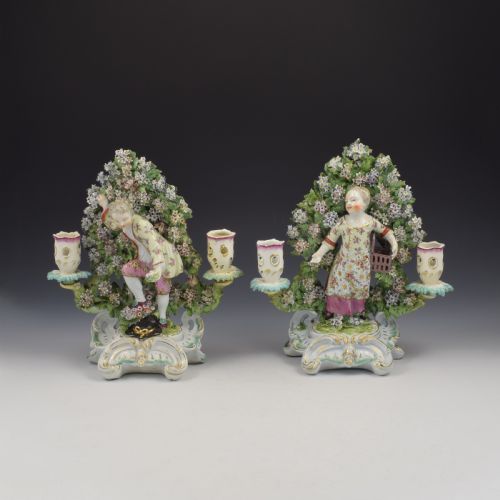
When you search for antique figural porcelain candleholders, you encounter modelled figures combined with functional lighting supports. These pieces take the form of children, gardeners, shepherdesses, and musicians intertwined with branches or floral bases.
The selections span the eighteenth and nineteenth centuries, taking shape as candlesticks for single taps and larger candelabra with multiple arms. European factories dominate the offerings, showing both cabinet pieces and robust table service items.
Victorian examples sit alongside earlier continental works, reflecting shifts from rococo curves to classical revival motifs. Buyers most frequently meet matched pairs featuring hand-modelled figures amidst applied porcelain leaves and flowers.
How they were made
Makers shaped hard-paste porcelain through complex moulding processes, supplementing cast bodies with individually handmade botanical elements like leaves and petals. Artisans applied fine details by hand before subjecting the pieces to high-temperature kiln firings.
Glazes and enamel colours received secondary firings to fuse pigments into the ceramic body. Highlights in gold leaf, gilding, and liquid gold accents were then added to robes, candle sockets, and scrollwork bases.
Bocage work - the dense thicket of porcelain foliage behind figures - required meticulous placement by skilled hands to prevent collapse during firing. The resulting structures balance sturdy ceramic columns with delicate figural grouping.
Antique Figural Porcelain Candleholders Retail Price Guide 2026
Typical asking prices for figural porcelain candleholders among the pieces listed under this phrase on Sellingantiques today, from the lower quarter to the upper quarter. They describe what is for sale here now, not the wider market.
Listings feature hard-paste porcelain items spanning the eighteenth and nineteenth centuries, with forms ranging from single candlesticks to four-arm candelabra.
What varies in quality
The crispness of the modelling defines the upper tier of these pieces, where facial expressions and garment folds remain sharp rather than softened by worn moulds. Superior examples display subtle hand-painted polychrome detailing with clean brushwork on eyes, hair, and clothing.
The preservation of delicate applied elements such as floral clusters and bocage leaves separates finer items from heavily restored or damaged specimens. Better pieces maintain intact gilding without heavy rub, showing bright gold leaf on scrollwork and bases.
Derby Porcelain·Sitzendorf Porcelain·Triebner, ENS & Eckert Volkstedt·Meissen Porcelain·Minton Porcelain·Royal Worcester Hadley
The Antique Figural Porcelain Candleholders Glossary
- Bocage
- A background of applied porcelain leaves and flowers framing a central figure. This technique mimics natural foliage and requires careful hand assembly before firing.
- Hard-Paste Porcelain
- A dense, vitrified ceramic material composed of kaolin and petuntse fired at high temperatures. It resists scratching and takes glossy lead or feldspathic glazes.
- Gilding
- The application of gold leaf or gold paint to ceramic surfaces for decorative accent. It highlights raised mouldings on bases and candle sockets.
- Candelabra
- A branched lighting fixture holding multiple candles simultaneously. These pieces often feature removable branches fitted into a central figural stem.
- Enamel
- Coloured vitreous glass fused to the porcelain surface during a secondary firing. It provides the vibrant skin tones and garment colours seen on the figures.
Antique Figural Porcelain Candleholders: Frequently Asked Questions
How do I clean my figural candleholders?
Dust gently with a soft, dry brush to prevent dirt accumulation within the intricate porcelain foliage and crevices. Avoid harsh chemical cleaners or submersion in water, as these can damage old enamel colours and delicate gilding.
For stubborn marks, use a slightly damp cloth with mild soap on glazed areas only. Keep moisture away from unglazed biscuit porcelain or areas with visible hairline cracks and old repairs.
Were these candleholders used for dining?
Many nineteenth-century examples served as decorative garnitures on mantelpieces rather than functional dining table lighting. Their elaborate figural composition and delicate applied flowers made them centrepieces for drawing rooms.
Smaller pairs sometimes saw use in boudoirs or bedrooms where single candles provided adequate illumination. Larger candelabra with multiple arms often anchored formal dining room sideboards.
How can I date an unmarked piece?
Examine the paste and glaze characteristics, noting whether the ceramic body appears translucent and hard or slightly softer. Stylistic clues such as rococo scrolls or neoclassical drapery help narrow the production era.
Base construction and manufacturing marks, even when faint or impressed rather than painted, provide direct links to specific factory periods. Comparing modelling depth and painting style with documented works confirms the likely decade.