
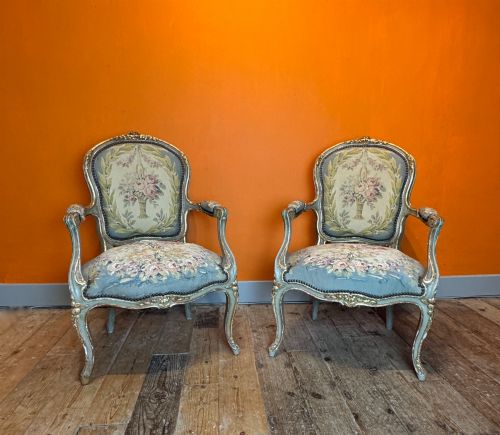
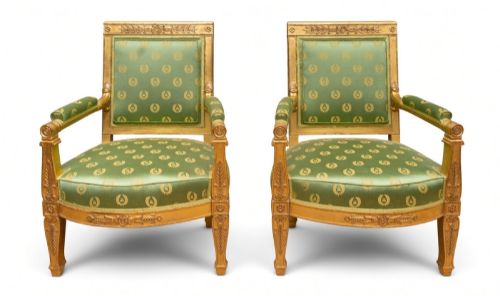
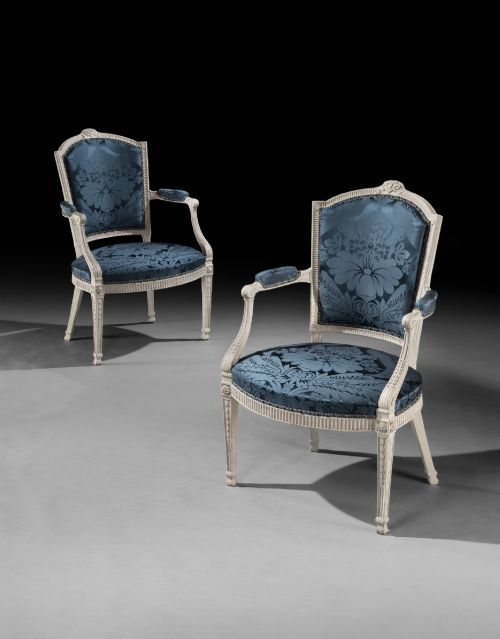
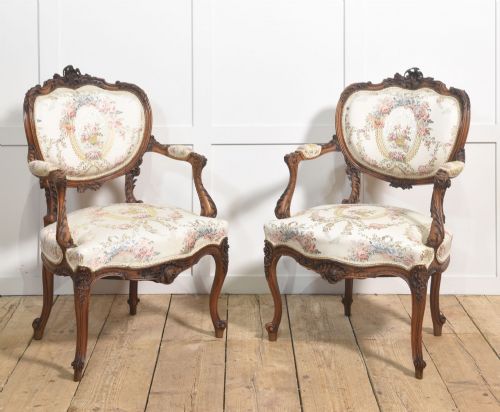
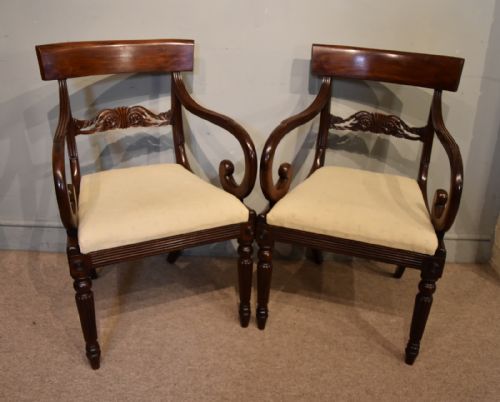
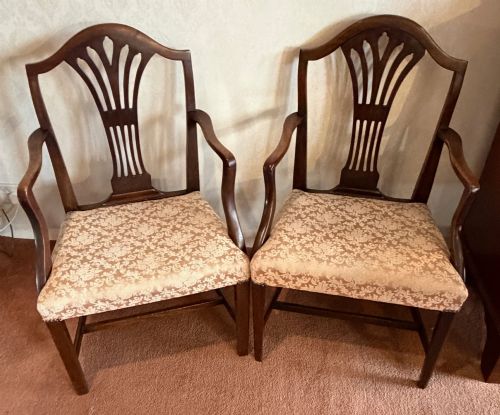


Pair Period Open Armchairs
These pair period open armchairs bring matching seating into a room, offering historic form and upholstery that suit traditional interiors.
Pair Period Open Armchairs
When you search for pair period open armchairs, you encounter matched sets of seating primarily originating from the eighteenth and nineteenth centuries. These chairs frequently emerge in styles such as Georgian, Regency, and various French revivals including Louis XV and Louis XVI.
The selection on this page centres on wooden frames combined with textile upholstery, ranging from carved mahogany carvers to giltwood fauteuils. Pieces span formal salon chairs, desk armchairs, and bedroom seating, all retaining open wooden arms characteristic of the period.
Buyers are most likely to meet nineteenth-century examples alongside eighteenth-century originals and later revivals from around nineteen hundred. These seating pairs often feature painted finishes, parcel gilding, or polished hardwood surfaces.
What varies in quality
The crispness of the hand-carving on the wooden frame separates standard production from finer work, with deep, sharp relief indicating skilled execution. The choice of primary timber, such as dense figured mahogany or richly grained walnut, alters the character of the piece.
Originality of surface finishes, including period paint or patinated polish, dictates the integrity of the chair. Furthermore, the presence of period-appropriate upholstery like needlepoint or tapestry enhances the historical completeness of the pair.
Several pairs managed to survive centuries of household use without ever losing their original wooden stretchers.
Jacob Desmalter
The Pair Period Open Armchairs Glossary
- Fauteuil
- An open-framed armchair with upholstered back and armrests, originating in France. These chairs typically feature exposed wooden frames with carved decoration.
- Giltwood
- Wood that has been coated with gold leaf or gold paint. This finish appears frequently on formal French and English salon seating.
- Carver chair
- An armchair designed to match a set of dining chairs, usually featuring open arms. They served at the heads of dining tables or as desk chairs.
- Needlepoint
- Embroidery stitched onto canvas mesh, commonly utilised for period upholstery. It provides a durable and textured surface for antique chair seats and backs.
- Parcel gilt
- Partially gilded, where gold leaf highlights specific carved details on a painted or stained wooden surface. This technique accentuates the decorative moulding of the frame.
Pair Period Open Armchairs: Frequently Asked Questions
How do I identify a pair?
Identifying a matching pair involves comparing the dimensions, timber grain, carving details, and construction methods of both chairs. Minor hand-carved variations often confirm authenticity in antique pieces.
Makers working by hand naturally produced subtle distinctions between individual items, separating genuine period pairs from later assembled matches.
Where should I place these chairs?
These chairs fit well in sitting rooms as a matched pair flanking a fireplace, console table, or window. Their decorative frames also suit bedrooms and studies as reading or desk seating.
Placing them away from direct sunlight and heat sources helps preserve the antique wood surfaces and historic textile upholstery.
What distinguishes French from English styles?
French seating designs like the fauteuil typically emphasise curved cabriole legs, carved floral motifs, and gilded or painted surfaces. English pieces, including Georgian mahogany chairs, tend to display straight or tapering supports with carved back splats.
Both national traditions developed distinct aesthetic approaches to open-arm seating during the eighteenth and nineteenth centuries.