

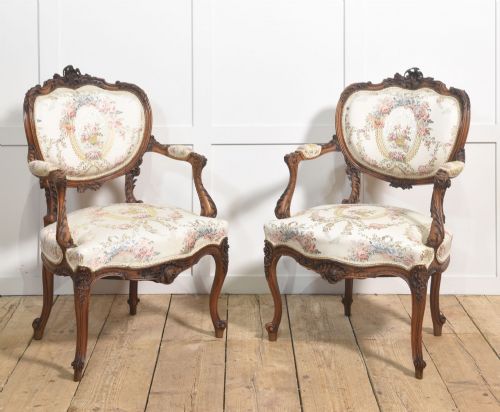
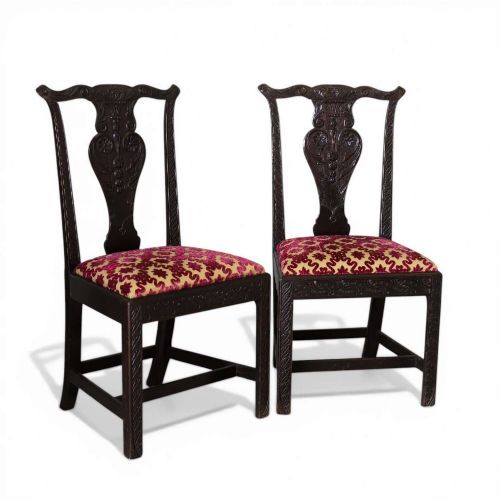
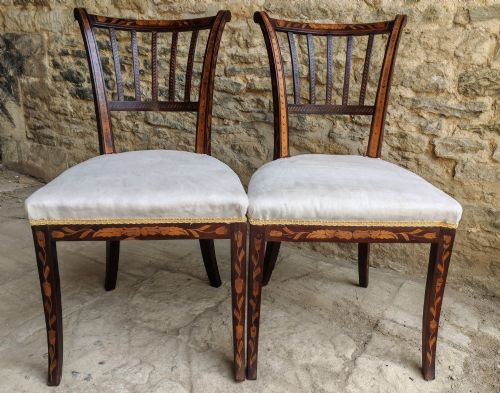
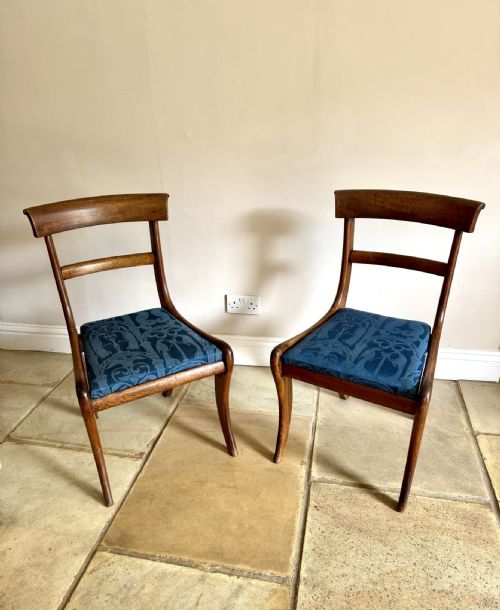

Pair Period Accent Chairs
When you search for pair period accent chairs, you uncover matching seating designed to complement a room's main scheme across centuries of craftsmanship.
Pair Period Accent Chairs
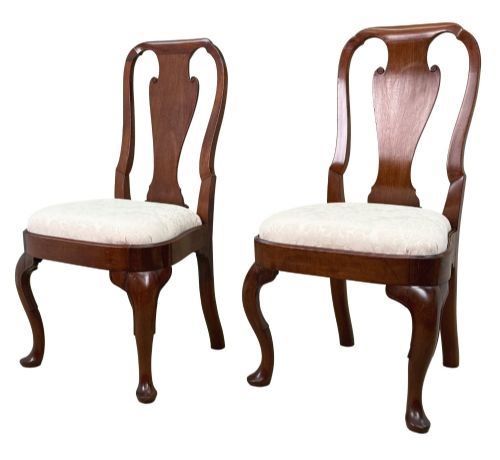
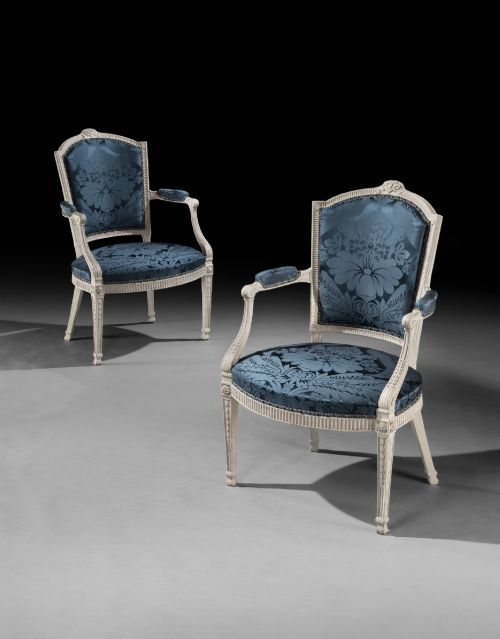
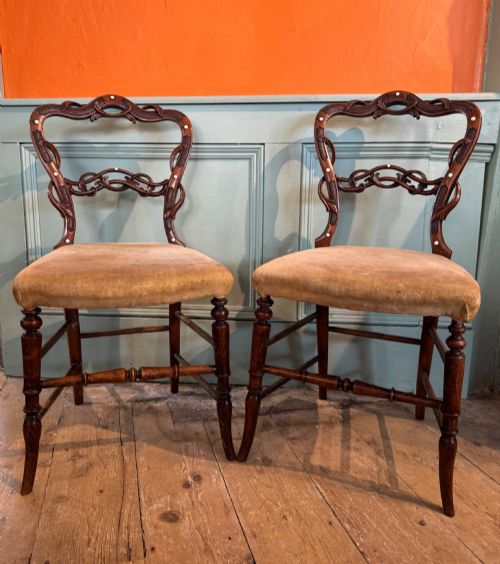
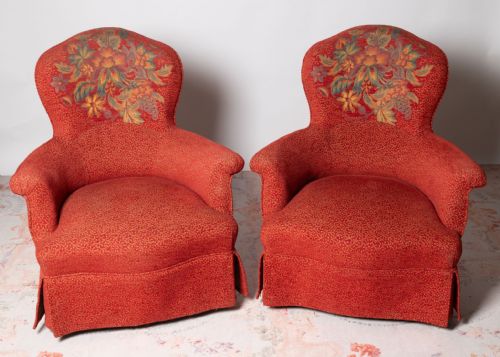
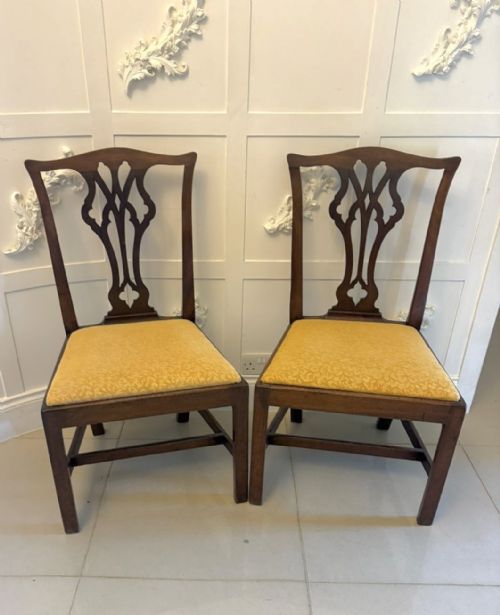
Pair period accent chairs encompass matching seating designed to stand out within a room rather than serve as primary dining furniture. The selection on this page ranges from walnut side chairs of the early eighteenth century to mahogany library or bedroom seating from the Victorian era.
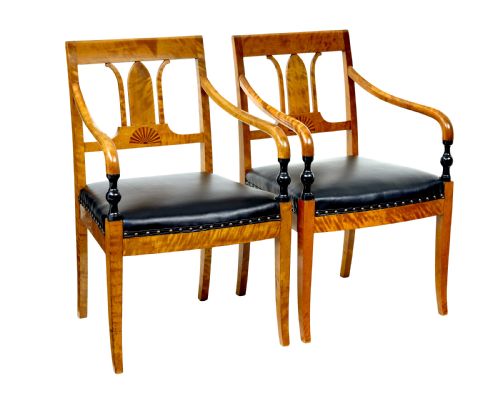
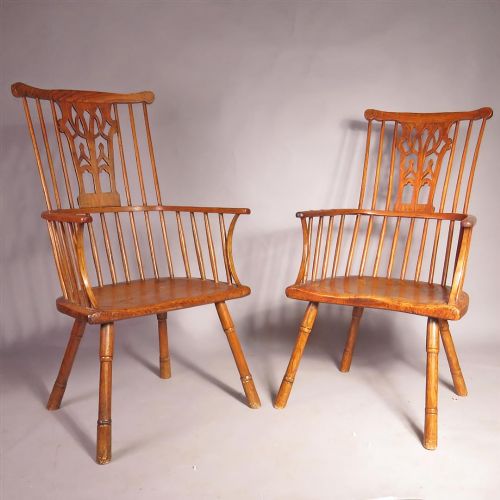
You will encounter various forms across these listings, including open armchairs, side chairs, bergères, and nursing chairs. Origins stretch across English workshops, Scottish makers, and French ateliers influenced by regional design vocabularies.
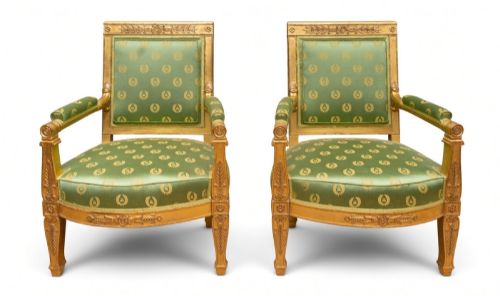
The aesthetic vocabulary draws on distinct periods such as the Georgian, Regency, and Victorian eras, alongside French movements like Louis XVI and the Second Empire. Buyers seek these items to introduce symmetrical balance and historical character into domestic interiors.
Distinguishing finer examples
Quality rests in the crispness of the hand-carved detail on wooden frames and the fidelity of period construction methods. Superior examples retain their original timber surfaces, structural rigidity, and harmonious proportions without intrusive modern alterations.
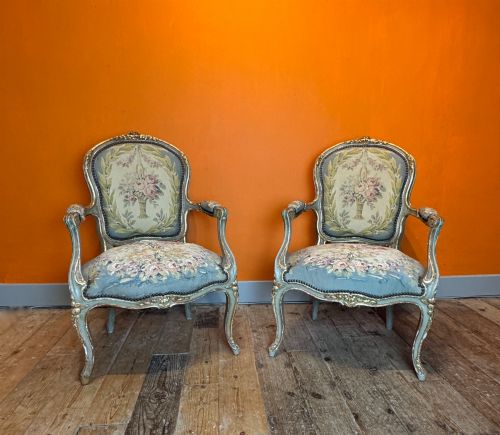
The integration of upholstery, whether through period needlepoint, silk tapestry, or supportive cane work, elevates an example further. Maker attribution or stamps from recognised workshops add tangible weight to an item's historical standing.
Several chairs arrive ready for an upholsterer's needle, offering a blank canvas beneath layers of historical padding.
Charles Tozer·Jacob-Desmalter
The Pair Period Accent Chairs Glossary
- Fauteuil
- An open-framed French armchair with upholstered armrests, typically dating from the seventeenth or eighteenth centuries. These pieces display carved wooden show-wood frames and padded seats.
- Marquetry
- The decorative craft of applying thin veneers of wood and other materials to form geometric or pictorial patterns on furniture surfaces. This technique requires exceptional precision.
- Giltwood
- Timber that has been coated with a thin layer of gold leaf or gold powder. It appears frequently on formal salon and reception chairs.
- Lyre back
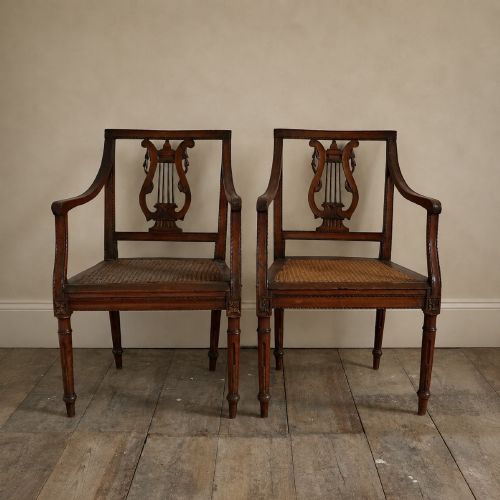
- A chair backrest shaped in the form of an ancient Greek lyre instrument. It is particularly characteristic of Regency period seating design.
- Cane seat
- A seating surface woven from peeled rattan or similar plant material. It provides a lightweight, flexible grid structure popular in bedroom and salon chairs.
Pair Period Accent Chairs: Frequently Asked Questions
How do I use accent chairs in a modern room?
Pair period accent chairs provide symmetrical anchor points when placed flanking a fireplace, console, or window.
Their contrasting historical forms break up uniform contemporary layouts while offering functional secondary seating.
What is the difference between an armchair and a side chair?
Armchairs feature structural armrests designed for relaxed sitting and formal framing. Side chairs lack arms, making them compact enough for dressing tables, halls, or tighter dining arrangements.
Both formats were often produced as matched pairs for balanced interior schemes.
How can I tell a Georgian chair from a Victorian one?
Georgian pieces typically exhibit restrained classical proportions, lighter mahogany or walnut framing, and precise hand-carving.
Victorian chairs lean towards heavier proportions, elaborate scroll carvings, and turned legs fitted with castors.
Are these chairs suitable for daily use?
Most period chairs retain sturdy hardwood frames capable of supporting everyday sitting.
Upholstered sections and cane panels may require professional conservation or re-webbing depending on their age and condition.