


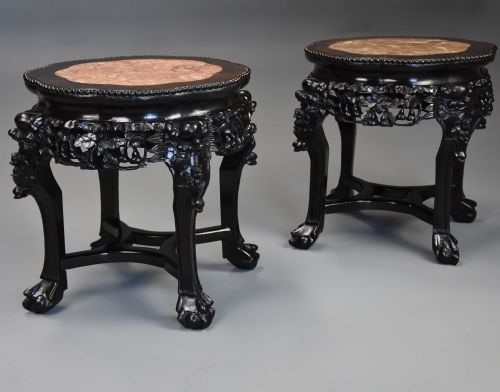

Pair Oriental Stands
Pair oriental stands bring sculptural presence and functional support to rooms through carved timbers, inset marble, and decorative bronze work.
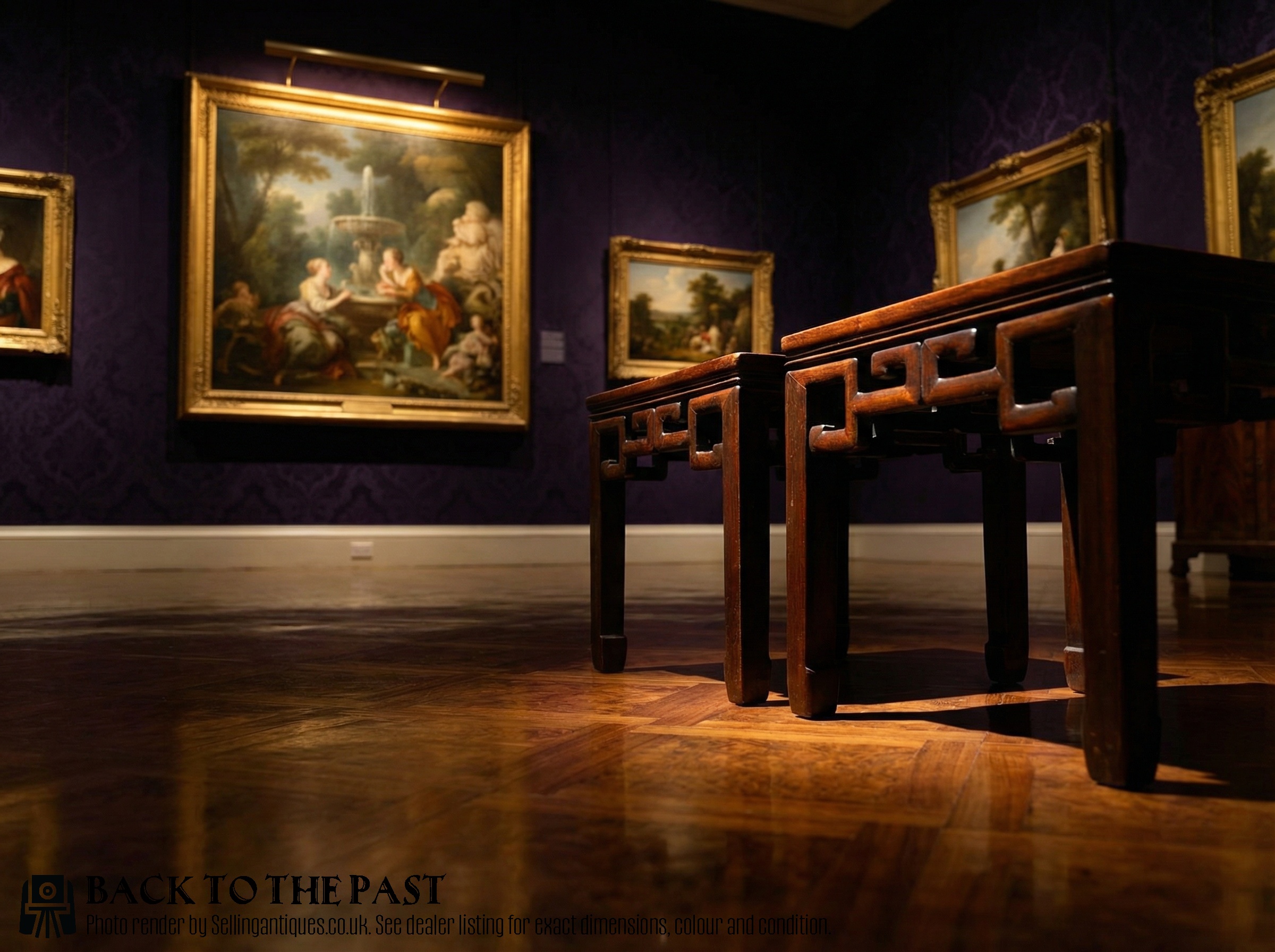
Pair Oriental Stands
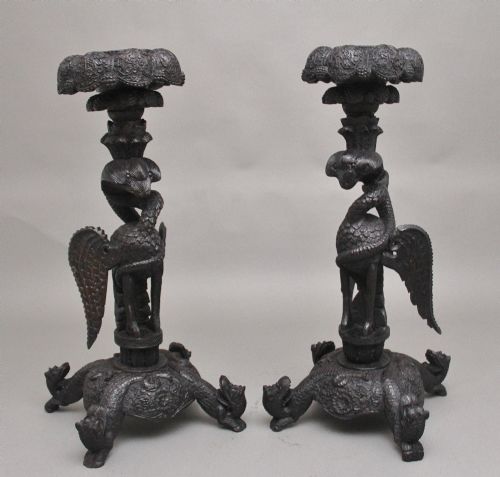
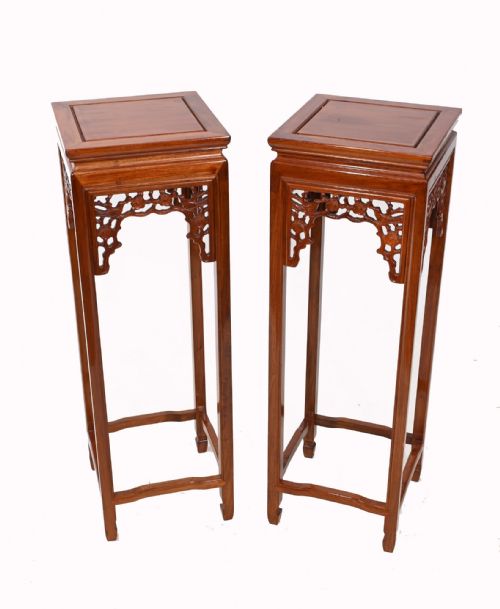
When searching for pair oriental stands, collectors encounter objects ranging from low pot supports and tall pedestal tables to stools and urn holders. These furnishings originate primarily from nineteenth century workshops and later periods, reflecting Chinese Qing dynasty and Japanese Meiji aesthetics alongside Anglo Indian and Chinoiserie interpretations.
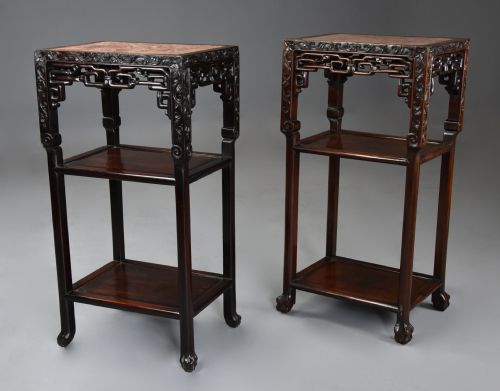
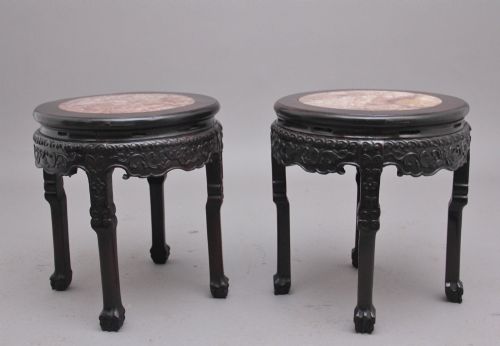
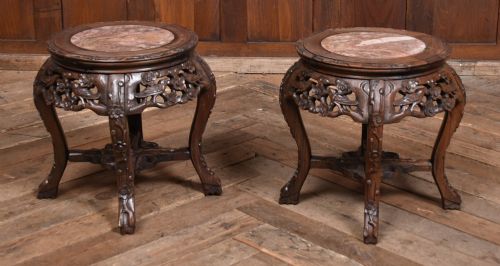
The inventory demonstrates that buyers most frequently meet hardwood tables, plant stands, and stools fashioned for display. Hardwood varieties like hongmu and huali predominate, often incorporating marble inserts, enamel panels, or lacquer finishes to elevate their decorative impact within domestic interiors.
Materials and construction
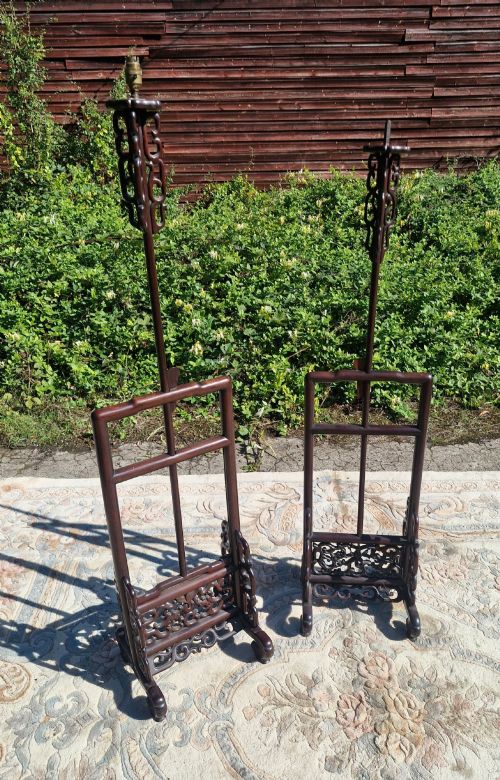
Maker workshops utilised dense timbers such as rosewood, padouk, and burr wood, employing traditional joinery to construct stable frames capable of bearing heavy porcelain vessels or bronze figures. Carved ornamentation often decorates the apron and legs, requiring precise hand tool work by skilled artisans.
Surface enhancement involved multiple layers of lacquer, polychrome painting, or the application of cloisonné enamel and brass fittings. Marble and porcelain panels were set directly into the timber tops of stands and tables to provide durable display surfaces.
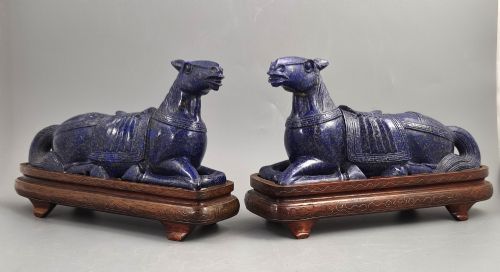
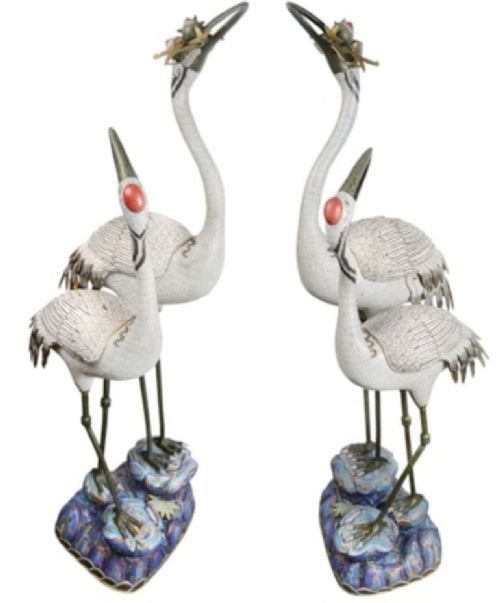
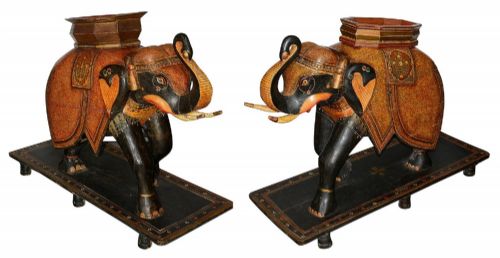
A few remarkable pairs take the unexpected form of carved wooden elephants and imposing cloisonne cranes ready to guard the room.
Quality factors
The standard of a piece rests upon the crispness of the wood carving and the selection of timber grain. Pieces utilising dense, high quality hardwoods like huali display sharper detail in pierced aprons and superior structural integrity compared to softer secondary woods.
Integration of secondary materials also dictates standing in the market. Well fitted rouge marble inserts, intact cloisonne enamel work, and matching original porcelain components separate standard utility items from masterworks of craftsmanship.
The Pair Oriental Stands Glossary
- Hongmu
- A dense, dark traditional Chinese hardwood valued for its weight and fine grain. Furniture makers utilised this timber for formal stands and tables.
- Cloisonne
- Enamelling technique where thin metal wires form raised cells on a bronze or copper base to hold coloured paste. Artisans fired these pieces to create durable decorative surfaces.
- Huali
- A fragrant and highly figured Chinese hardwood belonging to the rosewood family. Carvers favoured this timber for intricate nineteenth century display pieces.
- Pricket candlestick
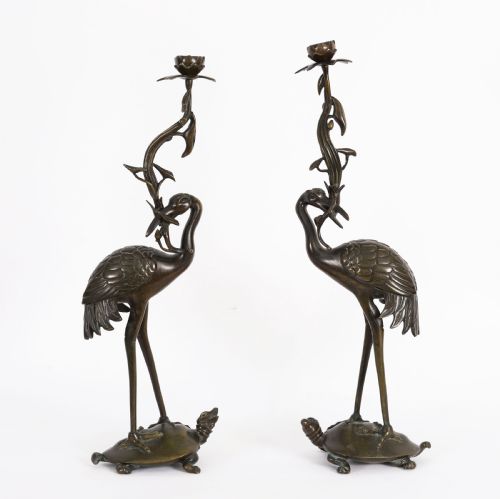
- A lighting device featuring a central spike upon which a candle is mounted. Japanese bronze examples often take this form.
- Chinoiserie
- European decorative style imitating Chinese artistic traditions. Makers applied these motifs to lacquer cabinets, furniture, and screens.
Pair Oriental Stands: Frequently Asked Questions
How do I date these stands?
Dating relies on identifying timber species, carving styles, and construction methods associated with specific periods like the Qing dynasty or Meiji era. Inset materials such as rouge marble or early lacquer techniques provide further chronological clues.
Examining the wear patterns on the feet and the tool marks on internal framing help distinguish nineteenth century examples from later twentieth century reproductions.
Are all these stands made of solid wood?
The listings show that the primary material framework consists of dense hardwoods like rosewood, padouk, and huali. Many items also incorporate secondary materials such as marble, brass, porcelain, and lacquer.
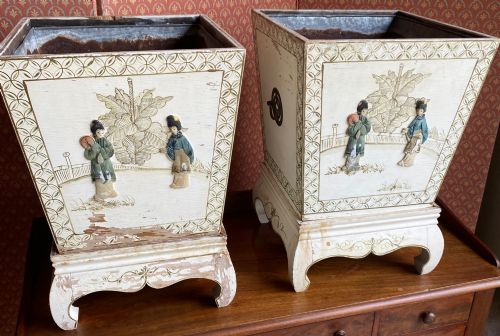
Certain decorative pieces utilise carved plaster, bronze, or polychromed wood, expanding the variety beyond simple timber construction.
How do I style them at home?
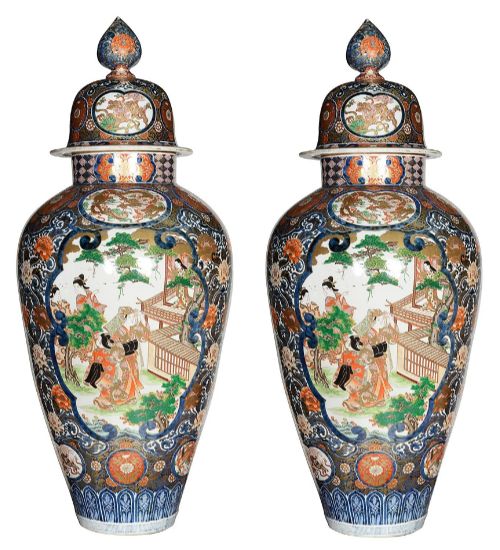
Placed symmetrically in a room, pair oriental stands create visual balance when topped with lamps, urns, or sculptural vessels. Their compact footprint makes them useful as side tables or plant pedestals in smaller spaces.
Matching pairs can be separated to unify different corners of a room or kept together as a focal point for heavier decorative objects.