


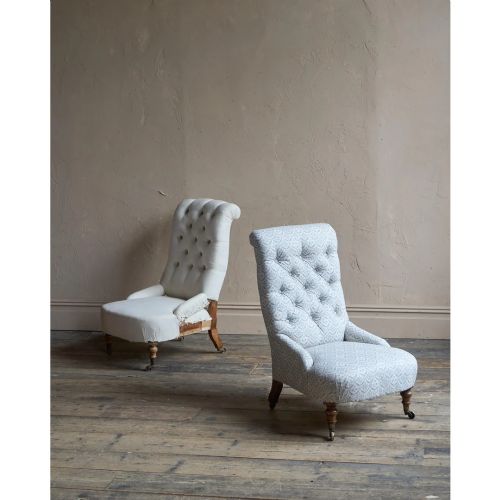
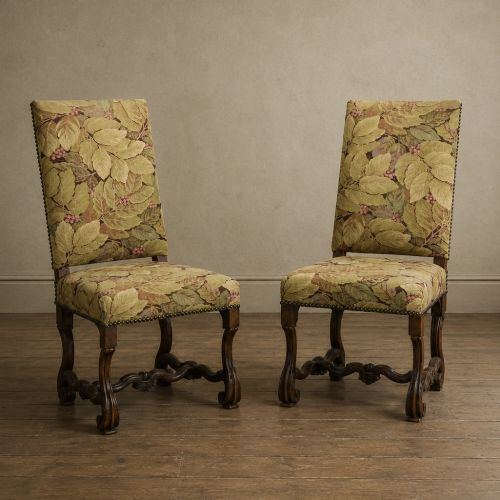
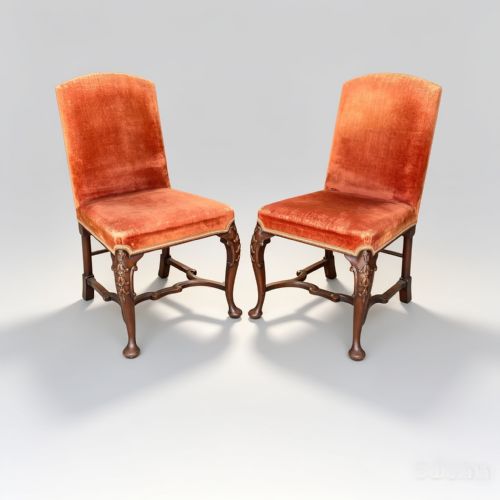
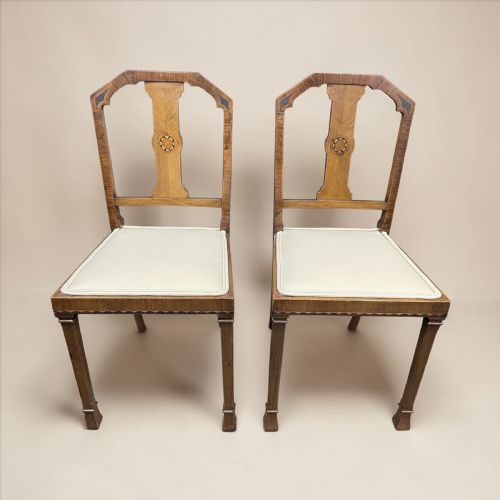
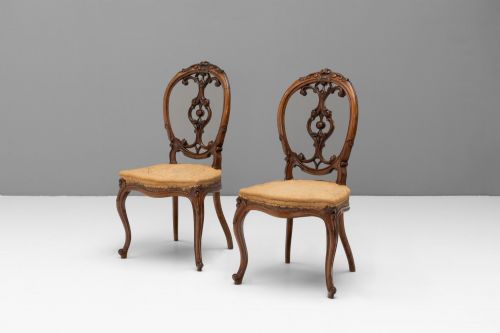

Pair of Walnut Side Chairs
When you search for a pair of walnut side chairs, you enter a tradition of matched seating that spans from the eighteenth century into the twentieth.
Pair of Walnut Side Chairs
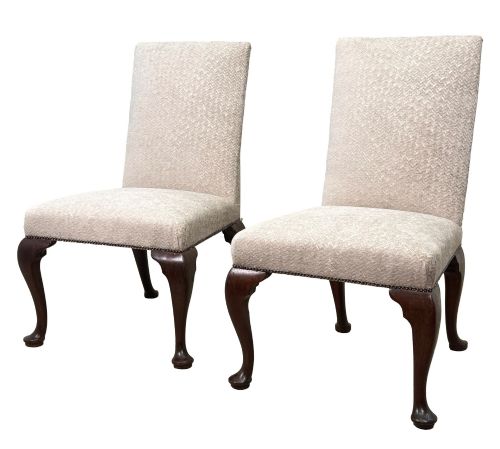
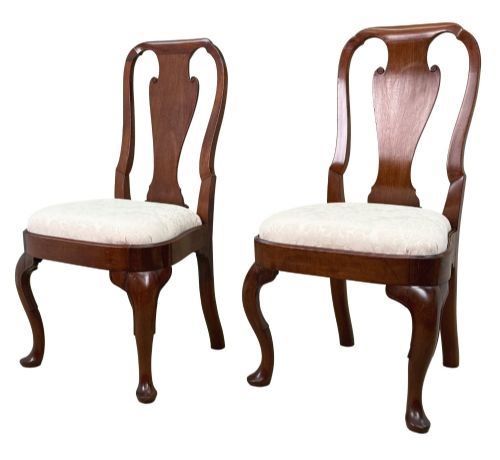
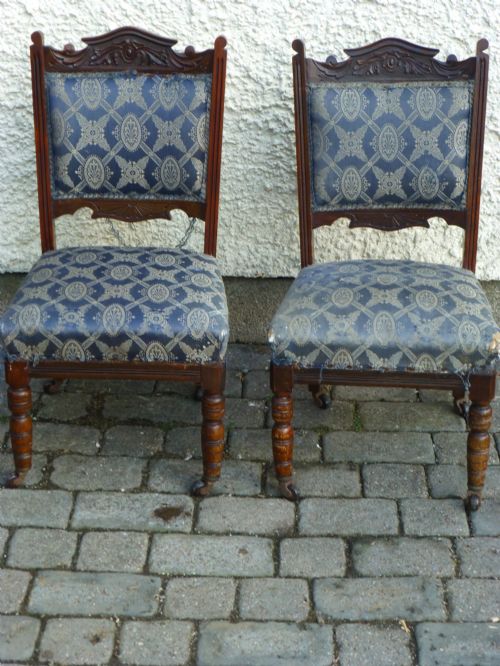
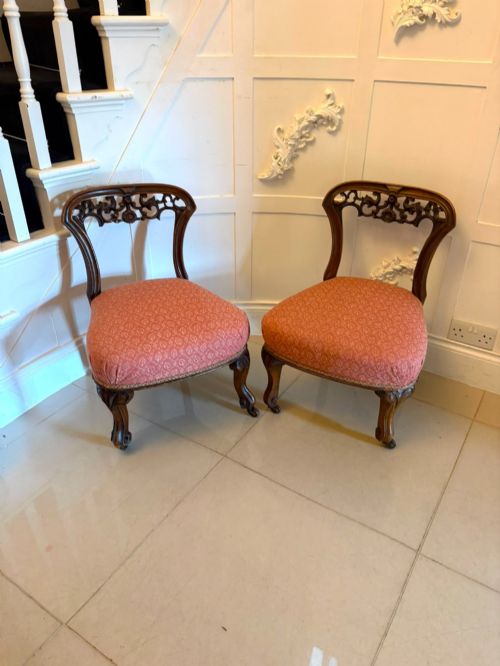
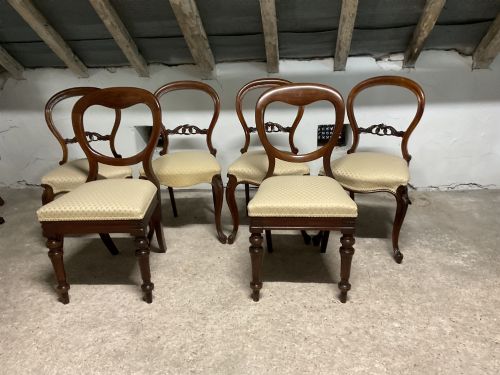
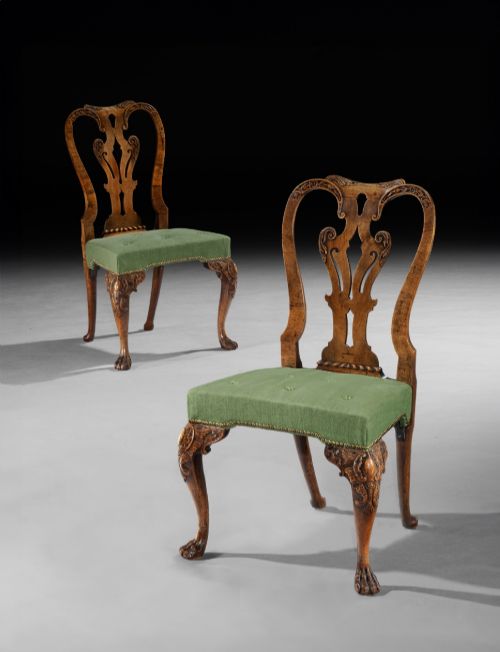
A pair of walnut side chairs brings together matched seating designed for dining rooms, halls, and parlours without the bulk of arms. These pieces most frequently emerge from the Victorian era and the eighteenth century, taking forms such as balloon back dining chairs and carved hall chairs.
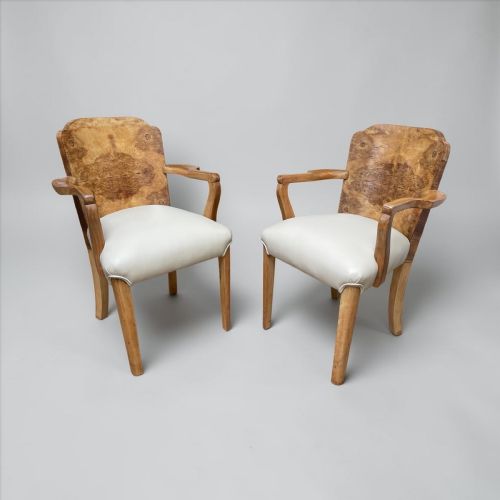
The selection ranges from early Georgian and Queen Anne walnut frames to later revival pieces and Art Deco designs. Buyers encounter everything from caned seats to upholstered versions covered in fabric, leather, or velvet.
How they were made
Cabinet makers utilised solid walnut and walnut veneers over supportive secondary woods, shaping frames with cabriole legs, carved details, and barley twist supports. Joinery relied on traditional mortise and tenon construction to withstand daily weight.
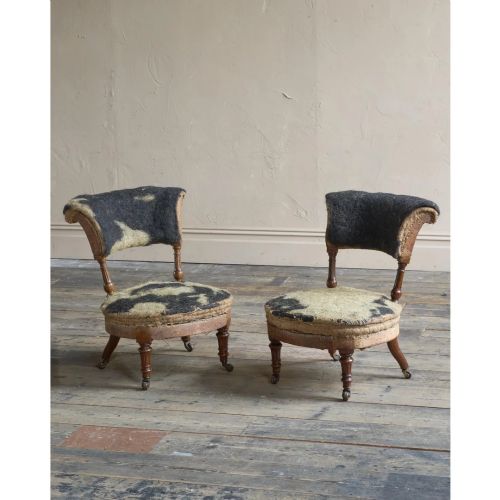
Seating areas received different treatments depending on the period, incorporating cane webbing, drop-in pads, or sprung upholstery covered in leather, velvet, or woven textiles.
Listings feature walnut side chairs spanning the eighteenth, nineteenth, and twentieth centuries, alongside revival styles from the Georgian and Louis periods.
What varies in quality
The standard of carving distinguishes standard production pieces from exceptional ones, particularly in the depth and sharpness of foliate details and scrollwork on the crest rails. Timber selection also dictates grade, with figured walnut grain commanding greater visual depth than plain stock.
Structural integrity of the joints and the preservation of original show wood surfaces without excessive sanding separate well-maintained examples from heavily restored ones.
Charles Tozer·Howard and Sons·Harry and Lou Epstein·Waring and Gillow·Whytock and Reid·Hille·Gillows
The Pair of Walnut Side Chairs Glossary
- Cabriole leg
- A furniture leg that curves outward at the knee and tapers inward to an ankle, common on eighteenth-century and Victorian revival chairs. This profile mimics animal limbs and provides sturdy support without heavy stretchers.
- Balloon back
- An oval-shaped upholstered or open backrest popular during the Victorian period. The curved wooden frame resembles the outline of a hot air balloon.
- Barley twist
- A turned wooden column resembling the spiral shape of twisted barley sugar. This decorative woodworking technique appears frequently on nineteenth-century supports.
- Caning
- Woven rattan or split cane material used to form light, flexible seats and back panels. It requires skilled hand-weaving around the interior frame edges.
- Drop-in seat
- A removable wooden frame insert upholstered independently before dropping into a recess in the chair rails. This design allowed for easier recovering of the textile surface.
Pair of Walnut Side Chairs: Frequently Asked Questions
How do I date a walnut side chair?
Dating relies on combining the form of the backrest, the leg style, and the construction methods visible underneath. Eighteenth-century models often feature simple joinery and dense timber, while Victorian pieces lean toward elaborate machine-assisted carving and balloon shapes.
Secondary woods and the style of the stretchers also offer clues to the era of manufacture. Comparing the piece to documented regional patterns helps narrow down the decade.
Can these chairs be used daily?
Most antique chairs handle normal daily use provided the frame joints remain tight and secure. Regular checking of the glue blocks and legs prevents sudden structural failure during sitting.
Leather and durable fabric upholstery withstand regular use better than delicate antique silks or fragile caning. Placing them away from direct heat sources protects the walnut timber from drying out.
How do I care for walnut wood?
Walnut surfaces respond best to occasional dusting with a soft, dry cloth and minimal waxing to preserve the natural sheen. Avoiding silicone sprays and harsh chemical cleaners prevents damage to the historic polish.
Keeping the chairs away from direct sunlight and rapid temperature fluctuations stops the timber from splitting or warping over time. Maintaining stable indoor humidity preserves both the wood and any applied veneers.
What is the difference between a side chair and an armchair?
Side chairs are built without armrests, designed originally to sit along the sides of a dining table or hallway wall to save space. Armchairs include structural arm supports, offering a more enclosed seating position for a desk or parlour.
Both types shared the same stylistic vocabulary within a given period, allowing makers to produce matching suites of seating. Side chairs usually appear in pairs or sets due to their intended placement around tables.