
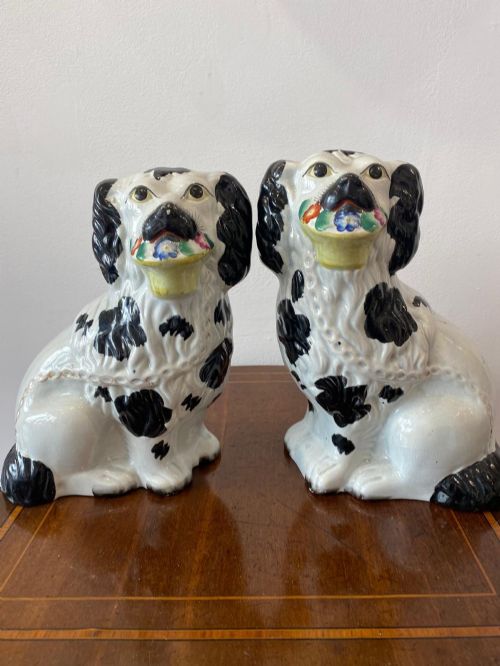


Pair of Wally Dogs
These pair of wally dogs are ceramic figurines that bring traditional charm to a mantelpiece, and buyers seek them out for their classic Victorian character.
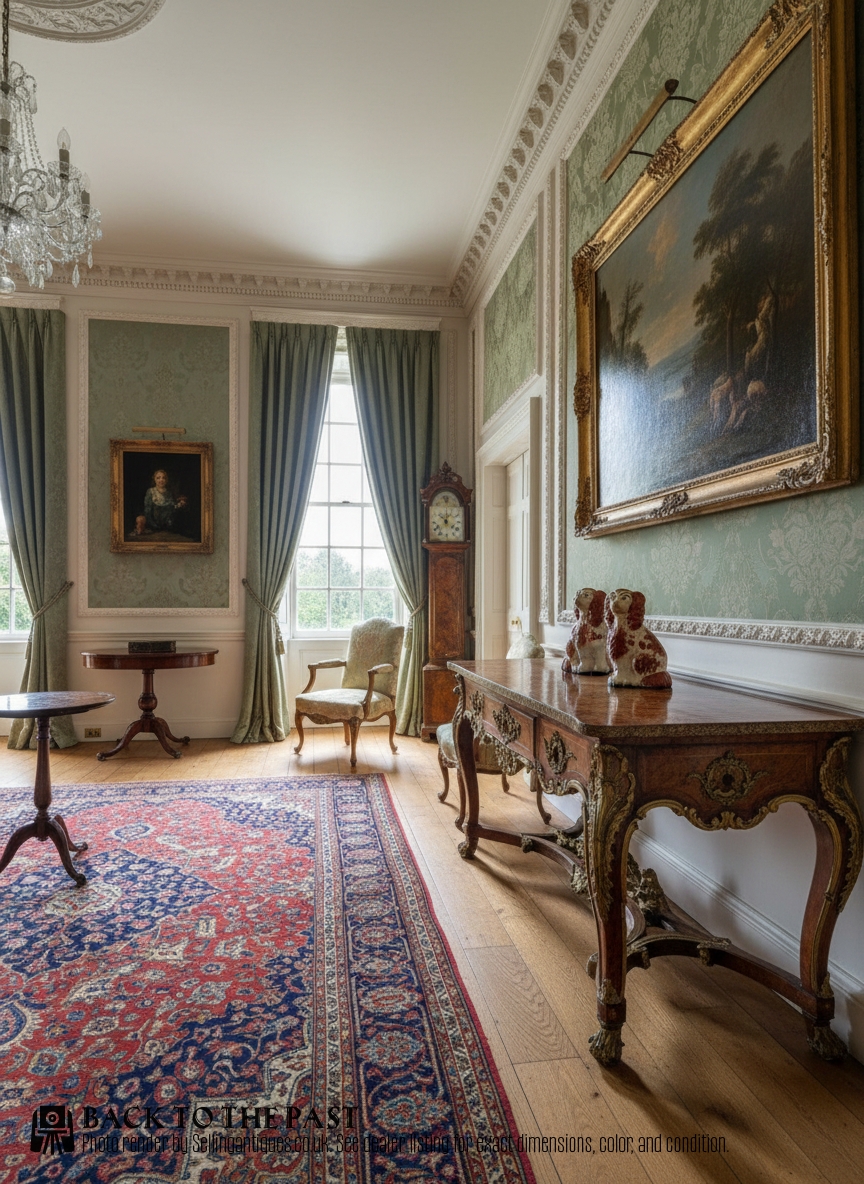
Pair of Wally Dogs
A pair of wally dogs represents the iconic Staffordshire spaniels that sat on hearths across Victorian Britain. These ceramic figures usually stand in matching pairs, facing each other as mirror images.
The pieces appearing here belong mainly to the nineteenth century, spanning decades such as the eighteen-sixties and eighteen-eighties. They take the form of decorative figurines and pottery spaniels designed for domestic display.
Makers shaped these ornamental dogs to mirror the beloved pets of the period, often called comforter spaniels. Their widespread appeal makes them a staple of English traditional interiors.
How they were made
Potters shaped these earthenware figures using ceramic moulds before applying a lead glaze to seal the body. Many examples received hand-painted enamel details in colours like copper lustre, red, black, and white.
Listings span the nineteenth century, featuring earthenware bodies finished with lead glazes, enamel paint, copper lustre, and gilt.
What varies in quality
The fineness of the painting on the face and coat marks the distinction between standard production and superior work. Stronger pieces display crisp brushwork on the eyes, muzzle, and gilt accents rather than hasty application.
Beswick
The Pair of Wally Dogs Glossary
- Staffordshire dogs
- Ceramic figures of spaniels produced in the pottery towns of Staffordshire during the Victorian era. They were traditionally placed on mantelpieces facing inward.
- Wally dugs
- A traditional Scottish dialect term for ceramic mantelpiece dogs. The phrase derives from wally, meaning porcelain or earthenware.
- Copper lustre
- A metallic glaze technique that produces a reflective, coppery sheen on pottery. Potters used this to decorate the coats and collars of spaniel figures.
- Comforter spaniels
- The nineteenth-century term for toy spaniels kept as lap dogs by nobility and middle classes. These live animals served as the direct inspiration for the pottery figures.
- Lead glaze
- A shiny coating containing lead applied to earthenware before firing. This technique gave Victorian figures their characteristic glossy finish.
Pair of Wally Dogs: Frequently Asked Questions
What are wally dogs?
Wally dogs are ceramic spaniel figures made during the nineteenth century in England and Scotland. People traditionally displayed them in pairs on mantelpieces.
They were modelled after popular lap dogs of the Victorian era and remain enduring symbols of domestic hearth decoration.
How old are these dogs?
The examples on this page originate primarily from the nineteenth century, with specific dates clustering around eighteen-sixty to nineteen-hundred.
Victorian makers produced these earthenware figures in large quantities to satisfy middle-class demand for home ornamentation.
How do you display them?
Traditional placement involves positioning the pair on a mantelpiece or shelf so they face inward toward each other.
They sit well on wooden furniture, sideboards, or traditional fireplaces where their bright glazes and painted details stand out.
What materials were used?
Potters constructed these figures using earthenware clay finished with a glossy lead glaze. Artisans added surface detail using enamel paint, gilt, and occasionally glass eyes.
Metallic copper lustre finishes also appear on specific regional variations of the spaniels.