

Pair of Wall Appliques
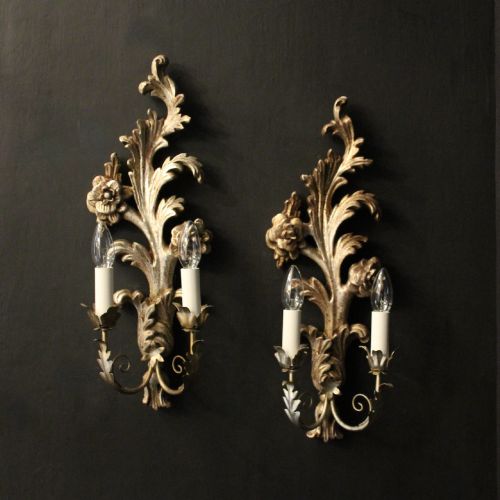
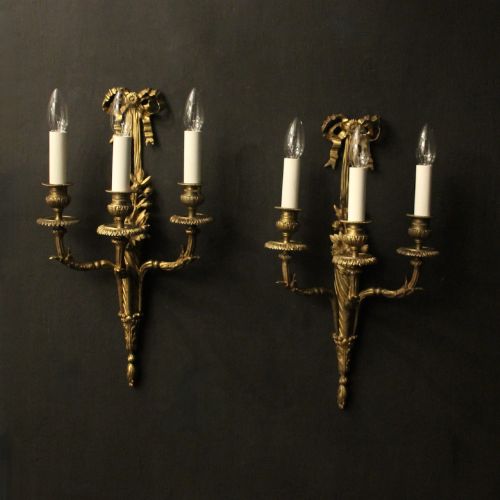
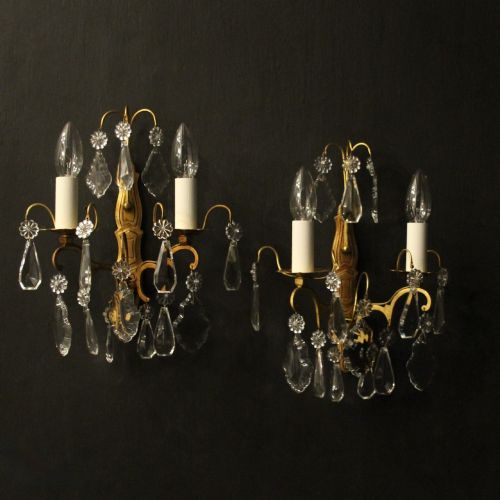
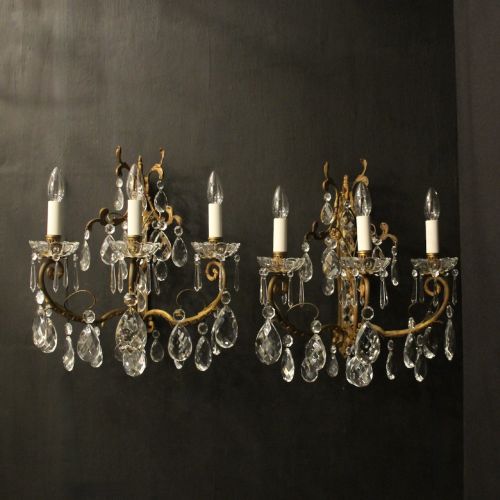
A pair of wall appliques brings symmetry and reflected illumination to a room, drawing the eye upwards with cast metal and carved wood.
Pair of Wall Appliques
When you search for a pair of wall appliques, you are looking at decorative wall-mounted light fittings designed to hold candles or electrical wiring. These fixtures range from single-arm brackets to multi-branched candelabras designed for symmetrical placement.
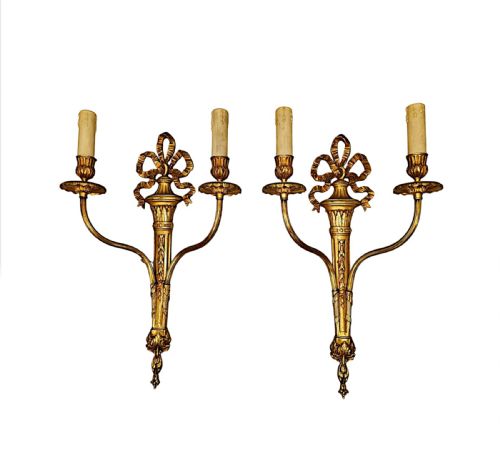
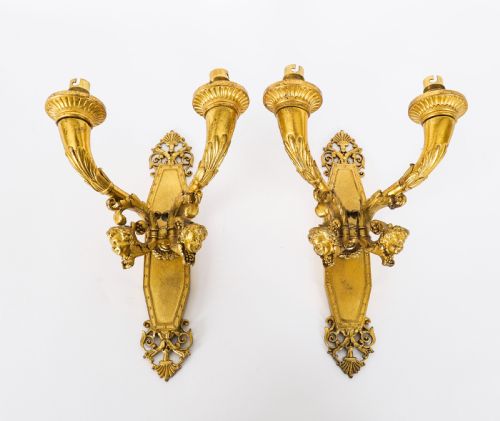
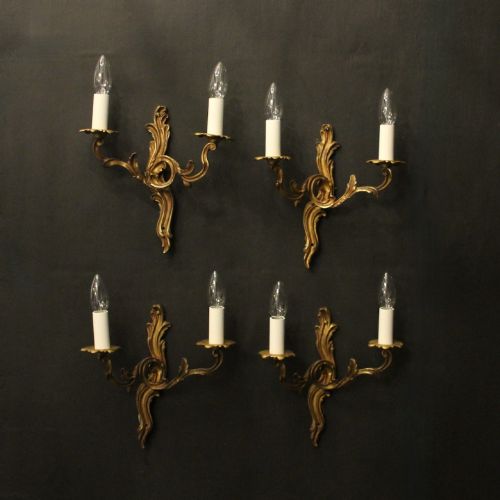
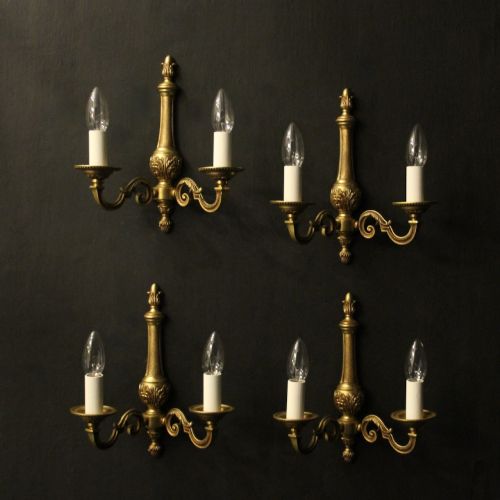
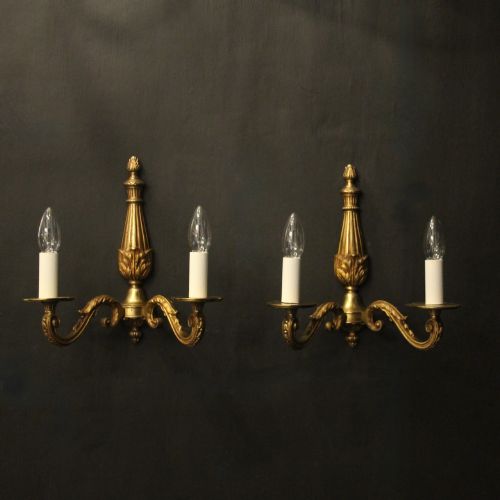
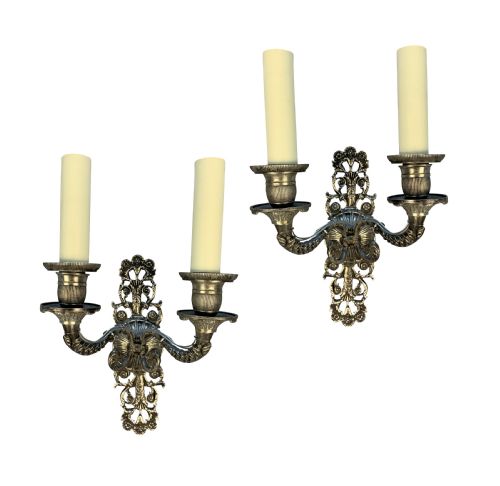
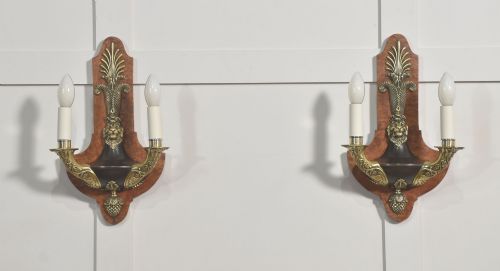
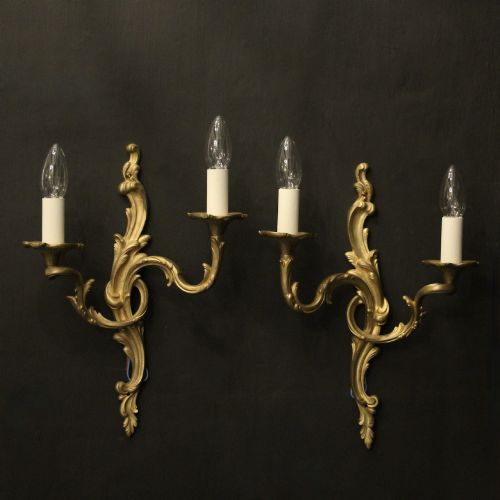
The versions you are most likely to meet on this page originate predominantly from French and Italian workshops spanning the eighteenth century to the early twentieth century. Common stylistic expressions include French Rococo, Louis XVI, and Empire designs featuring twin or triple arms.
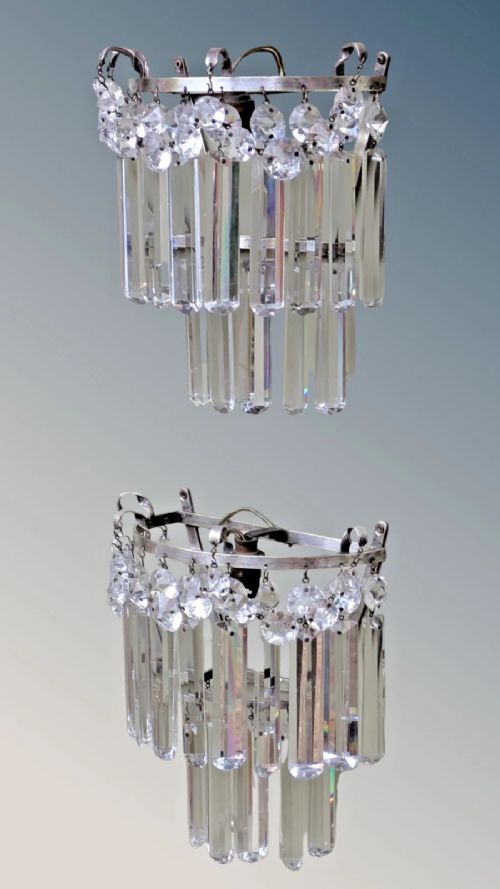
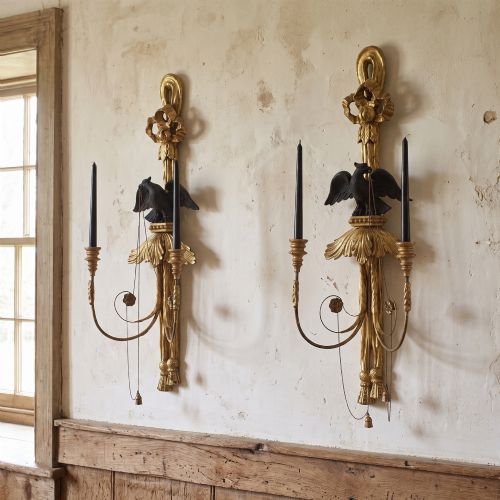
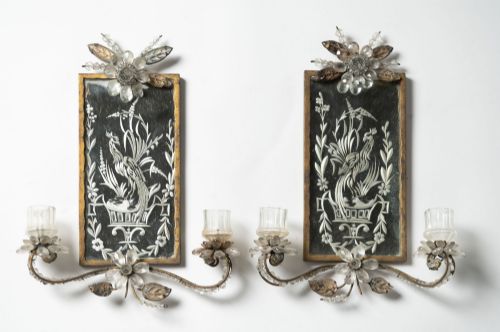
Materials span cast metals like brass, bronze, and ormolu alongside hand-carved giltwood and cut crystal. They appear frequently in matched pairs or larger sets intended to flank mirrors, paintings, or fireplaces.
How they were made
Metal appliques utilise brass, bronze, or copper alloy cast in sections, which are then chased by hand to sharpen details before receiving a layer of fire gilt, ormolu, or silver plating. Giltwood alternatives employ timber carved by hand and coated with gold leaf applied over a prepared gesso ground.
Glass and crystal components are mould-blown or cut, then wired or pinned to the metal backplates using traditional brass wire. Assembly relies on threaded rods, nuts, and pins rather than modern welding, keeping the structural components serviceable over centuries.
Listings feature pieces spanning the eighteenth century through to the nineteen thirties, encompassing French, Italian, and English origins.
What varies in quality
The crispness of the chasing on bronze and ormolu determines the visual depth of foliage, scrolls, and figural elements. Finer pieces retain sharp relief and varied surface textures, whereas cheaper castings appear soft and uniform.
Carved wooden appliques depend on the precision of the hand-carving in the gesso and wood, where deep undercut details indicate superior craftsmanship. The preservation of the original gilding and the weight of the metal backplate also signal higher-grade production.
Maison Baguès·Henri Picard
The Pair of Wall Appliques Glossary
- Ormolu
- Gilded bronze produced by applying a mercury and gold amalgam to a bronze base and heating it to vaporise the mercury. This technique creates a durable, deep golden surface.
- Giltwood
- Timber, usually lime or pine, that has been carved, coated with layers of gesso, and covered with thin sheets of gold leaf. It is lighter than cast metal.
- Applique
- A decorative wall-mounted light fitting or sconce designed to hold candles or lamps. The term is often used interchangeably with wall lights.
- Chasing
- The manual process of refining a metal casting with small punches and hammers to sharpen details and textures. Fine chasing distinguishes high-end foundry work.
- Gesso
- A plaster mixture applied to wood surfaces as a smooth base for gilding and painting. It allows intricate relief work to be moulded before applying gold leaf.
Pair of Wall Appliques: Frequently Asked Questions
How were wall appliques used?
These fixtures were mounted on walls to hold candles, which reflected light off mirrors, polished panels, and gilded surfaces to brighten grand interiors.
Over time, many pairs were adapted for electricity while retaining their original structural brackets and decorative arms.
How do I tell periods apart?
Stylistic cues point to specific eras, such as the asymmetrical scrolls of Rococo designs or the strict symmetry and classical motifs of the Empire style. Examining the construction methods, such as hand-cut threads and cast bronze thickness, helps confirm the age.
Earlier eighteenth and nineteenth-century pieces show heavier metal casting and hand-chased details, whereas twentieth-century reproductions often rely on standardised fittings.
Can these be wired for electricity?
Most antique metal and wood appliques can accommodate electrical wiring safely through existing channels or by running discreet cord down the wall channel. Professional installation ensures that historic components are not compromised during rewiring.
Insulating sleeves and modern candle tubes are often integrated to meet current safety standards without altering the visible exterior.
How do I care for gilt surfaces?
Dust gilt bronze, ormolu, and giltwood gently with a soft, dry brush to prevent abrasive particles from scratching the delicate gold leaf or metal surface. Avoid chemical cleaners and polishes, which strip away the historic gilding.
Keep them away from direct moisture and excessive heat sources to preserve the gesso and underlying timber or metal.