

Pair of Tub Armchairs
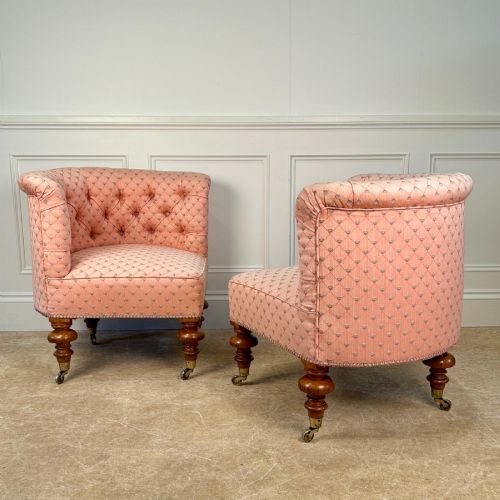
A pair of tub armchairs brings enveloping comfort and refined seating to a room, offering curved backs that wrap neatly around the sitter.
Pair of Tub Armchairs
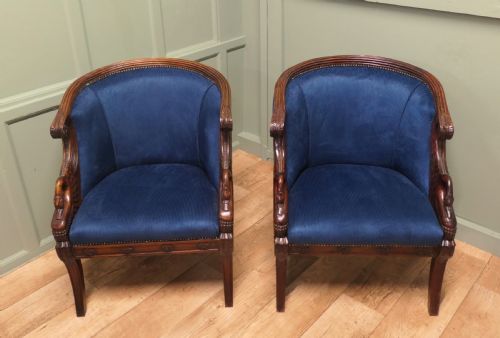
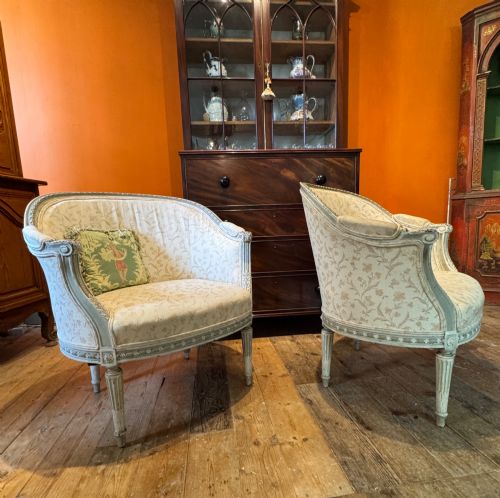
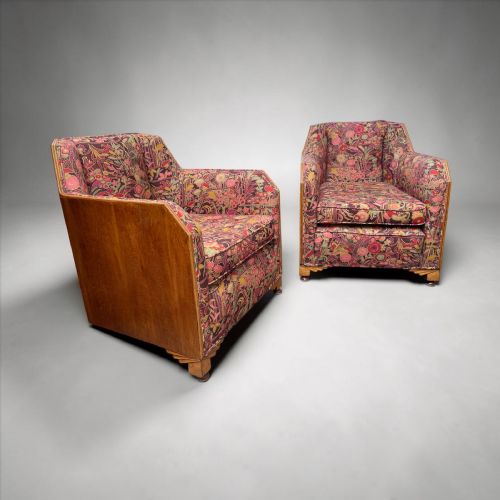
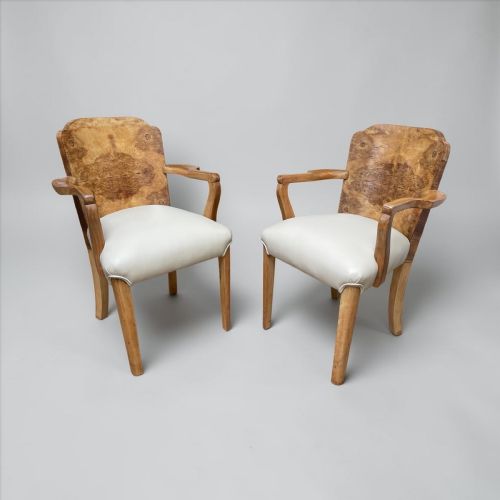
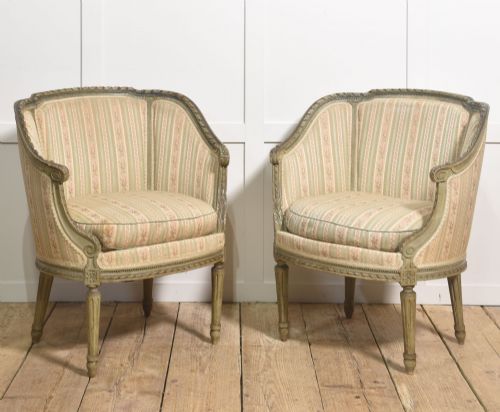
A search for a pair of tub armchairs uncovers matching seats defined by a continuous curved back and arms forming a single, rounded enclosure. These twin chairs appear frequently in Victorian, Edwardian, and Art Deco designs, alongside French iterations from the nineteenth and early twentieth centuries.
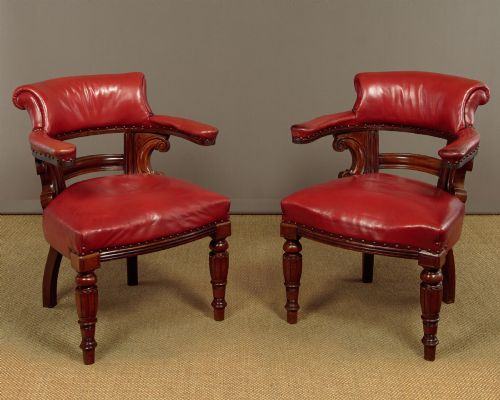
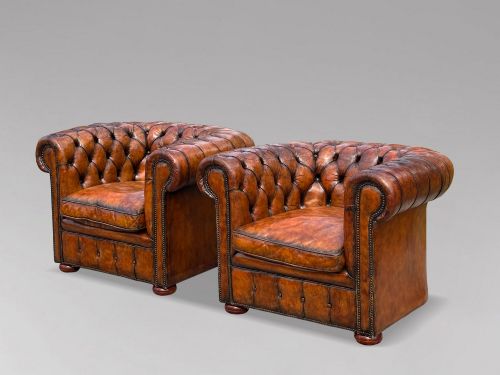
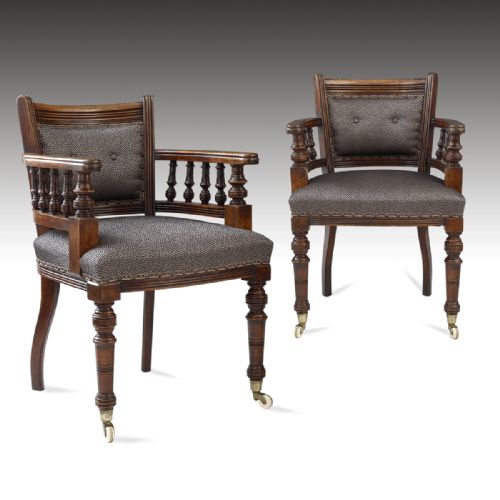
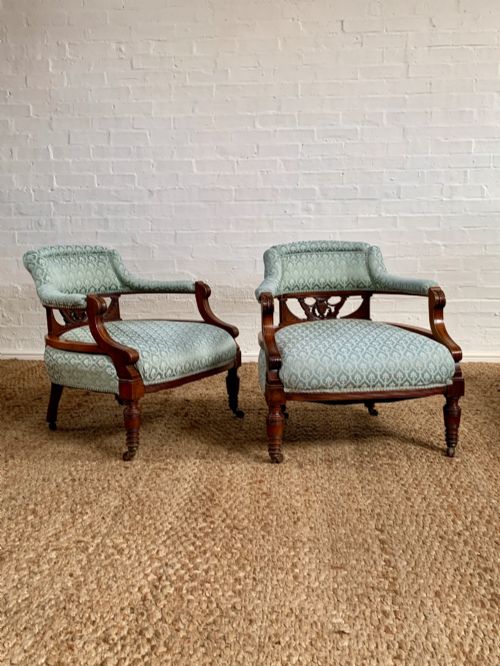
The selection ranges from compact mahogany and walnut salon seating to low leather club chairs and painted French bergères. Buyers encounter matching pairs designed for libraries, studies, and drawing rooms, often featuring upholstered barrel backs or open cane work.
Originating across English and continental workshops, these matched seats provide symmetrical arrangement options for firesides or twin desk placements. The surviving examples demonstrate how Victorian and Edwardian makers adapted the enclosed circular form for both formal reception spaces and comfortable domestic daily use.
Construction and materials
Cabinetmakers constructed the frames primarily from dense hardwoods such as mahogany, walnut, oak, beech, and birch, often steam-bending timber to achieve the characteristic curved tub profile. Structural integrity relied on mortise and tenon joints, sometimes reinforced with brass fittings or inlaid stringing.
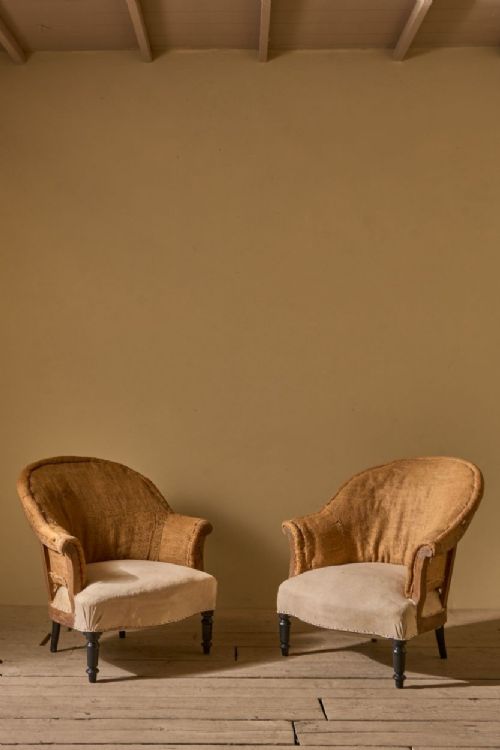
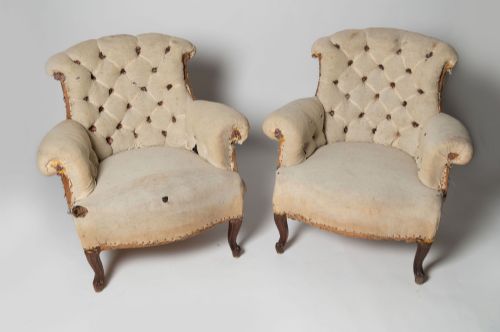
Upholstery techniques combined traditional horsehair stuffing and coil springs secured with webbing, finished in leather, velvet, damask, hessian, or original painted surfaces. Cane panels appeared in lighter bergère frames, while decorative elements included carved wooden details and brass nailhead trim.
Listings feature mahogany, walnut, oak, and beech frames paired with leather, cane, and diverse woven textiles across multiple centuries.
Assessing quality and craftsmanship
The distinction between standard commercial seating and superior work rests on the precision of the timber frame joinery and the integrity of the curved wood. Master makers ensured the continuous back rail maintained structural strength without relying on excessive glue or visible external fasteners.
Materials dictate longevity, with dense mahogany and walnut framing outlasting softer woods, while original leather patination or hand-carved detailing elevates the stature of a pair. Upholstery execution, from supportive springing to hand-stitched edging, separates ordinary utility pieces from fine salon seating.
Hille·Harrods, London
The Pair of Tub Armchairs Glossary
- Tub chair
- An armchair featuring a continuous curved back and arms that form a single low, rounded enclosure. This shape surrounds the sitter for added draught exclusion.
- Bergère
- An enclosed armchair with stuffed upholstery on the back and armrests, typically featuring an exposed wooden frame. Many examples incorporate woven cane sides.
- Crapaud
- A low, heavily upholstered French armchair with a fully sprung tub back and short legs, popular during the nineteenth century.
- Smoker's bow
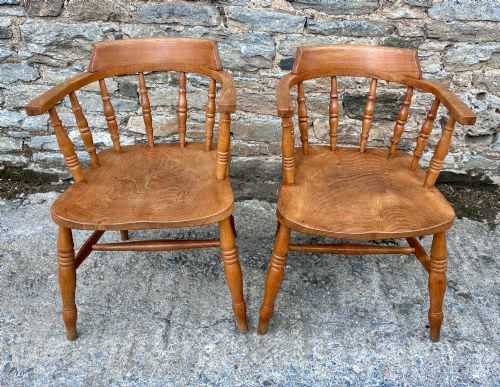
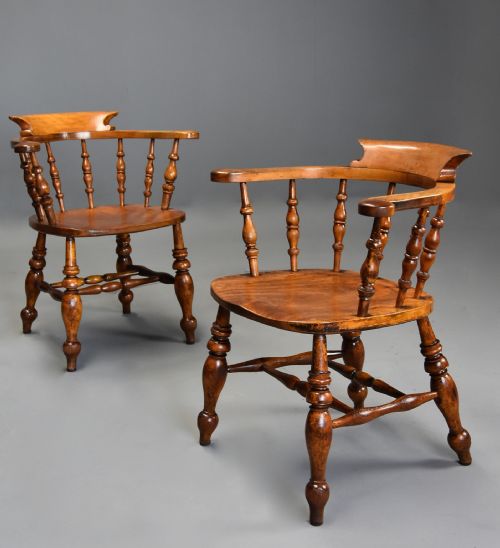
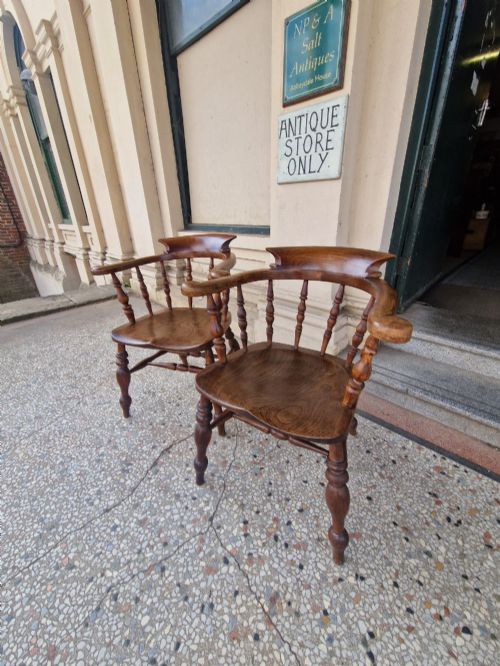
- A sturdy nineteenth-century wooden armchair with a rounded spindle back, often utilised in captains' offices and country houses.
- Show-wood
- Exposed polished timber on a chair frame where the wood grain remains visible rather than being entirely covered by upholstery.
Pair of Tub Armchairs: Frequently Asked Questions
Where should I place a pair of tub armchairs?
These matching chairs work well positioned symmetrically opposite a fireplace, flanking a low table, or placed together in a study for balanced seating.
Their enclosed circular profile also suits bedroom corners or quiet reading areas where dual matching seats create an intimate conversation space.
How do I identify the period of my chairs?
Dating relies on examining the timber species, upholstery construction methods, and stylistic cues such as Victorian buttoning or Art Deco geometry.
Earlier nineteenth-century pieces often display heavier mahogany frames and hand-stitched horsehair stuffing, whereas 1930s examples lean towards streamlined forms or lacquered surfaces.
Are these chairs suitable for daily seating?
Most surviving examples were built for domestic drawing rooms or libraries using durable hardwood frames and supportive internal coil springs.
While robust enough for regular use, vintage leather and antique fabric benefit from sensible placement away from direct heat sources and strong sunlight.
What is the difference between a club chair and a tub chair?
Club chairs generally offer deeper, lower, and wider proportions upholstered in thick leather, designed purely for relaxed lounging.
Tub chairs tend to feature a more upright, tightly curved barrel back that encloses the sitter in a compact, supportive posture.