

Pair of Throne Chairs
When you set out to acquire a pair of throne chairs, you are looking at substantial ceremonial seating designed to dominate a room.
Pair of Throne Chairs
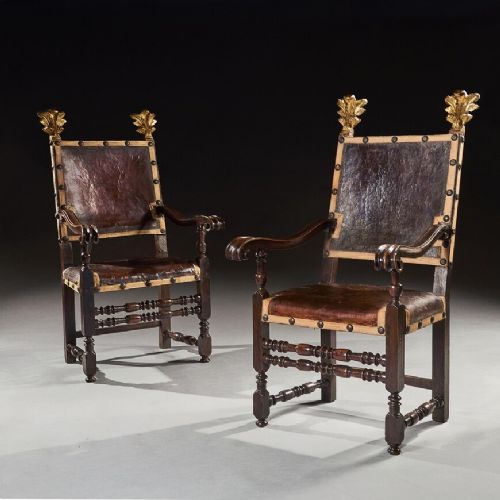
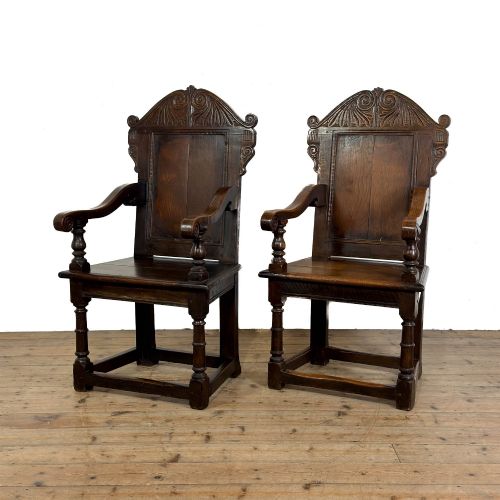
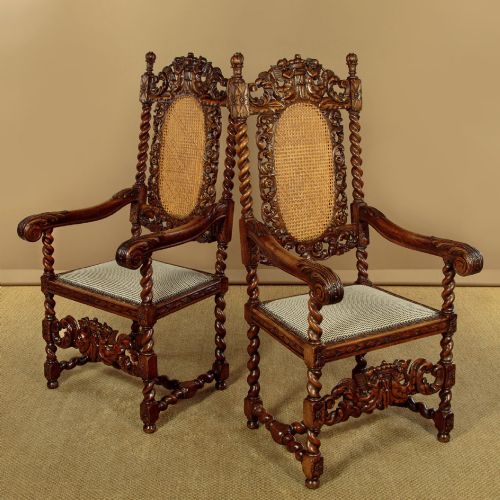
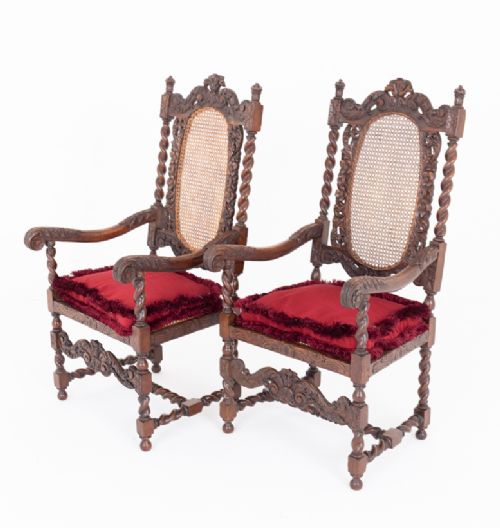
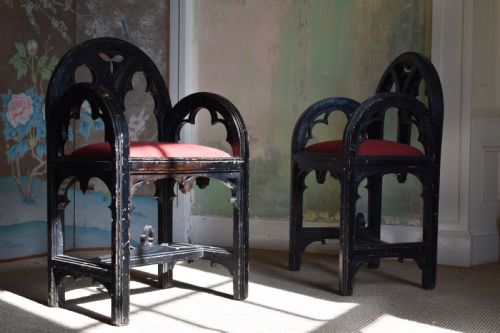
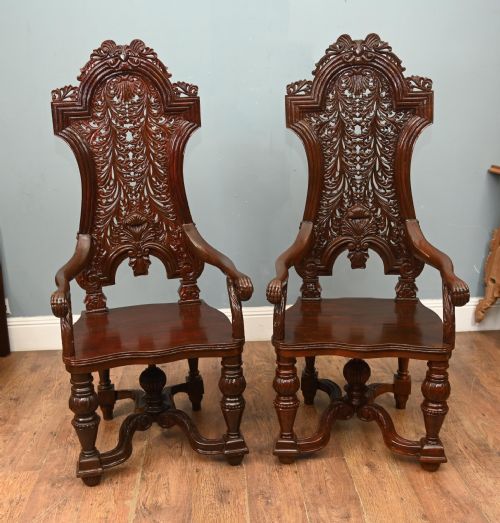
A pair of throne chairs encompasses heavy ceremonial seating, imposing armchairs, and high-backed hall chairs originating predominantly from the nineteenth century alongside eighteenth-century Italian examples. These items draw heavily on historical revivals, manifesting as Gothic, Baroque, Renaissance, and Jacobean expressions.
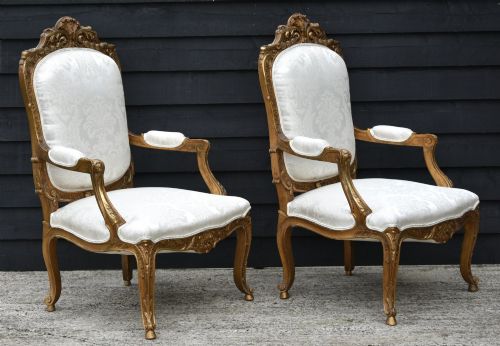
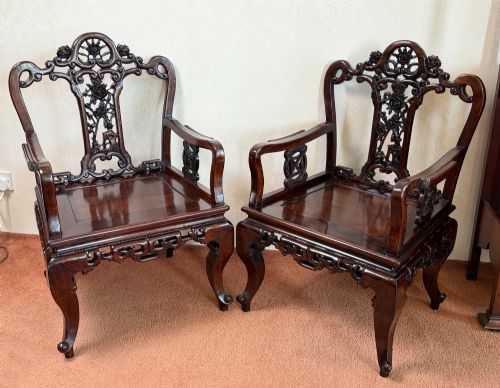
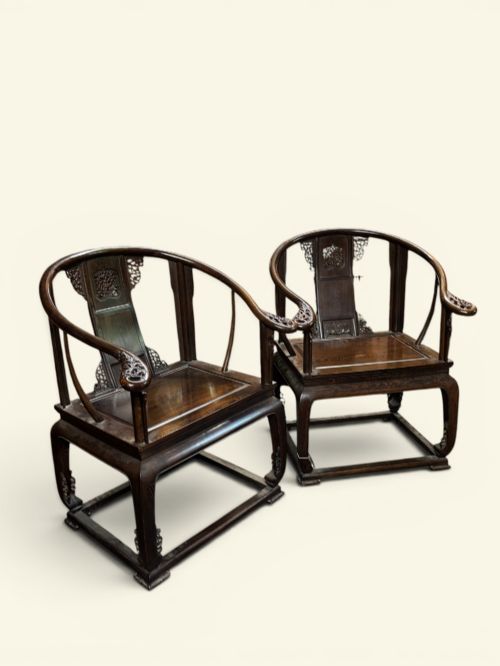
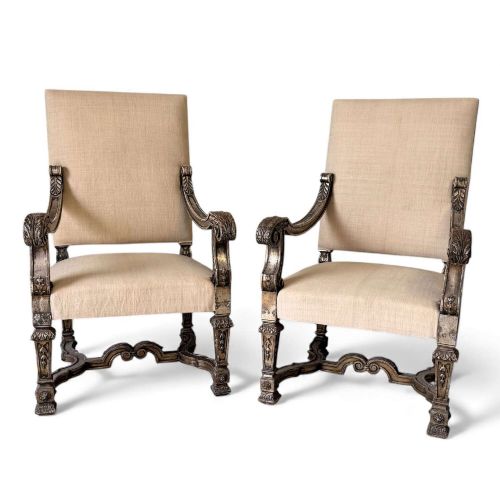
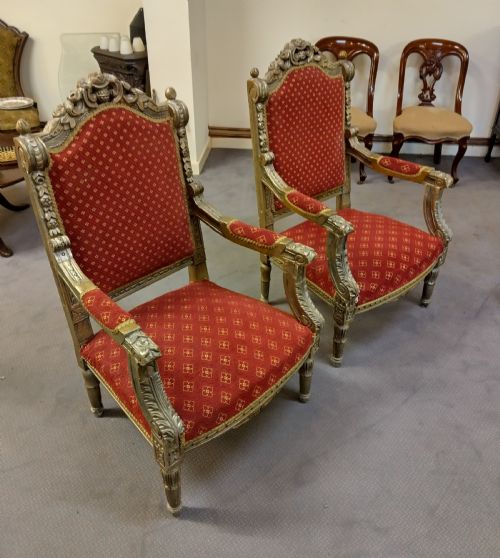
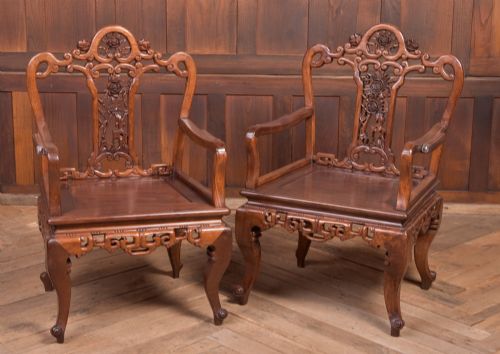
The heavy oak Victorian Gothic variants and the intricately carved Chinese hardwood and hongmu models appear frequently across the records. Buyers also encounter French giltwood, Italian parcel-gilt walnut, and simpler wainscot or panelled formats.
Materials and Construction
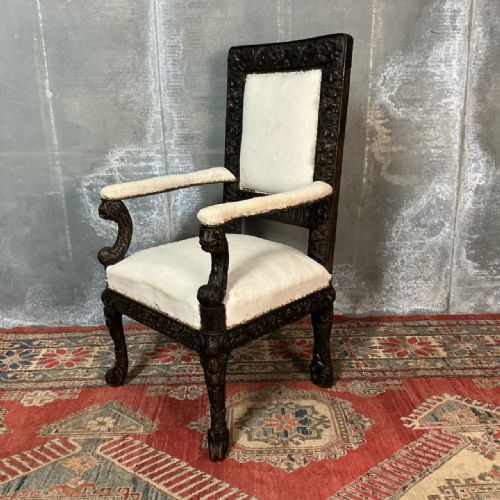
Carpenters and cabinetmakers utilised solid timbers such as oak, walnut, teak, elm, and exotic hardwoods, joining structural components with traditional joinery methods. Dense carving defines the ornamentation, yielding high-relief scrolls, heraldry, figures, and foliage.
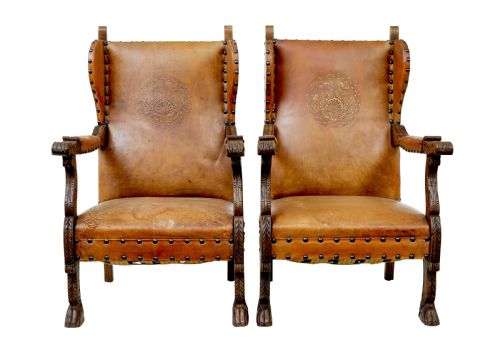
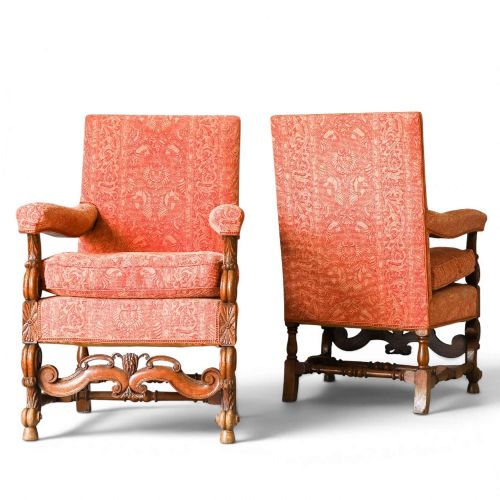
Upholstery forms an integral part of the fabrication, employing embossed leather, velvet, tapestry, and buttoned textiles secured with decorative brass tacks or webbing.
Listings demonstrate a strong prevalence of nineteenth-century oak, walnut, and Chinese hardwood fabrication within revival styles.
Defining Characteristics of Superior Examples
Depth and crispness of hand-carved detail separate ordinary seating from exceptional specimens, particularly where figures, crests, and complex foliate motifs appear. Timber selection dictates durability and visual weight, with dense, highly figured grain commanding greater presence.
Integrity of structure and authenticity of surface finish determine long-term worth, distinguishing pieces retaining their original gilding, patinated leather, or intact upholstery frameworks from those subject to heavy alteration.
The Pair of Throne Chairs Glossary
- Wainscot
- A wooden panelled chair construction featuring a solid back and box seat, typical of early vernacular seating. These sturdy forms often served civic or domestic hall use.
- Giltwood
- Timber treated with a thin layer of gold leaf or metallic finish to simulate solid gold decoration. This technique highlights carved details in Baroque and Rococo revival pieces.
- Hongmu
- A traditional Chinese term denoting dense, dark hardwoods used for high-status furniture. This heavy material accepts intricate carving without splintering.
- Carolean
- A decorative style spanning the late seventeenth century, characterised by rich walnut frames and scrollwork. Pieces in this manner display crown and scroll motifs.
- Parcel-gilt
- A decorative treatment where only specific portions of a wooden object receive gilding while the underlying timber remains visible. This contrasts golden highlights with dark walnut or oak.
Pair of Throne Chairs: Frequently Asked Questions
What distinguishes a throne chair from a standard armchair?
Throne chairs possess elevated, imposing backs, heavier timber frames, and dense sculptural carvings intended to project authority and status.
They scale larger than standard domestic seating and frequently incorporate architectural elements such as canopies, high headrests, or heraldic arms.
How do I place a pair of throne chairs in a modern interior?
These imposing seats function best as anchor pieces in large spaces, flanking a prominent fireplace, sideboard, or architectural focal point.
Their substantial physical presence requires adequate clearance so the carved details and high backs remain fully visible.
How do I identify a Gothic Revival throne chair?
Gothic Revival examples display pointed arch motifs, tracery, linenfold panels, and heavy structural oak framework.
Victorian makers adopted these medieval ecclesiastical designs to create dramatic, solemn hall and library seating.
Are Chinese hardwood throne chairs different from European ones?
Chinese throne chairs utilise dense exotic timbers like hongmu or elm, featuring intricate openwork carvings and horseshoe-back or panelled configurations.
They rely on joinery traditions distinct from European cabinetmaking, though they share an identical function as seats of authority.