






Pair of Temple Jars
A pair of temple jars brings symmetry and striking colour to a mantel or console, offering classical proportions in porcelain and ceramic.
Pair of Temple Jars
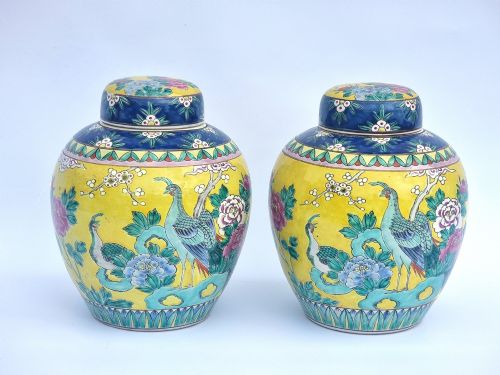
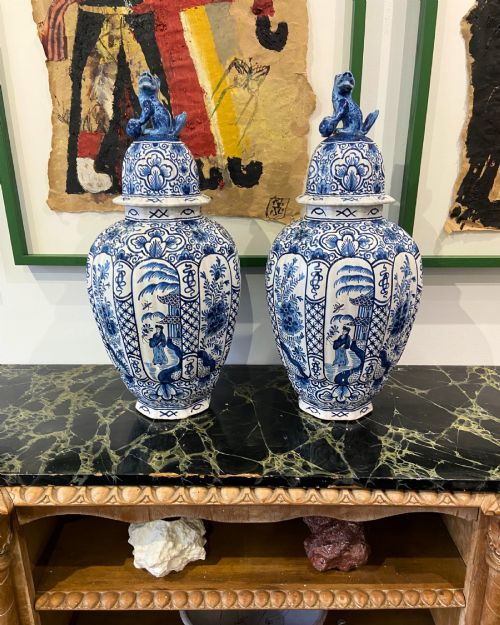
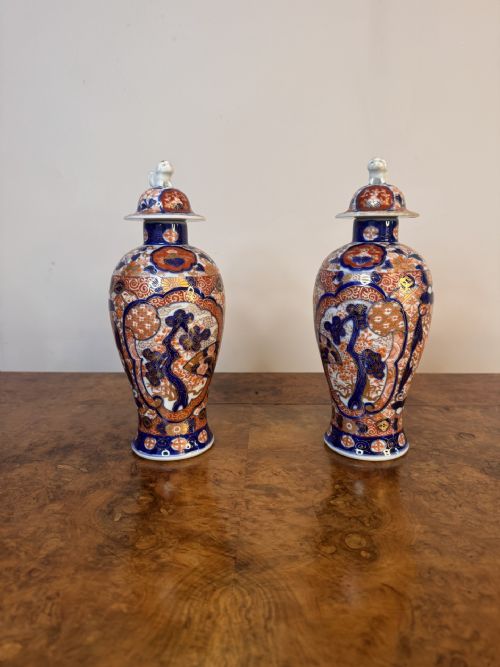
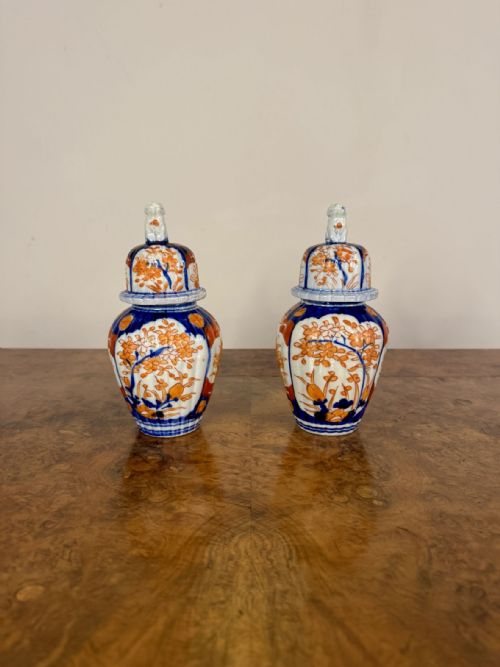
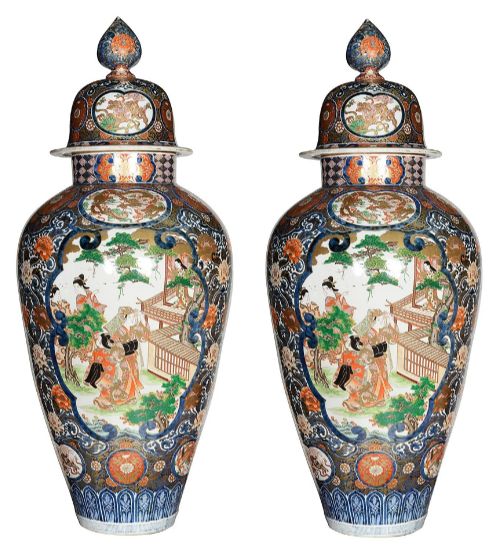
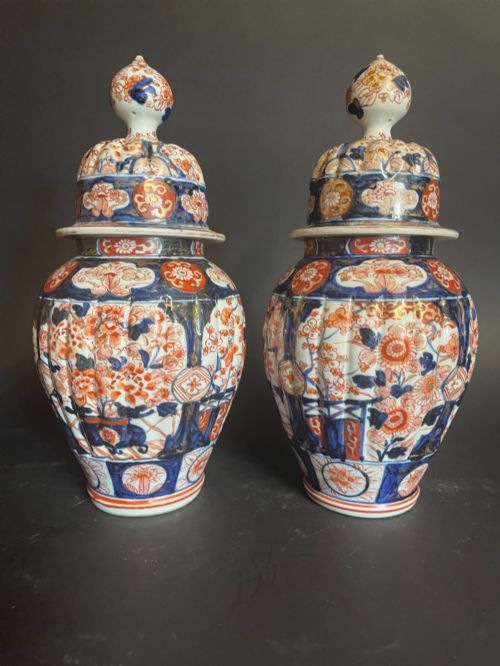
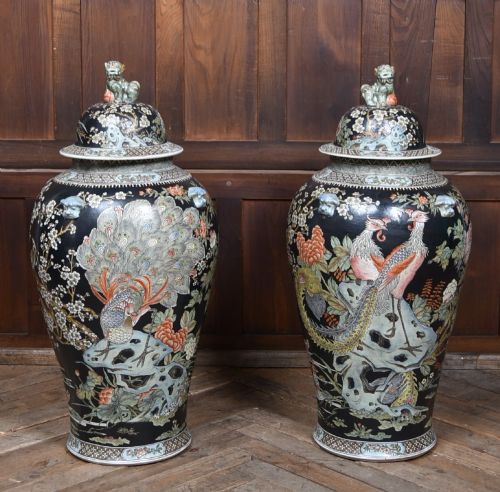
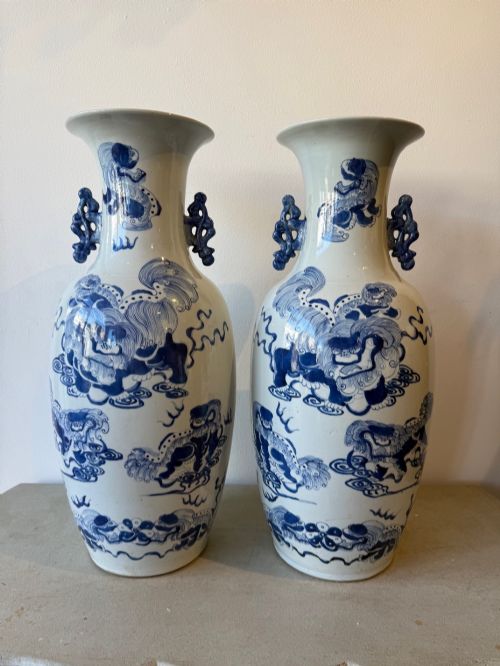
When you search for a pair of temple jars, you encounter covered vessels originating from China and Japan, spanning the seventeenth century through to the early twentieth century. These lidded containers take forms such as ginger jars, ovid vessels, and large floor urns.
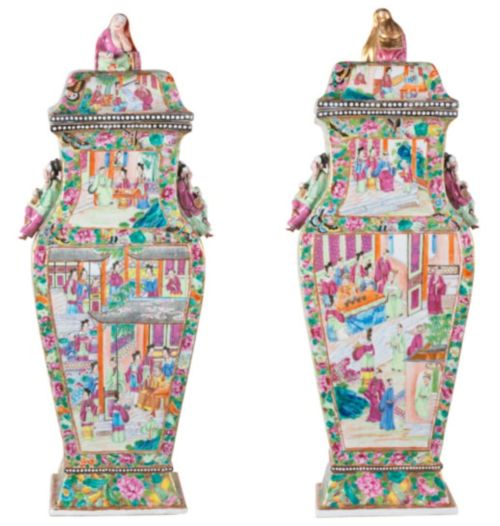
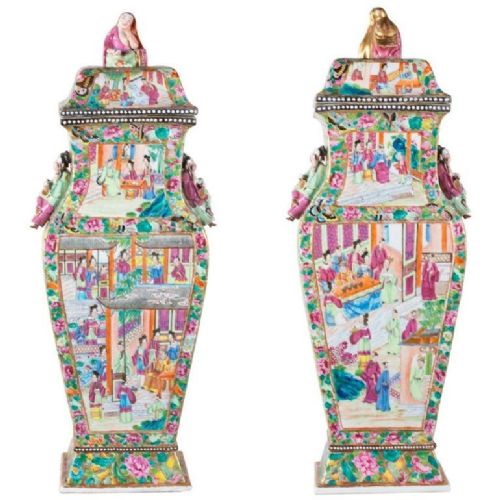
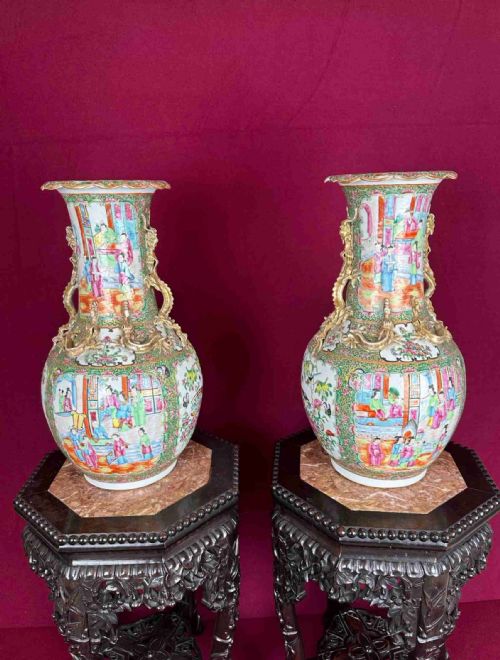
The most common examples on this page date from the nineteenth century, often decorated in Japanese Imari or Chinese Rose Medallion and Canton styles. Buyers select these matching vessels to anchor a room with traditional ceramic form and detailed hand painting.
How they were made
These vessels are built from porcelain and ceramic bodies, shaped on the wheel or in moulds before receiving intricate decoration. Artisans applied enamel glazes, gold leaf, and gilding over cobalt blue or polychrome palettes, sometimes pairing the ceramic bodies with brass or ormolu mounts.
Cloisonne examples employ metal wire soldered to a base to form cells, which are then filled with enamel before firing and polishing. Arita and Imari pieces utilise traditional Japanese kiln techniques with underglaze blue and overglaze iron red and gold.
Pair of Temple Jars Retail Price Guide 2026
Typical asking prices for pair of temple jars among the pieces listed under this phrase on Sellingantiques today, from the lower quarter to the upper quarter. They describe what is for sale here now, not the wider market.
The listings span periods from the 17th century to the 1930s, using porcelain, ceramic, enamel, brass, and ormolu.
What varies in quality
The standard of a pair of temple jars rests upon the crispness of the hand painting and the depth of the enamel palette. Superior pieces display precise brushwork, well-defined gilding, and balanced symmetry between both vessels.
The survival of matching original covers significantly affects the integrity of the pair. Finer examples maintain crisp detail in the ceramic moulding and secure mounting where metal elements join the body.
The Pair of Temple Jars Glossary
- Imari
- A style of Japanese porcelain featuring a palette of underglaze blue, iron red, and gold. This decorative tradition originated in Arita and became widely exported to Europe.
- Cloisonne
- An enamelwork technique where metal wire creates small compartments on a base to hold coloured paste. The piece is fired and polished to a smooth finish.
- Rose Medallion
- A style of Chinese porcelain decoration characterised by panels of figures and birds surrounded by pink rose flowers and green foliage. It gained popularity during the nineteenth century.
- Ovid
- An egg-shaped ceramic form frequently seen in ginger jars and storage vessels. This curved profile provides a stable base and a swelling shoulder.
- Ormolu
- Gilded bronze used for mounts and decorative triments on furniture and ceramics. It adds weight and ornamental detail to the finished object.
Pair of Temple Jars: Frequently Asked Questions
How were temple jars originally used?
These lidded vessels served primarily to store spices, ginger, and valuable dry goods in domestic and ceremonial settings. Over time, European collectors repurposed them purely as decorative display pieces.
Matched pairs were placed symmetrically on mantelpieces, sideboards, or flanking large architectural openings to create balanced interior focal points.
How do I date a pair of jars?
Dating relies on examining the characteristics of the ceramic body, the formulation of the enamel glazes, and the style of the hand painting. Eighteenth-century pieces often exhibit lighter potting and distinct cobalt tones, while nineteenth-century examples display heavier bodies and denser polychrome decoration.
Reference marks on the base provide additional clues, though reign marks were frequently copied in later periods as a mark of respect rather than deception.
Can these jars be converted into lamps?
Many nineteenth-century examples were mounted or adapted as table lamps during the Victorian and Edwardian eras. This conversion often involved drilling the base for wiring or adding brass and ormolu mounts to secure electrical fittings.
Buyers often choose whether to retain these period electrical conversions or restore the jars to their original lidded form.
How do I care for antique porcelain?
Care requires dusting the surface gently with a soft, dry cloth to prevent the accumulation of dirt in recessed enamel areas. Avoid using liquid cleaners or chemical agents, particularly on pieces with exposed gold leaf or overglaze gilding.
Display the vessels away from direct sunlight and areas prone to sharp temperature fluctuations to protect the integrity of the glaze and any metal mounts.