





Vintage Chinese Ceramic Urns
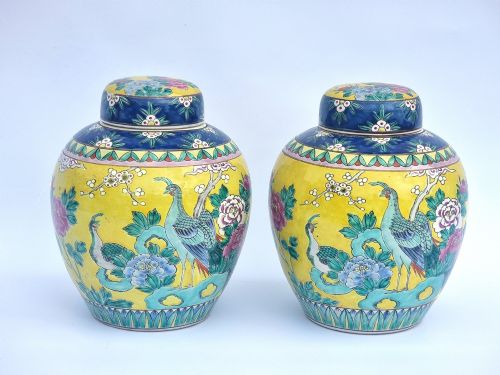
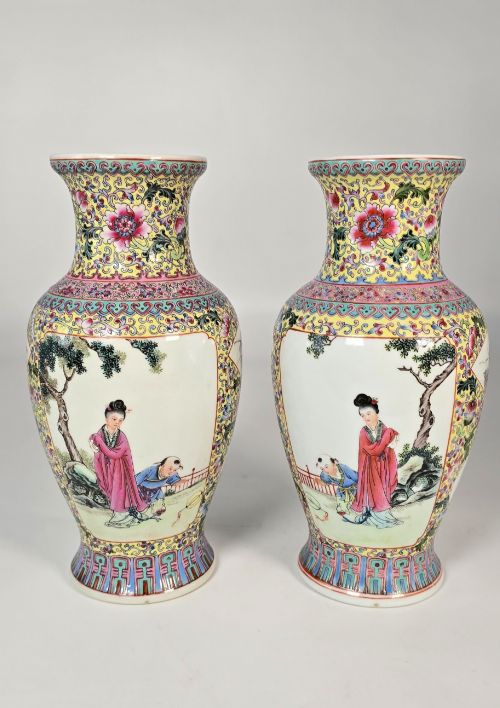
These vintage chinese ceramic urns bring hand painted porcelain and rich cobalt glaze into a room.
Vintage Chinese Ceramic Urns
Vintage chinese ceramic urns span the nineteenth century through the mid twentieth century, including pieces from the Qing dynasty, the Chinese Republic period, and French nineteenth century workshops. Buyers searching for vintage chinese ceramic urns often find lidded vases, ginger jars, and kamcheng jars alongside porcelain baluster vase lamps mounted with brass.
How they were made
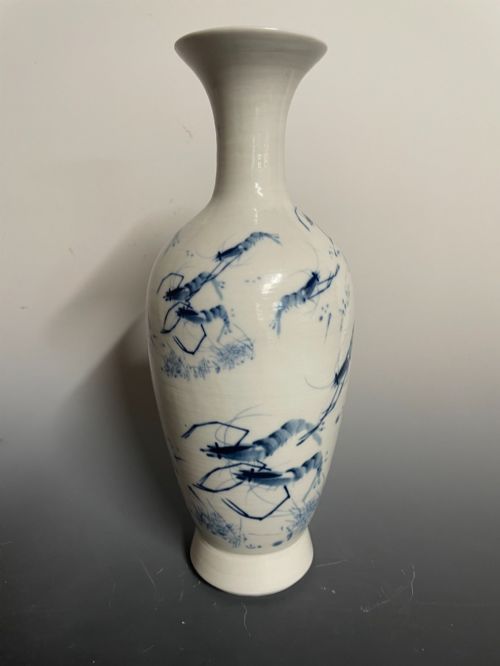
Makers shaped these vessels from high fired porcelain and finished them with cobalt glaze, enamel glaze, and intricate hand painted details. Some nineteenth century pieces display distinct crackle ware surfaces achieved through specialised cooling techniques in the kiln.
Vessels transformed into lamps incorporate brass fittings and stands made from wood, while textile elements utilise fabric and silk for the shades. The integration of ceramic bodies with metal and wood demonstrates common conversion practices of the nineteenth and twentieth centuries.
Vintage Chinese Ceramic Urns Retail Price Guide 2026
Typical asking prices for vintage chinese ceramic urns among the pieces listed under this phrase on Sellingantiques today, from the lower quarter to the upper quarter. They describe what is for sale here now, not the wider market.
Several ginger jars spent decades holding electrical cords instead of spices after peaceful retirement as lamps.
What varies in quality
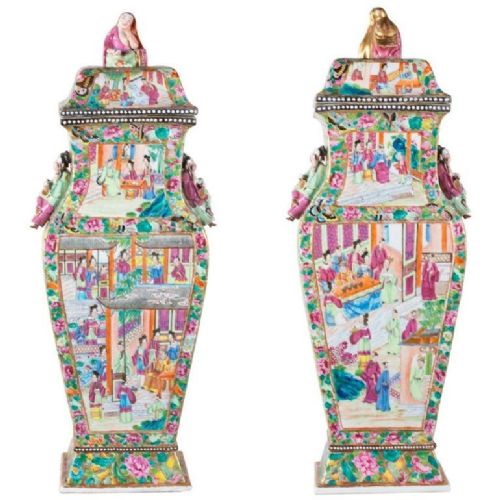
The precision of the hand painted brushwork and the vibrancy of the enamel glaze separate standard vessels from finer works. Rose medallion pieces and Canton vases often display varying degrees of detail in their figural and floral compartments.
Condition of the porcelain body, clarity of the cobalt glaze, and the structural integrity of any lamp conversions determine the character of each piece. Original lids on ginger jars and vases also influence how complete a form appears.
The Vintage Chinese Ceramic Urns Glossary
- Porcelain
- A hard, white ceramic material fired at high temperatures, used for the body of these jars and vases. It provides a resonant, non-porous surface that holds detailed enamel painting.
- Ginger Jar
- A decorative ceramic storage vessel characterised by a rounded body and a matching lid. Originally used for spices, they are valued today for their balanced proportions.
- Baluster Vase
- A vase with a bulbous lower portion tapering to a narrow neck and flared rim. The shape resembles a classical architectural baluster.
- Kamcheng Jar
- A traditional lidded ceramic container often used in Peranakan households for food storage. These pieces feature robust forms and distinct polychrome enamel decoration.
- Crackware
- A ceramic glaze that develops a network of fine decorative cracks during the firing process. It adds a textured visual depth to nineteenth century blue and white pieces.
Vintage Chinese Ceramic Urns: Frequently Asked Questions
What is a ginger jar?
A ginger jar is a lidded ceramic container with a rounded shoulder and straight or tapering sides. Originally designed for storing spices, these vessels became prized for domestic display.
Today they function as standalone decorative objects or paired mantel pieces. Their balanced proportions make them versatile additions to various interior styles.
How do I identify a Republic period piece?
Chinese Republic period ceramics, often dated around nineteen thirty, feature specific painting styles and enamel palettes distinct from earlier Qing dynasty works. Artists during this era introduced innovative glaze techniques while referencing traditional motifs.
Examining the base marks, pigment saturation, and brushwork helps distinguish these mid twentieth century works from nineteenth century exports.
Were these always lamps?
Many ceramic vases and jars were originally produced as display vessels or storage containers without electrical fittings. During the nineteenth and twentieth centuries, workshops often converted them into table lamps by adding brass hardware and wooden bases.
This adaptation preserved the decorative ceramic body while updating the object for domestic lighting. Some pieces retain their original lidded form alongside their lamp conversion.
What is rose medallion?
Rose medallion is a distinct decorative style featuring segmented panels filled with figures, birds, and flowers rendered in pink enamel and gilt. This export porcelain gained popularity during the nineteenth century in Canton.
The intricate compartments alternate between floral motifs and court scenes, creating a dense and colourful surface pattern across the porcelain.