
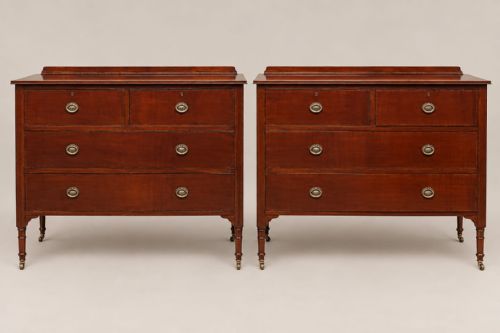
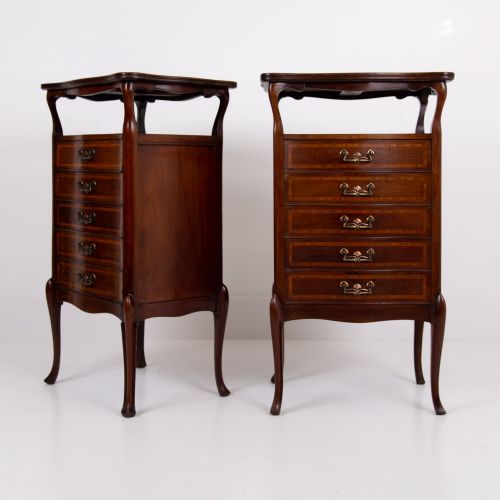

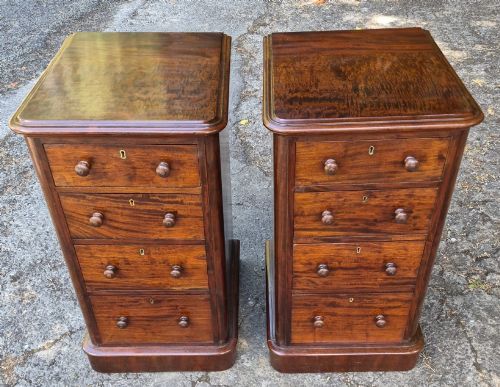
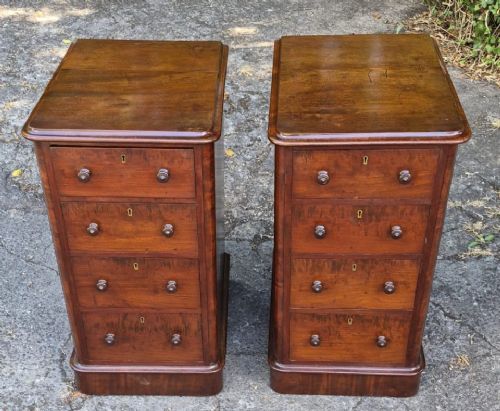
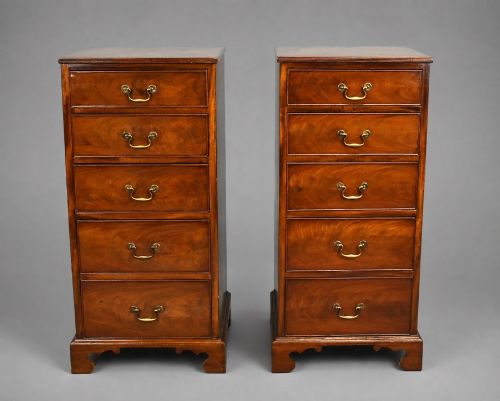
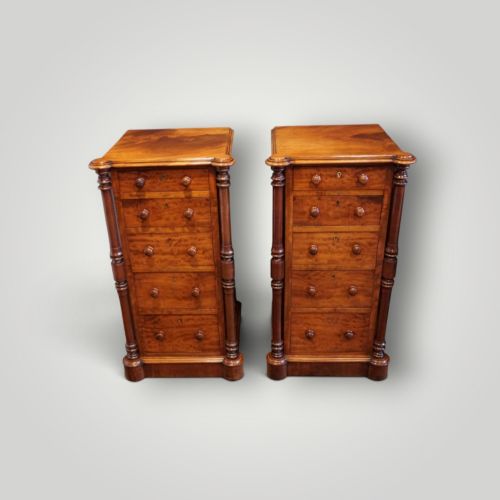
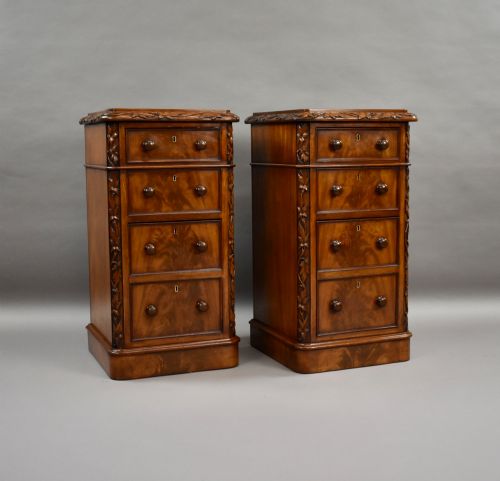
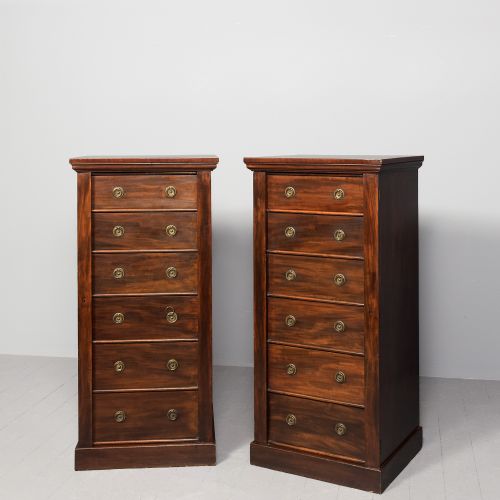
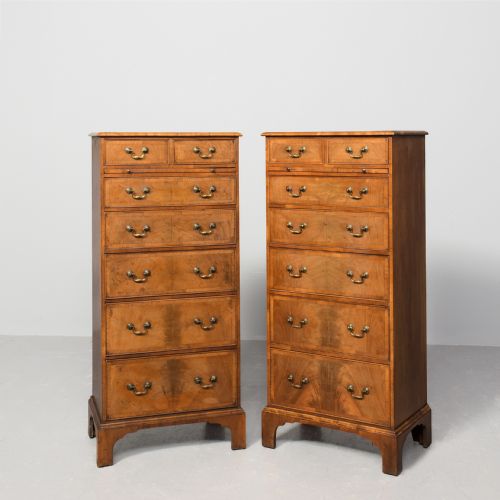

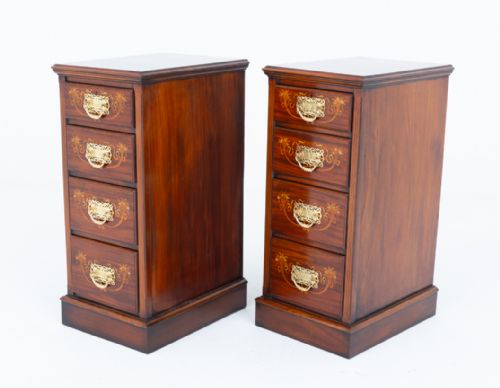
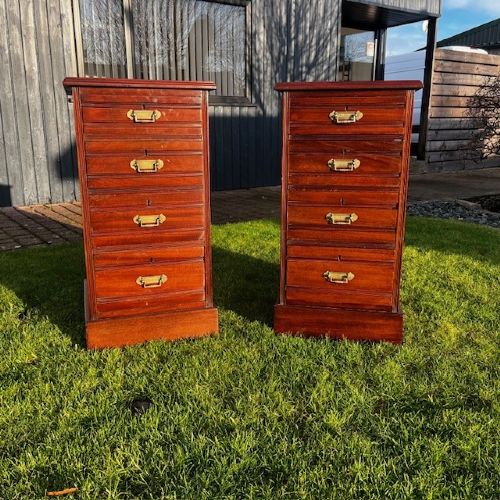


Pair of Tallboys
A pair of tallboys brings vertical proportion and symmetry to a room, offering generous storage in a narrow footprint.
Pair of Tallboys
A pair of tallboys comprises matching vertical chests of drawers, often referred to through related forms like bedside chests, Wellington chests, and chests on chests. The pieces encountered here span periods from the eighteenth century through the Victorian and Edwardian eras up to the nineteen-thirties.
Buyers seeking a pair of tallboys will most frequently find nineteenth-century and early twentieth-century examples rendered in mahogany, walnut, or pine. These forms serve practical storage needs while establishing a balanced decorative presence within a bedroom or dressing space.
Originating in various regional styles, including George III, Victorian country, and Louis XV Revival, these matching sets reflect the changing domestic requirements for partitioned clothing storage across different centuries.
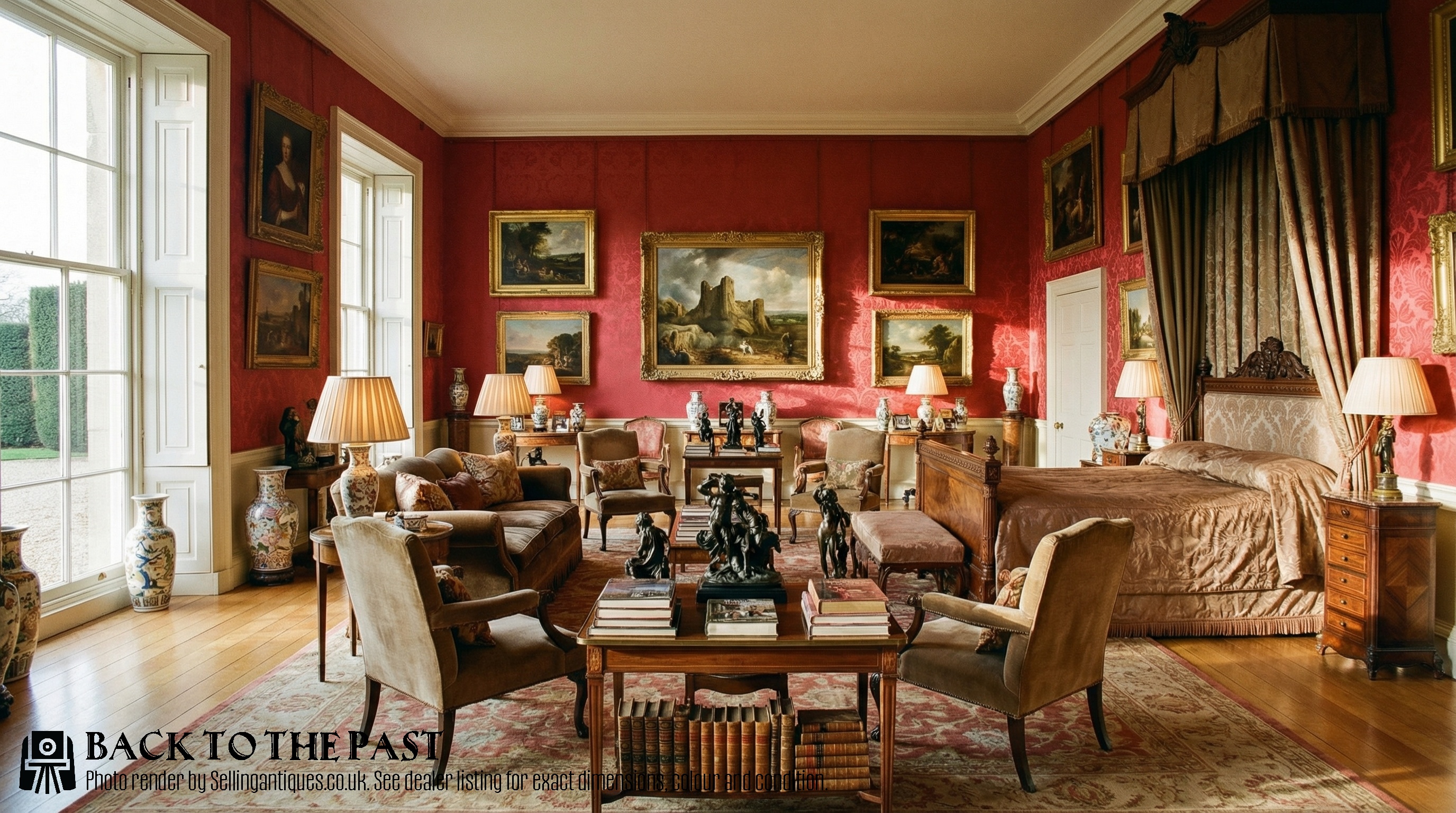
How they were made
Cabinet makers utilised dense hardwoods such as mahogany, walnut, and rosewood, alongside softer timbers like pine, constructing solid carcasses designed to support multiple stacked drawers. Secondary woods often lined the interior drawer boxes, showing hand-cut dovetail joints that secured the frame.
Surface decoration involved finely figured veneers, parquetry, and marquetry inlay work utilising satinwood and brass hardware. Polish finishes such as French polish or wax were applied to highlight the natural grain patterns of the timber.
Pair of Tallboys Retail Price Guide 2026
Typical asking prices for pair of tallboys among the pieces listed under this phrase on Sellingantiques today, from the lower quarter to the upper quarter. They describe what is for sale here now, not the wider market.
Several pieces include military-style lockers and secret locking stiles designed to keep small treasures safe from curious eyes.
What varies in quality
Quality rests in the selection of timber veneers and the precision of the joinery connecting the drawer frames. Superior examples display consistent grain matching across the drawer fronts and tightly fitted structural joints.
The sophistication of decorative elements, such as intricate marquetry inlay, original brass handles, and well-executed locking mechanisms on Wellington-style locking bars, distinguishes finer workshops from standard production pieces.
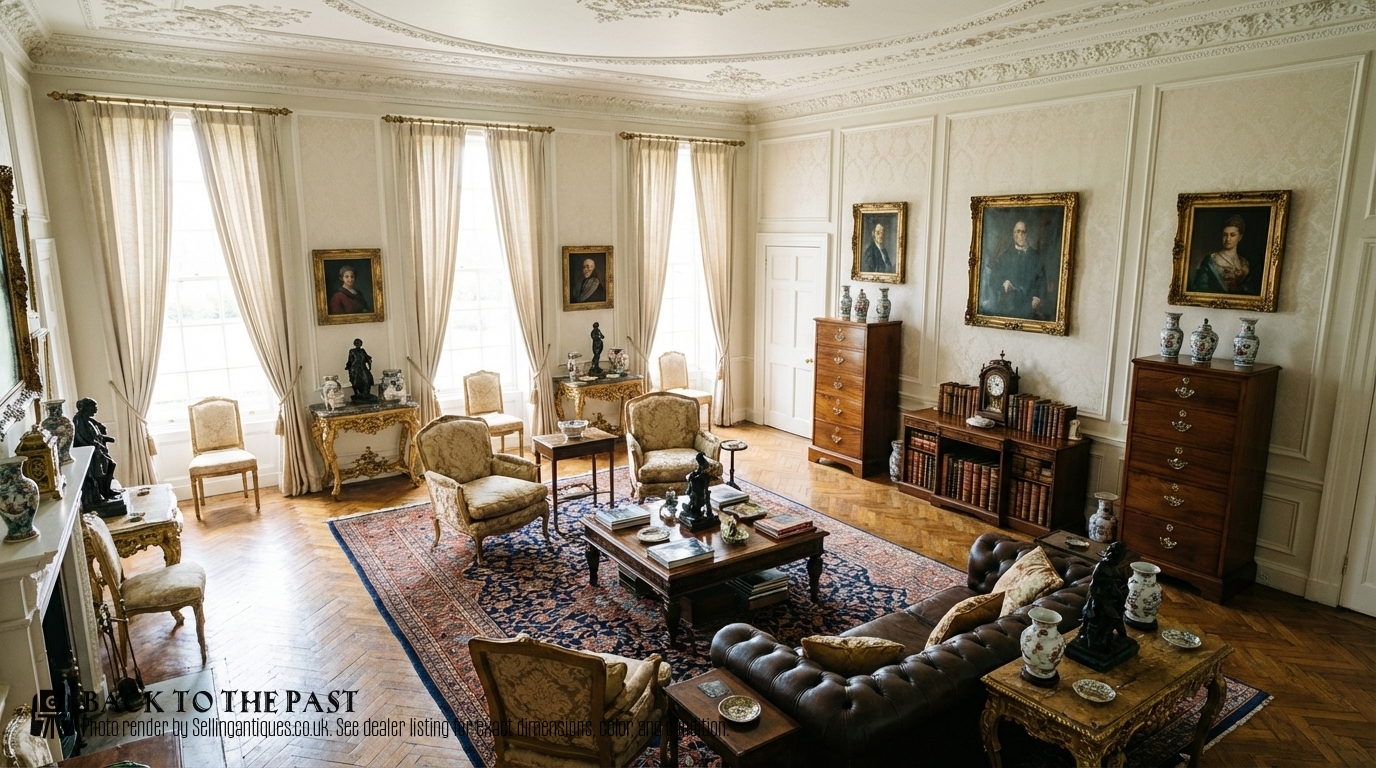
Warings Liverpool
The Pair of Tallboys Glossary
- Tallboy
- A tall chest of drawers, often formed by stacking one cabinet atop another or building a single elongated carcass. This configuration maximises vertical storage capacity while occupying minimal floor space.
- Wellington chest
- A narrow vertical chest of drawers secured by a hinged locking stile on one side. This design locks all drawers simultaneously with a single key.
- Marquetry
- Decorative veneer work created by fitting together small pieces of different coloured woods to form pictorial or geometric patterns. It appears across cabinet fronts on select Victorian pieces.
- Dovetail joint
- A traditional interlocking woodworking joint used to secure drawer corners together. Hand-cut variations indicate earlier craftsmanship periods.
- Parquetry
- A geometric mosaic of wood pieces used for surface decoration on tables and cabinet doors. This technique creates patterned visual depth across the wood surface.
Pair of Tallboys: Frequently Asked Questions
What is a tallboy chest?
A tallboy is a vertical chest of drawers designed to provide substantial storage within a narrow footprint. The form typically stacks multiple drawers in a single tall frame or combines two smaller cabinet sections.
Such pieces suit rooms where floor space is limited but vertical height allows for generous clothing or linen storage.
How do I date a tallboy?
Dating relies on observing the timber species, construction methods, and hardware styles present on the piece. Eighteenth-century examples often show distinct dovetailing and timber choices compared to Victorian or Edwardian counterparts.
Matching the stylistic revival markers, such as George III or Louis XV influences, further helps place the manufacture period.
Where should I place a tallboy?
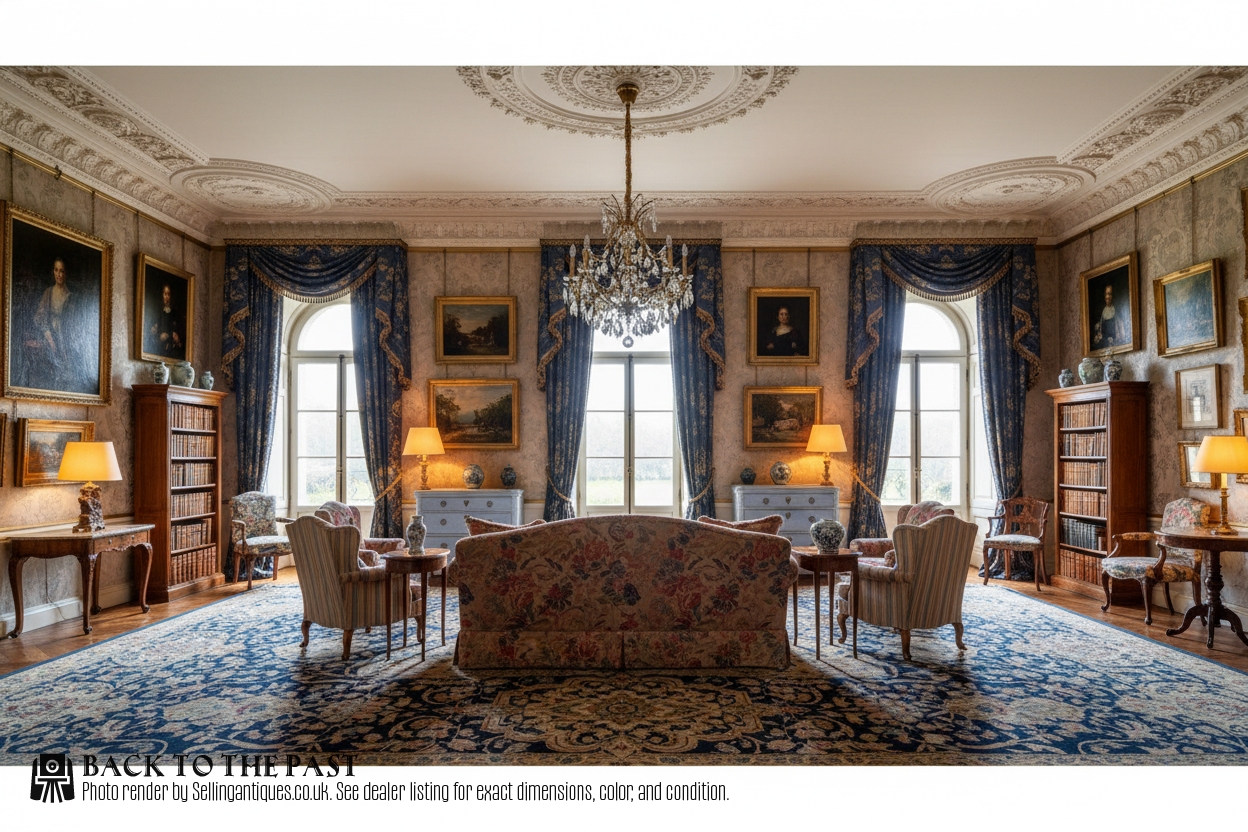
These tall cabinets fit naturally into bedrooms, dressing rooms, or hallways where vertical storage is required without crowding the floor plan. Placing them in pairs creates symmetry on either side of a bed or architectural feature.
Care should be taken to ensure adequate clearance for opening drawers and cabinet doors in tighter spaces.
What woods were used for tallboys?
Cabinet makers predominantly utilised hardwoods including mahogany, walnut, rosewood, and satinwood for visible exterior surfaces. Pine frequently served as a secondary structural timber or the primary material for painted regional pieces.
Veneers and inlay work were often applied over denser foundational woods to create decorative patterns.