
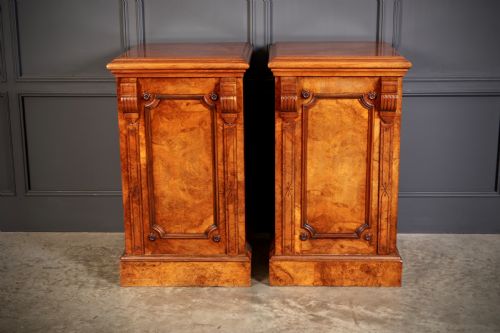


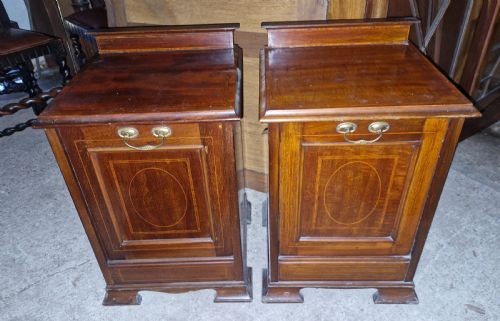


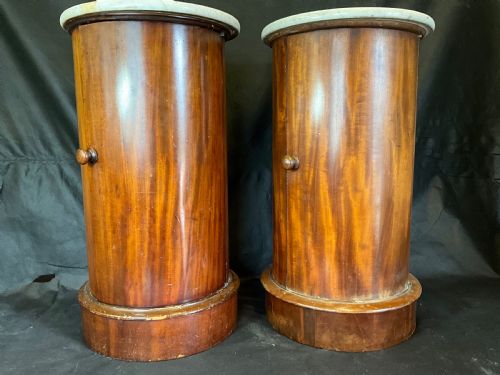

Pair of Storage Pedestals
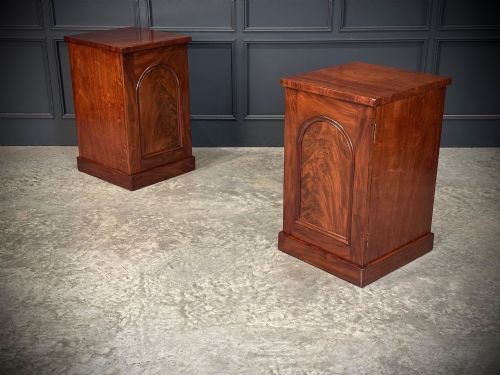
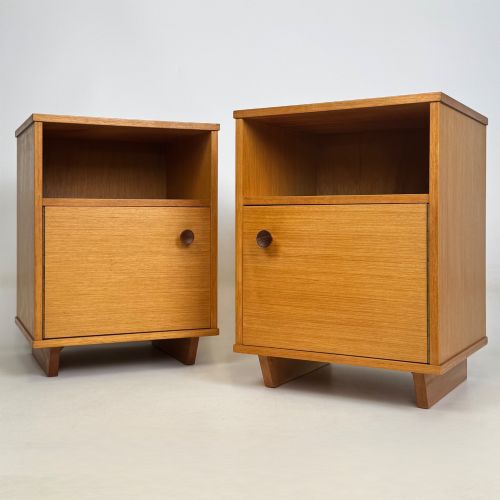
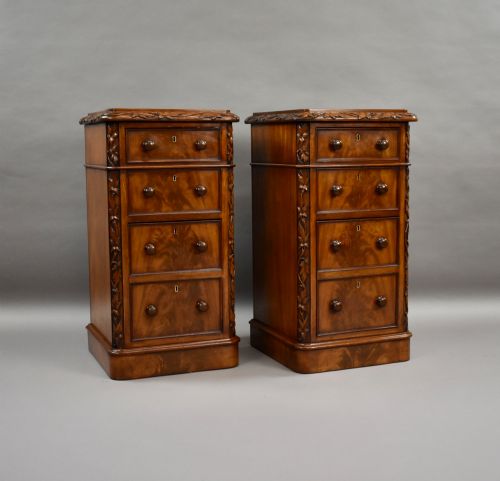
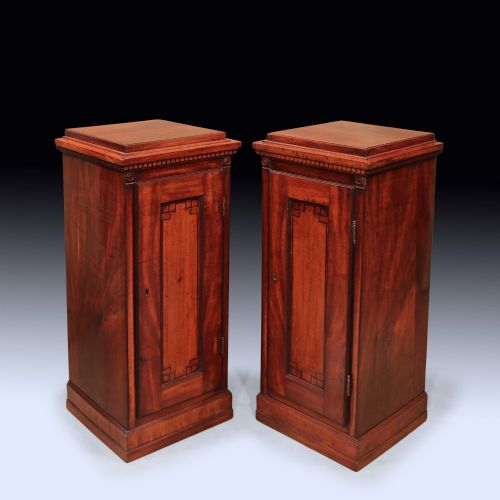
A pair of storage pedestals offers matched bedside organisation, bringing period timber and proportion into the bedroom.
Pair of Storage Pedestals
A pair of storage pedestals encompasses enclosed bedside cabinets, pot cupboards, and compact side chests designed to stand beside a bed or in a corner. These matched pieces provide practical concealed storage within a compact footprint.
The versions most commonly met on this page span the Victorian and Edwardian eras, executed primarily in mahogany or walnut. Forms range from cylindrical and hexagonal bodies to traditional rectangular chests of drawers and cupboards.
Originating from the nineteenth and early twentieth centuries, these matching furniture items often incorporate panelled doors, brass hardware, or inlaid details. They function equally well as lamp stands or small side tables in contemporary rooms.
Materials and construction methods
Cabinet makers utilised solid timbers such as mahogany and walnut, frequently applying figured flame mahogany veneer or burr walnut to create patterned surfaces on the doors and drawer fronts. Boxwood stringing and marquetry inlay appear on later examples to ornament the exterior.
Structural integrity relied on traditional joinery methods, with heavier carcases built to support marble tops or heavy contents. Drawer linings and internal shelving employed secondary timbers shaped by hand.
Fittings include turned wooden knobs, brass drop handles, and occasionally brass gallery rails or hinges. Surface finishes were built up using traditional polishing techniques that highlighted the natural grain of the wood.
Listings feature woods such as mahogany, walnut, teak, and satinwood, spanning the Victorian, Edwardian, and Regency periods.
Judging the quality of matched pairs
Quality rests primarily on the consistency of the match between the two pieces, particularly regarding timber grain, colour tone, and overall dimensions. A superior pair maintains strict symmetry and visual harmony.
The selection of cabinet woods dictates the visual depth, with carefully matched veneer figuring or high-grade solid mahogany representing higher standards of production. Finer examples display crisp inlay work and well-executed internal carpentry.
Hardware choice and the execution of structural joints distinguish standard utility items from finer workshop pieces. Smooth operation of drawers and well-fitted cupboard doors indicate careful original construction.
The Pair of Storage Pedestals Glossary
- Flame mahogany veneer
- A thin slice of mahogany timber cut from the fork of the tree to create a distinctive flickering flame pattern. This decorative veneer was prized for prominent surfaces on cabinet doors.
- Burr walnut
- A knotted growth on a walnut tree sliced to reveal an intricate, swirling grain pattern. It adds rich texture to the exterior of antique cabinets.
- Pot cupboard
- A small bedside cabinet originally constructed to house a chamber pot. Modern buyers utilise these enclosed spaces for general bedside storage.
- Marquetry
- The art of applying pieces of veneer to a structure to form decorative patterns or pictures. It often incorporates lighter woods like boxwood against a darker walnut ground.
- Wellington chest
- A tall, narrow chest of drawers secured by a hinged locking stile on one side. This form provides deep vertical storage within a compact floor area.
Pair of Storage Pedestals: Frequently Asked Questions
What is a pair of storage pedestals?
These items are matched sets of small cabinets, chests, or cupboards designed to sit beside a bed or in compact living spaces. They provide enclosed shelving or drawers for personal items while maintaining symmetrical interior decoration.
Most examples date from the nineteenth or early twentieth centuries, constructed from timbers such as mahogany and walnut. Their enclosed designs hide clutter while offering a stable surface for lamps and books.
How were bedside cabinets used originally?
In period bedrooms, these pieces served multiple practical functions ranging from housing night-time necessities to holding washing basins or chamber pots. Their enclosed cupboards kept private items out of sight.
Over time, their role shifted towards general bedside storage and display surfaces. Today they function effectively as lamp stands or small side tables in various rooms.
How do I style these in a modern home?
Matching pedestals work well flanking a bed, but their compact proportions allow them to function as side tables in a sitting room or hallway. Their warm timber tones contrast effectively against neutral walls.
Because they provide closed storage, they help keep surfaces clear of small objects. Placing a lamp or decorative item on top completes their integration into contemporary spaces.
How do I tell Victorian from Edwardian pieces?
Victorian cabinets often feature heavier proportions, dense solid mahogany, or rich burr walnut with minimal exterior ornament beyond fine grain. Construction tends to be robust and utilitarian.
Edwardian pieces frequently display lighter satinwood, delicate boxwood stringing, or marquetry inlay reflecting revival styles. Their overall visual weight is generally lighter than mid-Victorian furniture.