



Geometric Panelled Cupboards
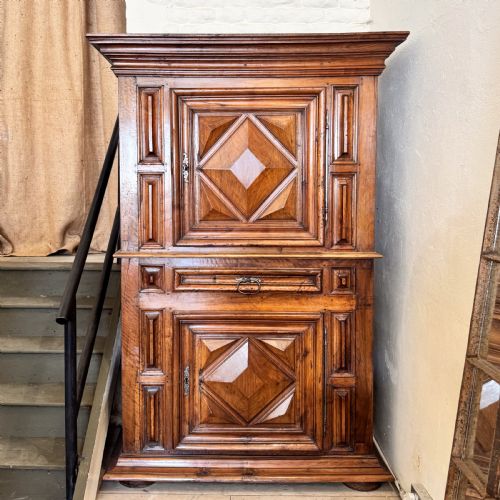
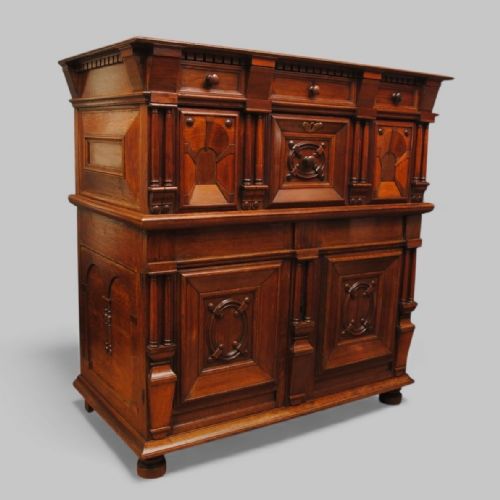
Geometric panelled cupboards bring substantial timber storage to a room, uniting architectural door fronts with period presence.
Geometric Panelled Cupboards
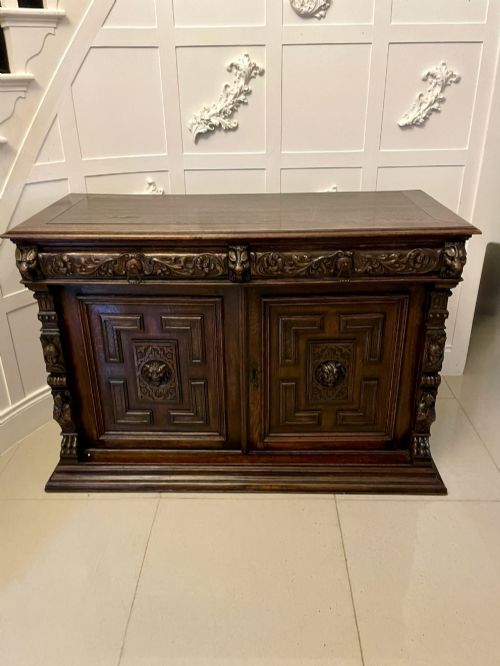
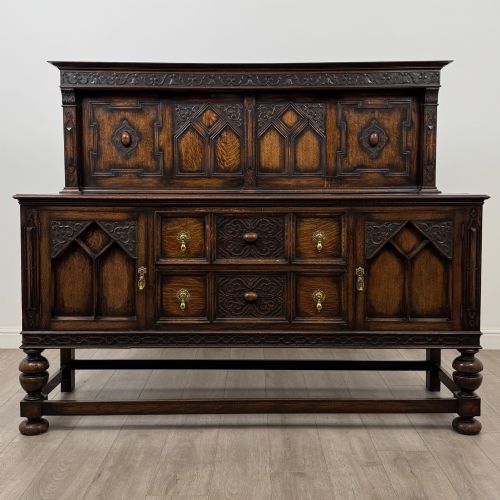
Geometric panelled cupboards encompass a variety of heavy storage forms, including sideboards, side cabinets, dressers, and corner units. These pieces emerge predominantly in oak, walnut, and fruitwood, carrying the heavy architectural influence of earlier centuries into later revivals.
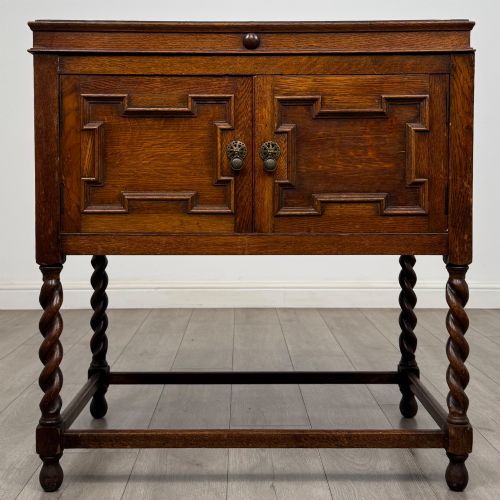
The buyer meets versions ranging from seventeenth-century chests and dressers with intricate moulded decoration to Edwardian and later Jacobean style cupboards on stands. Regional pieces such as Welsh dressers and Flemish table cabinets also appear, each showing distinct handling of panel work and proportion.
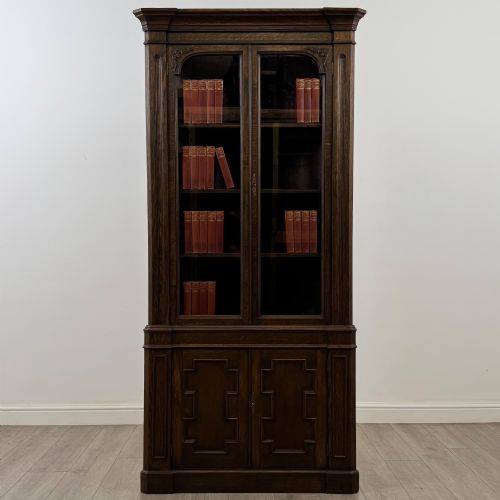
The selection bridges several eras, stretching from eighteenth-century moulded front bases up through the revival movements of the nineteenth and twentieth centuries. Oak dominates the material record, frequently paired with brass hardware, leaded glass, and secondary woods like snakewood.
Materials and construction
Makers relied heavily on solid oak, walnut, and fruitwood to build these sturdy carcasses, incorporating brass for hinges and handles. Secondary decorations utilised contrasting timbers such as snakewood, alongside leaded glass for door panels on specific cabinets.
Construction methods relied on framed and panelled assembly to accommodate natural timber movement across large doors and sides. Moulded fronts required precise joinery to create the raised and sunken geometric patterns characteristic of the Jacobean and revival styles.
Listings feature extensive use of oak, walnut, and fruitwood across periods ranging from the seventeenth century through to Edwardian revivals.
Assessing quality in timber and form
Quality rests in the crispness of the timber mouldings and the architectural ambition of the panel arrangement across the doors and drawers. Pieces displaying careful selection of grain and contrasting secondary woods like fruitwood or snakewood sit firmly above plain examples.
The integrity of the timber framing and the proportional balance between the upper and lower sections dictate the visual weight of the piece. Superior examples maintain original brass hardware and well-fitted leaded glass without clumsy alterations to the carcass.
The Geometric Panelled Cupboards Glossary
- Jacobean Revival
- A nineteenth and twentieth-century style that copies the heavy, rectilinear forms, dark timber, and geometric panelling of the early seventeenth century. It brings substantial presence to later furniture.
- Moulded Front
- A decorative surface treatment where timber is shaped into raised and recessed geometric profiles. This technique adds depth and shadow to cupboard doors and drawer fronts.
- Leaded Glass
- Small panes of glass held together by strips of lead to form windows within cabinet doors. This method allows contents to be viewed while maintaining a structured, traditional grid.
- Welsh Dresser
- A traditional two-part storage unit combining lower cupboards or drawers with upper display shelves. It serves as a principal piece of utilitarian country furniture.
- Snakewood
- A dense, heavily figured exotic timber utilised for decorative inlay and contrast details. Its distinctive markings elevate the finish of seventeenth-century panels.
Geometric Panelled Cupboards: Frequently Asked Questions
What is a geometric panelled cupboard?
These are wooden storage pieces defined by raised and recessed mouldings arranged in geometric patterns across the doors and drawers. They draw heavily on seventeenth-century aesthetics, appearing frequently in revival forms from later decades.
The category spans sideboards, dressers, and smaller table cabinets built mainly in oak and walnut. Their primary function remains heavy storage paired with strong architectural character.
How do I date a Jacobean style cupboard?
Dating requires looking closely at construction marks, timber shrinkage, and the specific characteristics of the hardware. Many pieces showing early geometric panels actually date from nineteenth or twentieth-century revival periods.
Examining the interior timbers and backboards helps distinguish genuine seventeenth-century joinery from later interpretations. Secondary woods and fastener types provide further clues to the true age of the carcass.
Where should I place a large oak sideboard?
These substantial pieces demand adequate wall space and a room with sufficient scale to absorb their dark timber and heavy mouldings. Dining rooms and large hallways offer traditional settings that complement their utility.
Because oak and walnut absorb light, pairing these items against lighter walls prevents the room from feeling closed in. Ensuring stable room humidity protects the dense timber panels from seasonal movement.
How do I care for antique fruitwood and oak?
Routine maintenance involves dusting with a dry or slightly damp cloth to prevent grit from settling into the deep geometric mouldings. Avoiding direct sunlight and intense heat sources protects the timber from drying out and splitting.
Occasional applications of appropriate wax feed the wood and maintain a soft sheen without building up heavy residue. Keeping the environment stable preserves both the primary timber and any delicate secondary veneers.