
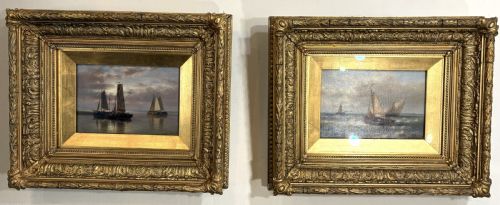


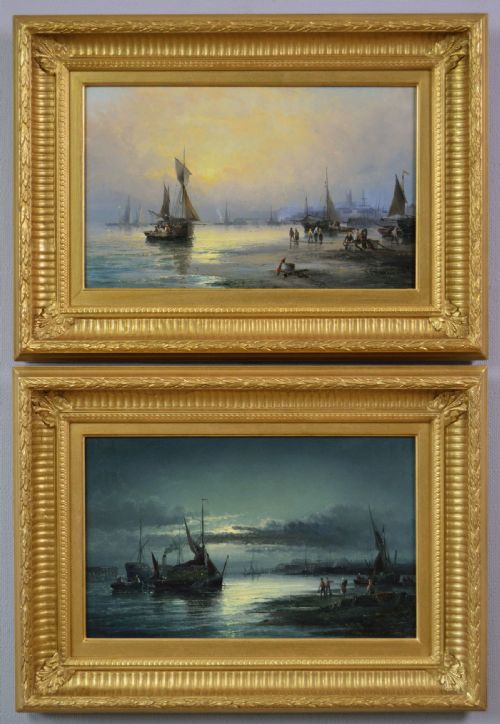
Pair of Seascapes
A pair of seascapes brings the movement of coastal tides and maritime shipping directly into a room, offering matched balance for a mantel or wall.
Pair of Seascapes
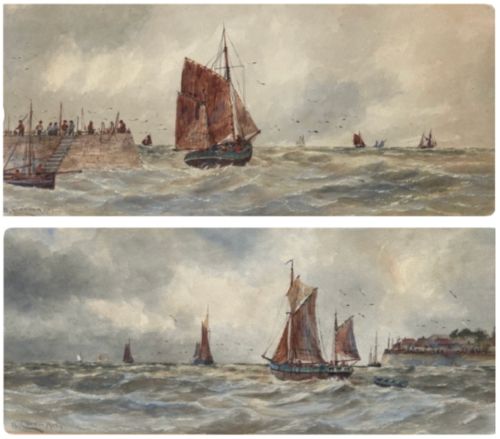
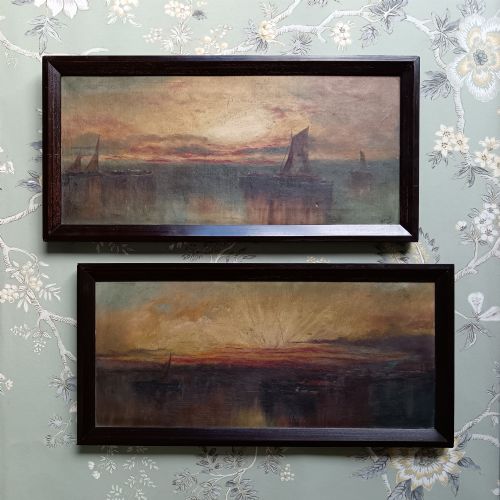
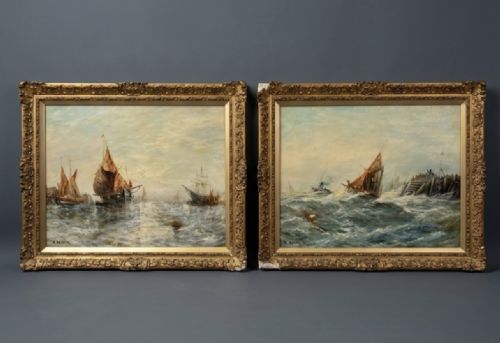
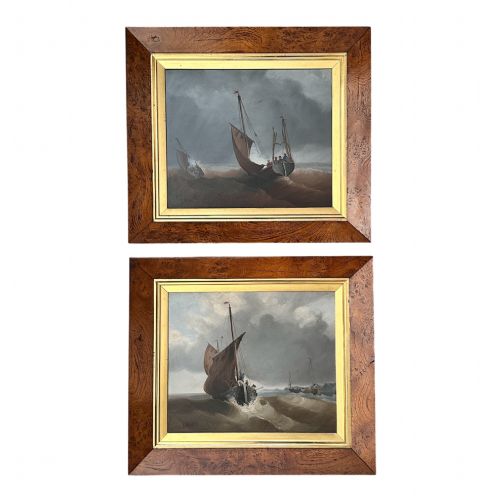
When searching for a pair of seascapes, buyers encounter matched compositions depicting coastal scenes, shipping vessels, and fishing boats upon the water. These works typically arrive as balanced duos, often created as companion pieces representing sunrise and sunset or contrasting sea conditions.
The selections span the nineteenth century and the early twentieth century, encompassing both Victorian and Edwardian periods. Examples include watercolours on paper and oil paintings executed on canvas or board, frequently housed within their original giltwood or ebonised frames.
How they were made
Artists painted these works using oil paint or watercolour applied to canvas, wood panels, or heavy paper. Pigments captured coastal light, atmospheric haze, and the detailed rigging of sailing ships upon the water.
Framing played an integral role in presentation, utilising carved wood, gesso, and gold leaf to create gilded surrounds that complemented the maritime subjects.
Listings feature works executed in oil on canvas, oil on board, and watercolour on paper, housed in giltwood and ebonised frames.
What varies in quality
The standard of execution in marine painting rests upon the artist's ability to render water movement, atmospheric light, and maritime architecture with conviction. Superior works demonstrate confident brushwork and precise handling of coastal atmosphere.
Preservation of the original surface and the survival of matching period frames significantly influence the character of these matched artworks.
John Moore of Ipswich·Abraham Hulk I·Gustave De Bréanski·Pieter Cornelis Dommersen·Thomas Bush Hardy·Hubert Thornley·John James Wilson
The Pair of Seascapes Glossary
- Seascape
- A work of art depicting the sea, coastal views, shipping, or maritime activity. These subjects gained immense popularity during the nineteenth century.
- Giltwood
- Wood that has been coated with gold leaf or gold paint. Frames of this material define many nineteenth-century maritime paintings.
- Gesso
- A plaster-like mixture applied to wood frames as a base for gilding. It allows for intricate moulded decoration around the artwork.
- Watercolour
- A paint consisting of pigment suspended in a water-based solution, applied to paper. Many period maritime works utilise this medium for delicate coastal effects.
Pair of Seascapes: Frequently Asked Questions
How should I hang a pair of seascapes?
Matched maritime paintings work best when hung side by side at eye level to maintain the visual balance intended by the artist. Keeping them together preserves their narrative connection, particularly if they depict complementary subjects like sunrise and sunset.
Ensure they are placed away from direct sunlight and excessive moisture to protect the canvas, paper, and original gilt frames.
Are these paintings original period works?
The selections shown date from the nineteenth century through the early twentieth century, painted during the Victorian and Edwardian eras. They utilise traditional materials appropriate to those periods, including oil on canvas and watercolour on paper.
Signatures, framing styles, and stretcher construction help confirm the historical context of each matched set.
What subjects do these maritime paintings show?
The compositions frequently feature fishing boats, merchant shipping, and coastal cliffs observed around British and European shores. Scenes often capture specific locations such as Scarborough, Portsmouth Harbour, or the Thames.
Artists focused heavily on changing weather, tidal movements, and the daily labour of maritime communities.