




Pair of Red Vases
A pair of red vases brings strong colour and symmetry to a room, ranging from vibrant ruby glass to traditional Japanese Imari.
Pair of Red Vases
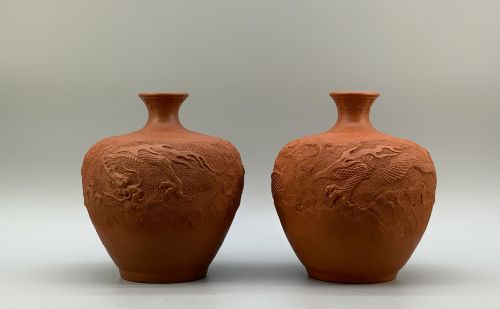
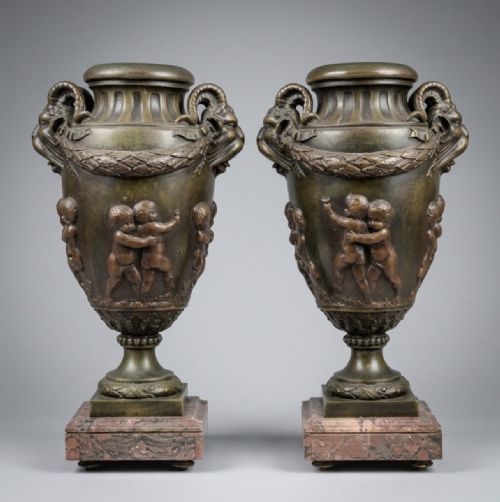
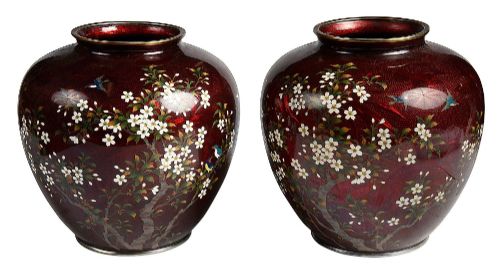
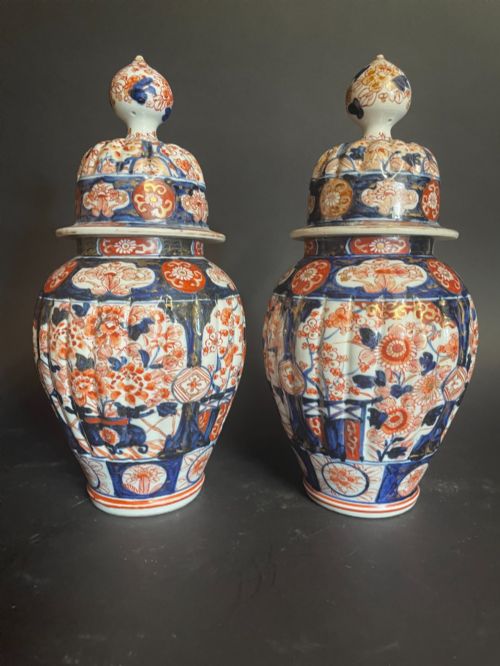
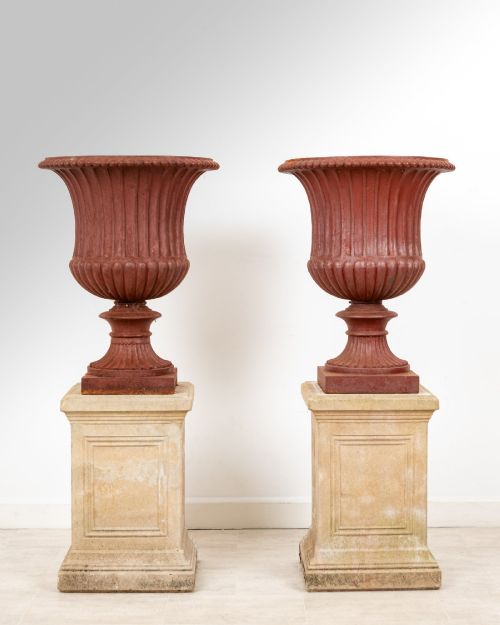
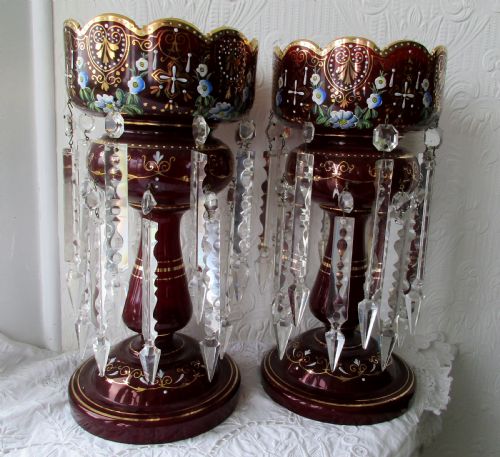
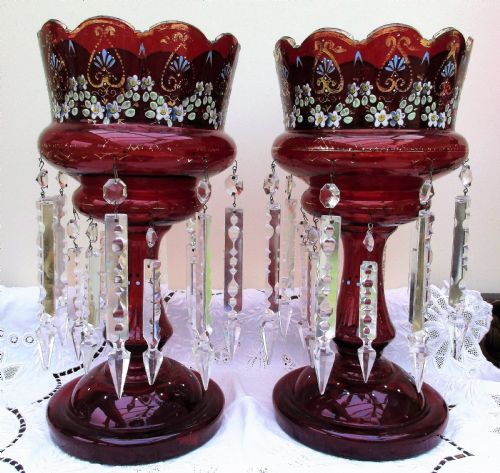
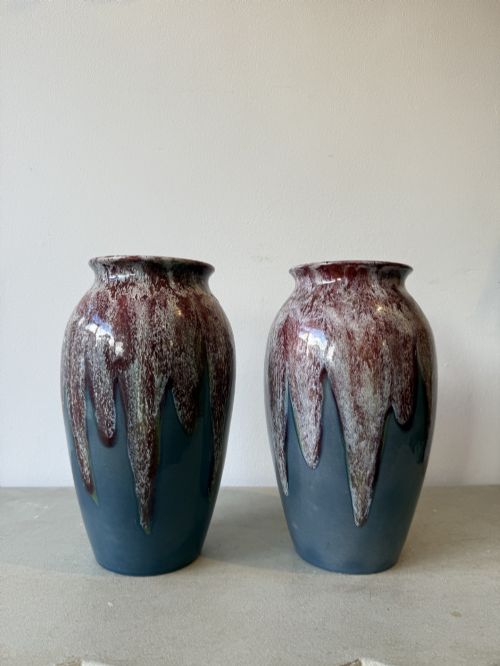
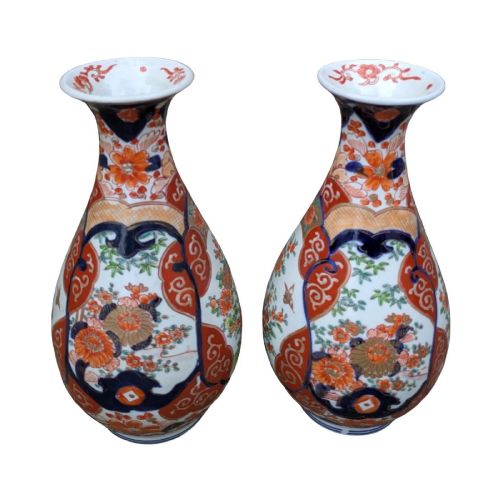
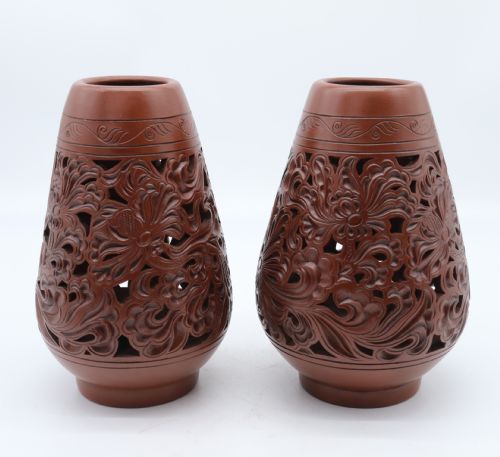
A pair of red vases encompasses a broad variety of decorative vessels designed in matching sets, originating from nineteenth-century English, European, and Asian workshops. When searching for a pair of red vases, a buyer will frequently encounter nineteenth-century Japanese Imari porcelain, Victorian ruby glass lustres, and Chinese cloisonné or cinnabar lacquer pieces. These items appear in various forms including lidded jars, baluster vases, trumpet shapes, and mantel urns.
The materials span from fired clay and porcelain to layered glass, enamel, and carved lacquer, often accented with gilding or mounted on brass and marble bases. Many examples reflect specific historical periods such as the Meiji period, Victorian era, or Qing Dynasty, showing distinct regional aesthetics from European glasshouses and Asian potteries alike.
How they were made
Makers utilised diverse manufacturing techniques, combining hand-thrown or moulded pottery with complex surface decoration such as cloisonné wirework, enamel painting, and cinnabar carving. Glass vessels often involved flash glass layering or deep ruby colouring achieved through mineral additives during the blowing process.
Porcelain pieces frequently received underglaze cobalt and iron-red pigments before high-firing in kilns, sometimes supplemented with hand-applied gold leaf or overgluede enamels. Metal components like bronze and iron required casting and patination, while wooden stands involved intricate carving and lacquer application.
Some nineteenth-century glass vessels served double duty as mantel ornaments that jingled softly whenever heavy carriages rumbled past outside.
What varies in quality
The distinction between standard and superior pieces rests on the precision of the hand-painting, the depth and clarity of the glaze, and the crispness of the modelled details. Finer porcelain and glass exhibit balanced proportions, deliberate brushwork, and well-executed gilding that remains intact across both items in the set.
Secondary examples may show minor inconsistencies in symmetry, simpler surface decoration, or wear to surface metals and enamel work. The matching nature of the pair, uniformity in colour saturation, and the preservation of original covers or companion stands also influence the overall standard of the objects.
Royal Worcester·Jacob Petit·Coalport·Empire Ware
The Pair of Red Vases Glossary
- Imari
- A style of Japanese porcelain decorated in underglaze blue, iron red, and gold, named after the port from which it was shipped to Europe.
- Lustre
- A type of glass or ceramic vessel featuring pendant glass prisms hung around the rim, popular during the Victorian period.
- Cloisonné
- An enamelwork technique where metal wire is soldered to a base to form compartments filled with enamel paste and fired.
- Cinnabar
- A carved red lacquer material built up in numerous layers on a wooden or metal core before being deeply carved with motifs.
- Baluster
- A vase form characterised by a rounded body that tapers towards a narrow neck and flared rim.
Pair of Red Vases: Frequently Asked Questions
What periods do these vases come from?
The available pieces originate primarily from the nineteenth and early twentieth centuries, spanning Victorian, Meiji, and Qing periods.
Craftsmen during these eras produced items ranging from English ruby glass to traditional Asian ceramics.
How were ruby glass lustres used?
Victorian ruby glass lustres served as decorative mantelpiece ornaments designed to catch and reflect candlelight through suspended glass prisms.
They added dramatic colour and formal symmetry to nineteenth-century parlours.
Are these matching pieces sold together?
Yes, these items are offered as matching pairs intended to be displayed in symmetrical arrangements on tables, mantels, or pedestals.
Keeping the set together preserves their decorative balance.
How do I identify Japanese Imari?
Japanese Imari pottery is recognised by its distinctive palette combining iron red, underglaze blue, and supplementary gilding on a white porcelain ground.
Designs typically feature dense floral and geometric patterns.