


Pair of Pottery Spaniels
A pair of pottery spaniels brings the steadfast character of the Victorian parlour straight to the modern mantelpiece.
Pair of Pottery Spaniels
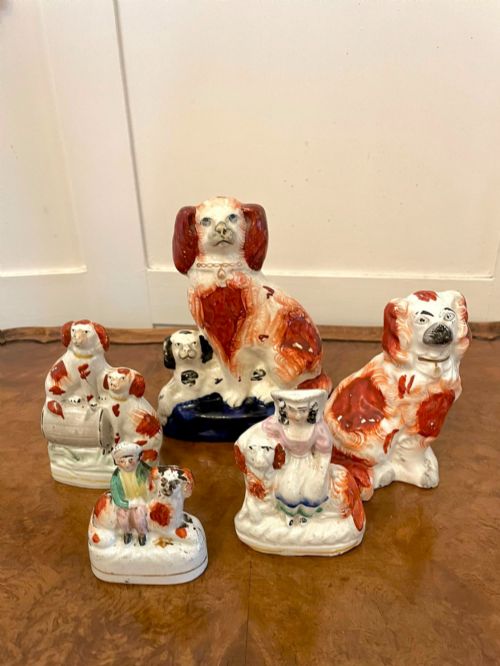
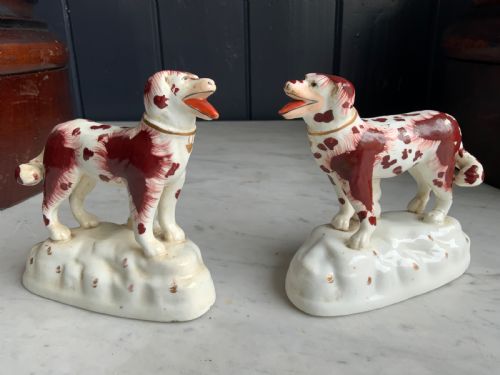
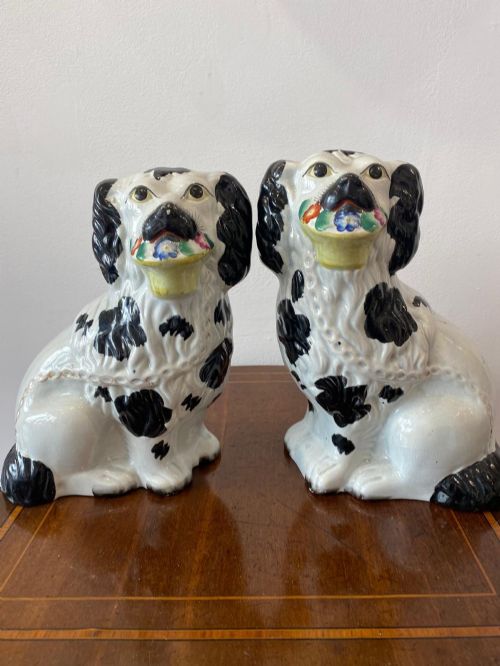
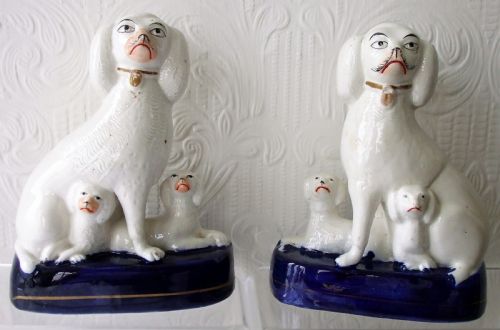
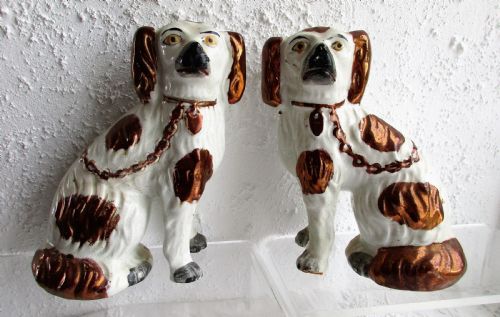
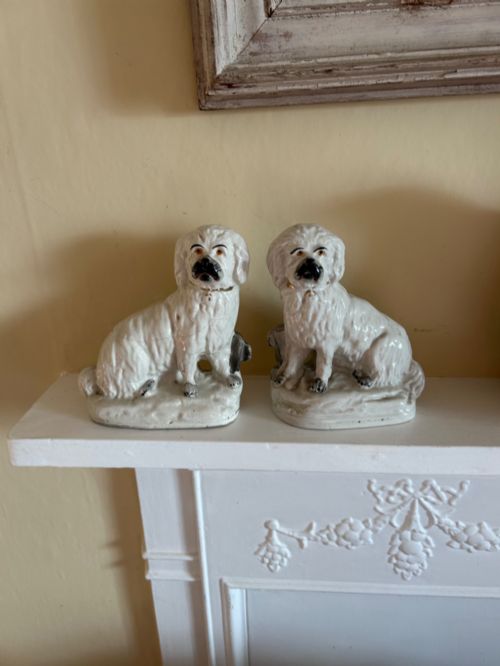
When you search for a pair of pottery spaniels, you encounter the quintessential mantelpiece ornaments of the Victorian era, modelled as seated dogs facing one another. These ceramic figures, often known historically as comforter spaniels, populated nineteenth-century British hearths in matching left and right orientations.
The version you are most likely to meet on this page dates from the mid-to-late nineteenth century, spanning decades such as eighteen-sixty and eighteen-eighty within the Victorian period. They appear in forms ranging from standard seated dogs to variations incorporating spill vases, quill holders, or models featuring glass eyes and hand-painted details.
Beyond standard spaniels, the listings also encompass related ceramic dog figures including poodles, maltese terriers, and black and white spaniels of the Staffordshire type. These decorative objects occasionally include decorative elements such as blue cushions with encrusting, copper lustre finishes, or white and gilt decoration.
How they were made
Potters shaped these earthenware and ceramic figures using moulds before applying lead glaze and hand-painted enamel colours to the surface. Many examples incorporate metallic accents such as copper lustre or gilt highlights applied over the fired ceramic body.
Certain Victorian dogs stare out with genuine glass eyes, ensuring they watch the room just as intently as the family watched them.
What varies in quality
Beswick
The Pair of Pottery Spaniels Glossary
- Comforter spaniels
- Staffordshire pottery dog figurines placed on either side of a fireplace mantelpiece in nineteenth-century homes. They are traditionally depicted seated with alert expressions.
- Earthenware
- Porous ceramic material fired at relatively low temperatures, forming the basic body for the majority of these nineteenth-century figures. It requires a glaze to become impermeable to liquids.
- Copper lustre
- A metallic glaze finish that imparts a reflective, copper-coloured sheen to the ceramic surface. It was achieved by applying metallic oxides before firing.
- Spill vase
- A hollow cylindrical fixture attached to the figure designed to hold wooden spills used for lighting fires or pipes. These combined decorative and practical functions on the Victorian hearth.
- Lead glaze
- A glossy coating containing lead oxide applied to pottery before a final firing to create a smooth, shiny surface. It enhances the vibrancy of the underlying enamel colours.
Pair of Pottery Spaniels: Frequently Asked Questions
What rooms did these dogs originally occupy?
These ceramic figures were traditionally displayed on the mantelpiece of the Victorian parlour, usually positioned at either end facing inward toward the hearth.
Their presence added a sense of respectability and comfort to domestic interiors during the nineteenth century.
How do I know which way they face?
A proper pair consists of a left-facing and a right-facing dog designed to mirror each other symmetrically on a surface.
Individual dogs from different pairs often face the same direction, so matching profiles matter when acquiring a true pair.
Were they ever used for practical purposes?
Certain variations served functional roles alongside their decorative purpose, including versions fitted with hollow cylinders to hold wooden spills or quill pens.
These combined utility with the comforting presence of a household pet on the table or desk.