
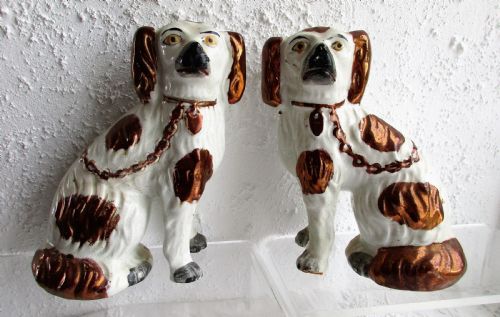


Antique Fireplace Spaniels
Antique fireplace spaniels bring Victorian charm straight to the mantelpiece.
Antique Fireplace Spaniels
Antique fireplace spaniels are ceramic figures modelled as seated dogs, designed traditionally to sit on either side of a hearth. These decorative objects date predominantly from the nineteenth century during the Victorian era. Most examples appear as symmetrical pairs, keeping watch from the mantelpiece.
The version most commonly met on this page is the Staffordshire pottery dog. These seated spaniels often display painted markings, enamel details, or copper lustre finishes. Makers produced them in various sizes, ranging from small mantel ornaments to large pairs.
How they were made
Potters shaped these figures using earthenware clay, forming ceramic bodies that were subsequently fired and glazed. Artisans applied hand-painted details in enamel, alongside touches of gold leaf or gilt. Some iterations incorporate copper lustre finishes to create a metallic sheen on the ceramic surface.
Certain examples feature applied glass eyes, adding a lifelike gaze to the earthenware figures. The combination of slip casting or moulding with careful hand painting produced the distinct appearance seen across the nineteenth century.
Current listings span the nineteenth century, focusing on Victorian earthenware figures finished in glaze, enamel, and copper lustre.
What varies in quality
The presence of original decorative elements, such as gilt accents or glass eyes, elevates certain figurines above standard production pieces. Consistency in the matching pair also defines the better tier of nineteenth-century ceramics.
The Antique Fireplace Spaniels Glossary
- Earthenware
- Porous pottery fired at relatively low temperatures and typically glazed to ensure it holds water or simply to provide a smooth finish. It serves as the primary ceramic material for nineteenth-century mantel figures.
- Copper Lustre
- A metallic glaze technique imparting a coppery, reflective sheen to the ceramic surface. Potters achieved this effect by introducing metallic salts during the kiln firing.
- Comforter
- A traditional term for Staffordshire spaniels due to their association with bedside tables and hearths where they offered perceived comfort. These decorative figures were staple ornaments in Victorian households.
Antique Fireplace Spaniels: Frequently Asked Questions
Where did fireplace spaniels sit?
These ceramic figures traditionally occupied the mantelpiece above a fireplace, arranged as a matching pair facing inward toward the grate.
Owners also placed them on side tables or chests of drawers within nineteenth-century parlours and sitting rooms.
How do I date these spaniels?
Dating relies on stylistic clues, manufacturing techniques, and the type of glaze or enamel utilised by the potter. Most examples originate from the nineteenth century during the Victorian period.
Analysing the clay body and eye style helps distinguish between mid-century pieces and later nineteenth-century productions.
Are they always found in pairs?
Many examples survive as symmetrical pairs designed to balance each other on either end of a mantelpiece.
Collections occasionally encompass groups of four or five figures rather than strict pairs.
What materials make up these dogs?
The figurines consist of earthenware ceramic, finished with lead glazes and hand-painted enamel details.
Some variants incorporate copper lustre glazes, gilt highlights, or inserted glass eyes.