
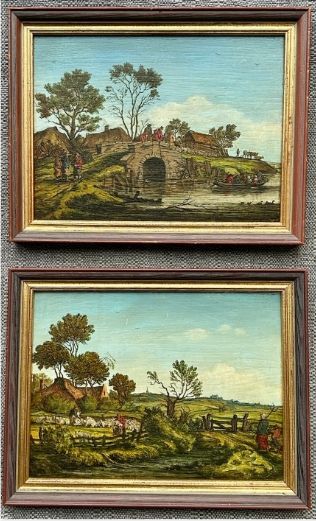
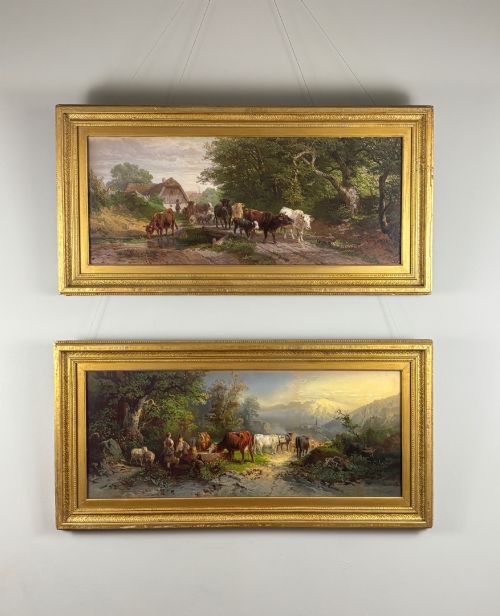


Pair of Pastoral Artworks
A pair of pastoral artworks brings rural calm into a room, offering matched scenes of rustic life and landscapes that collectors prize.
Pair of Pastoral Artworks
A pair of pastoral artworks comprises two complementary visual pieces sharing a common rural theme, often depicting animals, herders, and country landscapes. Buyers searching for a pair of pastoral artworks encounter matched formats designed to hang together in balanced symmetry on a wall.
The selections span from Georgian sepia prints and eighteenth century silk embroideries to nineteenth century oil paintings on wood panels and canvas. Artists capture scenes ranging from Flemish style cattle and sheep in glens to French Rococo compositions and rural watercolours.
Nineteenth century examples dominate the selection, including works by named painters and framed prints under glass. These dual pieces offer a direct window into historical interpretations of agrarian life and idealized countryside vistas.
How they were made
Makers utilised oil paint applied to canvas, wood panels, and paper support sheets to build rich landscape textures. Watercolours on paper and needlework silk embroideries also form part of the construction methods recorded in the selection.
Framing materials incorporate carved wood finished with gold leaf, creating giltwood and gilt wood borders that protect the artworks. Glass covers sensitive paper items like prints and watercolours to guard against environmental damage.
What varies in quality
Quality rests in the precision of the brushwork and the harmony between the two companion pieces, where matched framing and consistent scale elevate the pairing. Hand applied gold leaf on original wood frames surpasses later or plain replacements in character.
Artistic attribution and firm signatures by known painters distinguish finer works from anonymous workshop output. The preservation of the original canvas, paper, or silk surface dictates the enduring integrity of each framed piece.
W Klombeck·Johann Friedrich Voltz·Franz van Severdonck·Frederick James Knowles·Sidney Pike·John Boydell·James H Hulse·Robert Watson·Francois Boucher·Alfred Vickers Senior·John W Morris·Alfred Rimmer
The Pair of Pastoral Artworks Glossary
- Pastoral
- Relating to the countryside or the lives of shepherds, featuring rural landscapes and farm animals. These subjects offer a tranquil depiction of agricultural existence.
- Oil on Canvas
- A painting medium where pigments suspended in drying oils are applied to stretched fabric. This technique allows for deep colour blending and tactile texture.
- Mezzotint
- A printmaking process of the intaglio family where a copper plate is roughened and then scraped to achieve tones. It produces rich dark areas and subtle tonal gradations.
- Giltwood
- Wood that has been coated with a thin layer of gold leaf or gold paint. It provides a luminous decorative border for fine paintings and prints.
- Flemish School
- A group of artists working in Flanders during various periods renowned for detailed realism. Their influence appears in nineteenth century landscape and animal panels.
Pair of Pastoral Artworks: Frequently Asked Questions
How do I hang a pair?
Hang the two pieces at eye level with consistent spacing between them to maintain visual balance on the wall. Aligning the centre points ensures the matched composition reads as a unified statement.
Keep them away from direct sunlight and damp walls to protect the canvas, paper, and gilt wood frames from gradual degradation.
What subjects do they show?
The subjects focus on rural scenes including sheep, cattle, geese, and figures herding livestock through glens and highlands. These agrarian motifs reflect traditional ideals of country living.
Artists frequently paired morning and evening scenes, or contrasting weather conditions, to create a narrative dialogue between the two works.
Are original frames important?
Original gilt wood frames contribute significantly to the historical integrity and visual harmony of the artworks. They reflect the period aesthetic and protect the edges of the canvas or panel.
Matching frames demonstrate that the pair has remained together since creation, preserving its intended presentation.
How do I clean the glass?
Wipe the glass gently with a dry microfibre cloth to remove dust without disturbing the framed artwork underneath. Avoid spraying liquid cleaner directly onto the glass to prevent moisture seeping behind the frame.
Check the backing periodically to ensure dust seals remain intact and protect watercolours or prints from airborne debris.