




Pair of Painted Tables
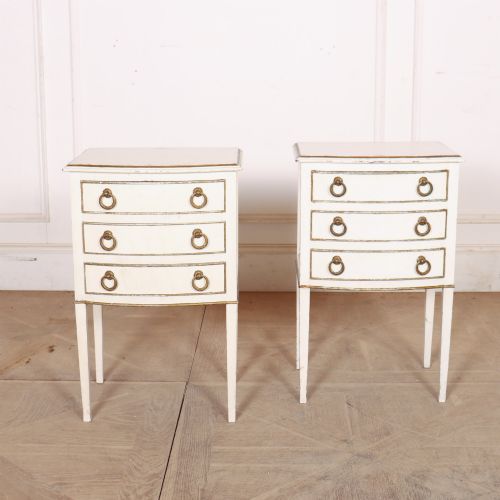
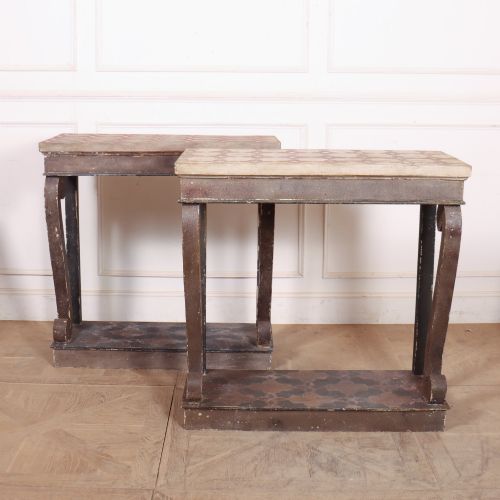
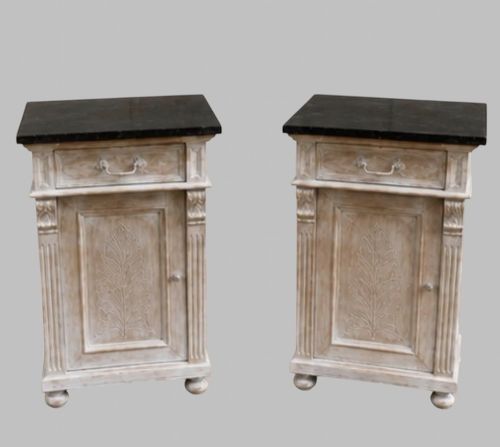
A pair of painted tables brings symmetry and colour to a room, spanning console, bedside and side table forms from the eighteenth to the twentieth centuries.
Pair of Painted Tables
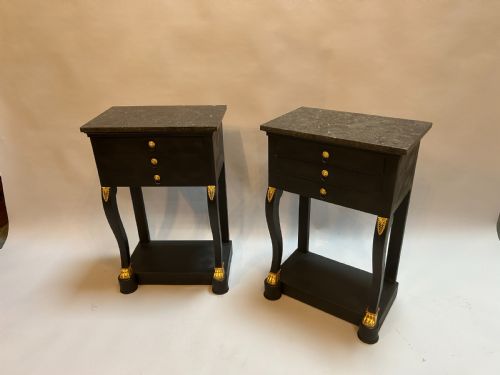
A search for a pair of painted tables typically reveals matching furniture designed for dual placement, most commonly bedside cabinets, lamp tables, or console tables. These items emerge from various periods, including the Victorian era, Edwardian years, and the early twentieth century, reflecting diverse international workshops.
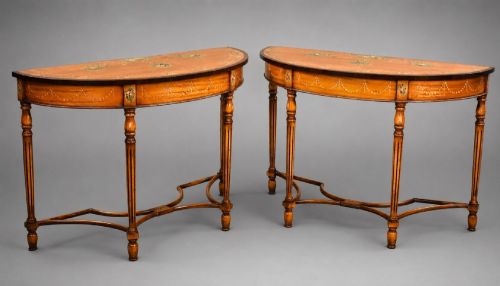
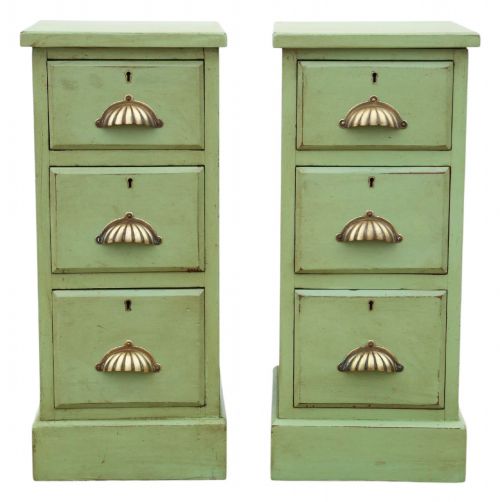
Console tables and demilune shapes appear frequently in the selection, often intended for hallways or living spaces where balanced proportions matter. Alongside these, smaller bedside chests and side cupboards provide practical storage surfaces with decorative painted finishes.
The origins span English, French, Swedish, and Spanish traditions, showing styles from French Rococo Revival and Gustavian to Sheraton Revival and Chinoiserie. Many pieces demonstrate original decorative paintwork, while others show later hand-painted interventions on older pine or hardwood carcases.
Materials and construction techniques
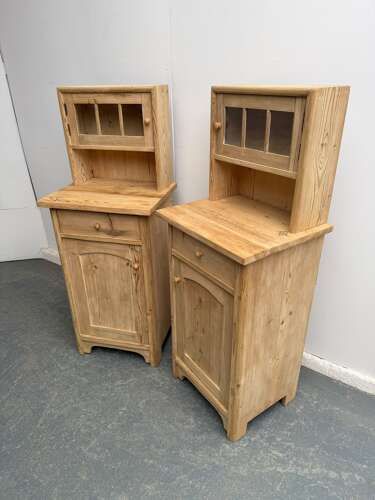
Carpenters utilised timbers such as pine, satinwood, oak, and kingwood to build the carcases, often applying softer woods for simpler country pieces and denser hardwoods for finer revival furniture. Pine frequently served as the base for applied decorative schemes, while satinwood provided a smooth ground for detailed brushwork.
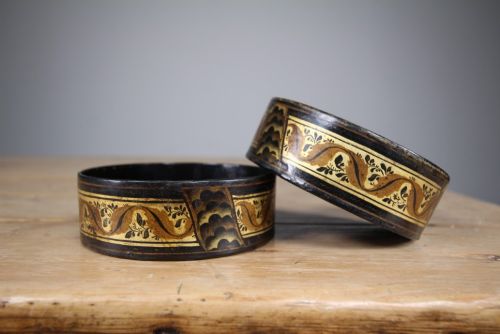
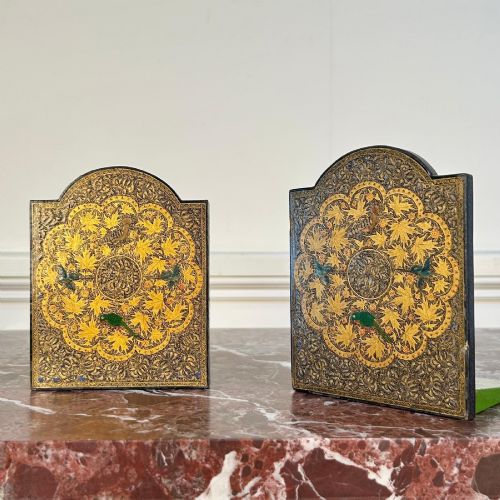
Surface decoration relies on layers of paint, lacquer, and enamel, sometimes complemented by hand-painted motifs, gilt bronze mounts, or faux bamboo turning. Artisans applied pigments directly to prepared wood grounds or over earlier surfaces, sealing the work with traditional varnishes and waxes.
Listings feature painted tables spanning the eighteenth, nineteenth, and twentieth centuries, using pine, satinwood, and lacquer.
Factors determining the grade
Proportion and detail dictate visual success, where balanced dimensions and refined hardware, such as brass mounts or delicate handles, elevate the piece. The harmony between the two tables in a pair remains essential, ensuring matching scale, wear patterns, and pigment consistency.
Royal Worcester
The Pair of Painted Tables Glossary
- Demilune
- A half-moon shape used for console and side tables designed to sit flush against a wall.
- Console table
- A table supported by wall brackets or legs, historically placed in hallways and reception rooms.
- Satinwood
- A durable tropical hardwood with a lustrous yellowish grain, favoured for fine neoclassical and revival furniture.
- Chinoiserie
- European decorative style reflecting Chinese artistic traditions, featuring lacquered surfaces and painted motifs.
- Tope-peinte
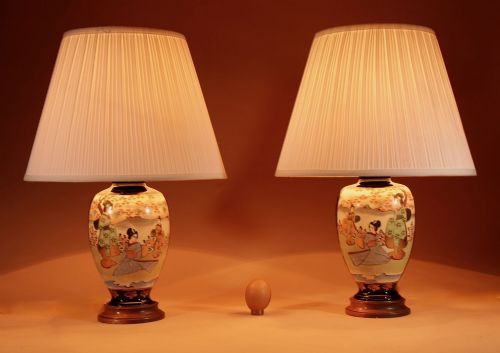
- French term for painted tin or metalware, often found on columns and lamp bases.
Pair of Painted Tables: Frequently Asked Questions
How do I style a pair of painted tables in a bedroom?
Placing matching bedside tables on either side of a bed creates immediate visual symmetry and anchors the sleeping area.
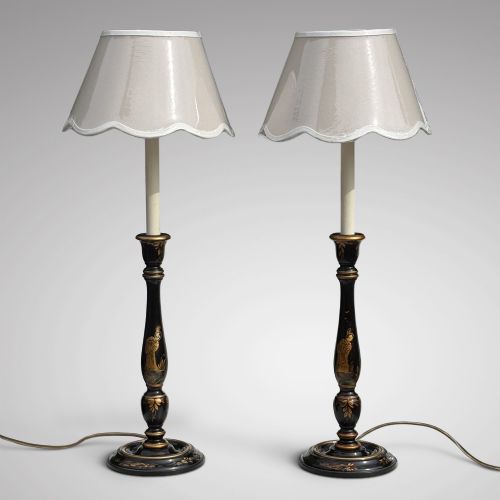
Adding matching lamps or decorative objects reinforces the balanced arrangement while providing functional bedside lighting.
Were these tables originally painted or decorated later?
Many pieces retain their original factory or workshop paint finishes, particularly those from the Edwardian and later periods.
Other listings feature older pine or hardwood furniture that received decorative painted surfaces later in its history.
What is the difference between a console table and a side table?
Console tables typically feature a semicircular or rectangular top designed to stand against a wall, sometimes requiring wall attachment.
Side tables stand independently on four legs and offer more versatile placement options throughout living spaces.
How can I tell a Victorian painted table from an Edwardian one?
Victorian examples often lean towards heavier pine carcases, darker green or red pigments, and robust construction.
Edwardian and later pieces frequently show lighter satinwood bases, neoclassical revival motifs, and brighter decorative palettes.