
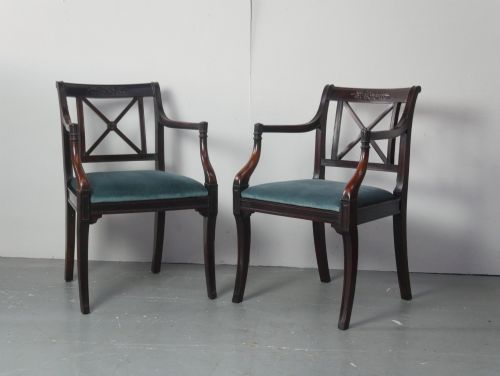
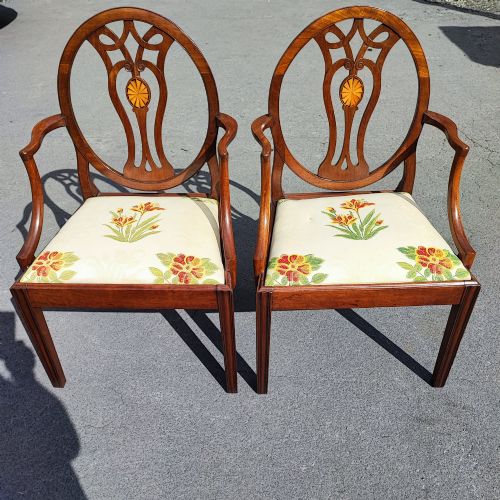
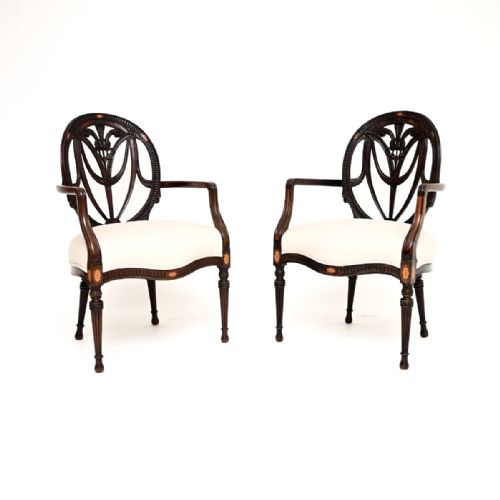
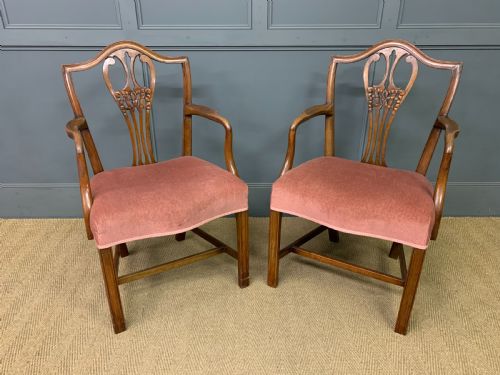
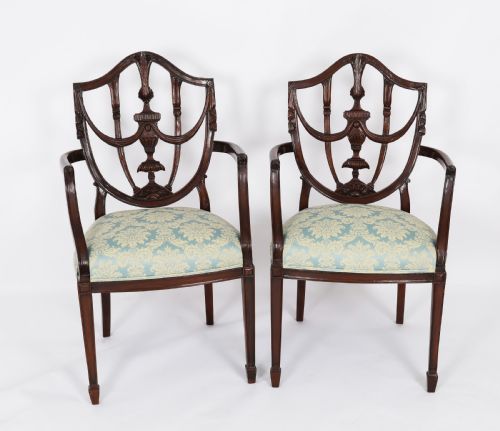
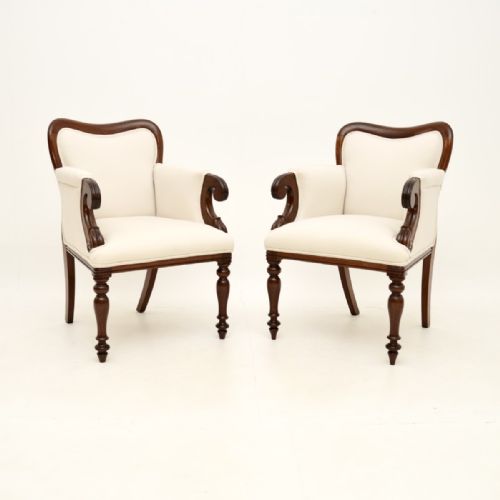
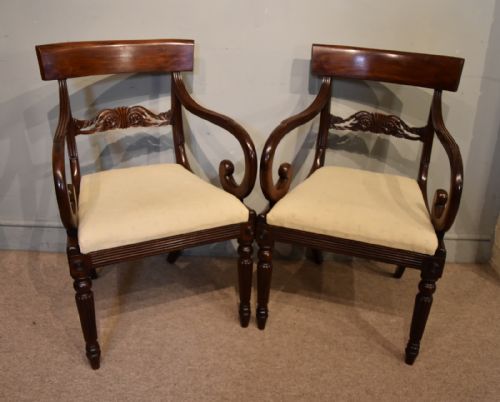
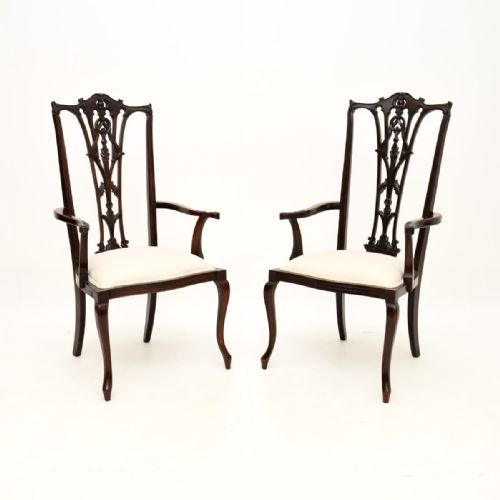
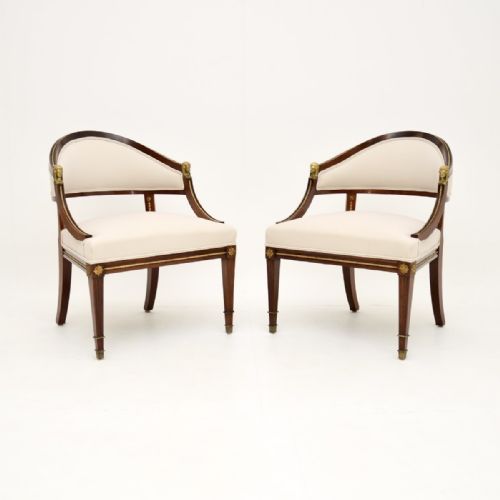
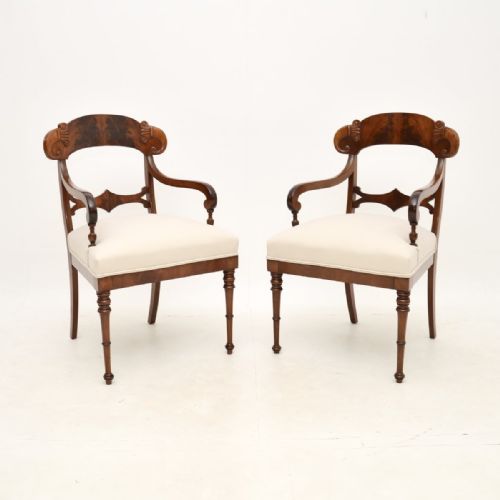
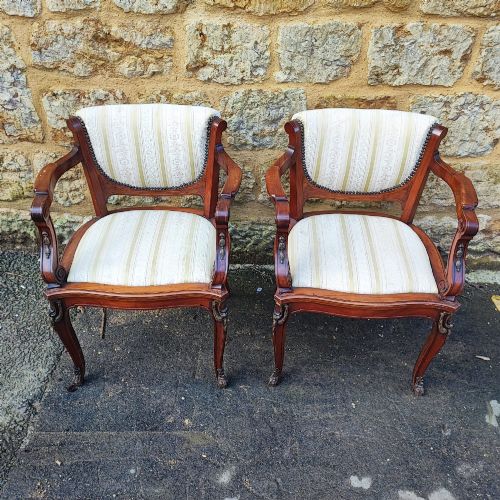
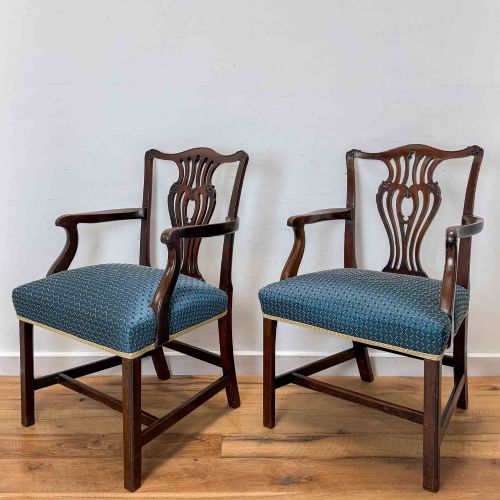
Pair of Mahogany Carvers
A pair of mahogany carvers brings architectural presence to a dining table, offering sturdy armrests and rich timber grain rooted in centuries of craftsmanship.
Pair of Mahogany Carvers
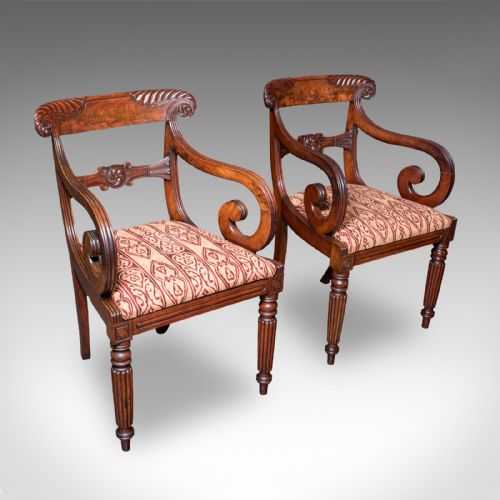
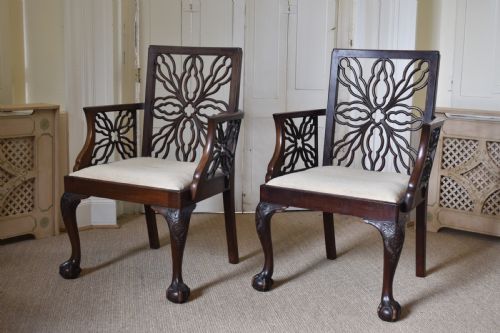
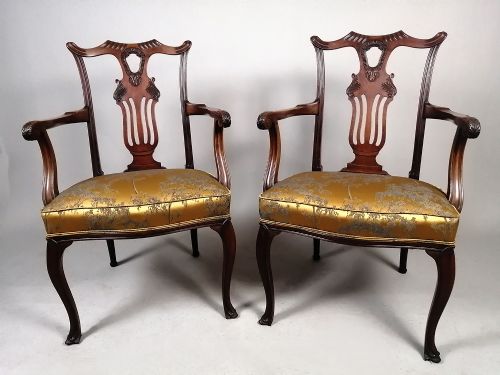
A pair of mahogany carvers consists of two matching armchairs traditionally placed at the head and foot of a dining table or used as reception seating. When searching this phrase, buyers encounter forms spanning the Georgian, Regency, William IV, Victorian and Edwardian eras.
The selections on this page heavily feature revival designs alongside genuine period pieces, including Chippendale, Hepplewhite and Sheraton styles. These chairs often appear as open armchairs, elbow chairs or salon chairs constructed primarily from solid timber.
Origins range across English workshops alongside continental examples from Sweden and Italy. Buyers most frequently meet nineteenth-century interpretations that replicate earlier eighteenth-century proportions with varying degrees of ornamentation.
Evaluating the standard
Quality rests in the crispness of the hand-carving and the structural tightness of the frame joints. Superior examples display thoughtful timber selection with consistent grain patterns across both chairs in the set.
Lesser pieces may exhibit heavy-handed restoration, replaced stretchers or loose arm joints that compromise daily use. The refinement of the back design and the proportional balance of the arms distinguish finer workshop output from mass production.
Listings on this site span mahogany, velvet, leather, and brass across Georgian, Regency, and Edwardian periods.
The Pair of Mahogany Carvers Glossary
- Carver
- A dining chair with arms, historically set at the head of a table for the host. These pieces match standard side chairs while providing broader proportions.
- Elbow chair
- An alternative term for an armchair with low or swept-back supports for the arms. They frequently served in morning rooms and reception spaces.
- Shield back
- A chair back shaped like a heraldic shield, popularised by eighteenth-century designers. This silhouette appears often in revival dining suites.
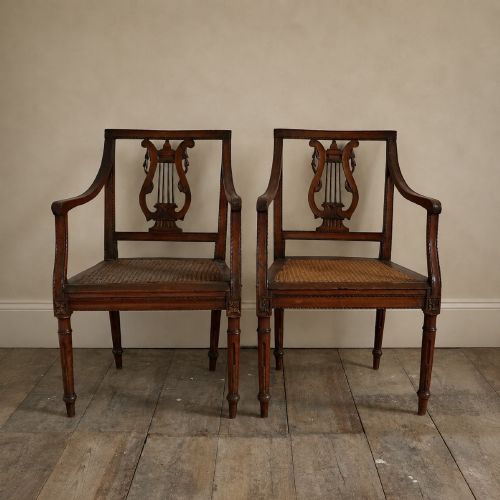
- Lyre back
- A central splat shaped to resemble an ancient musical instrument. This motif defines many Regency and nineteenth-century formal seats.
- Stringing
- Inlaid lines of contrasting lighter wood, such as satinwood, set flush into the mahogany surface. This technique outlines panels and legs for decorative contrast.
Pair of Mahogany Carvers: Frequently Asked Questions
Where should I place these chairs?
These chairs traditionally anchor either end of a dining table where the armrests provide extra support. They also function successfully as standalone reading seats in a study or bedroom.
Because they feature open arms, they fit comfortably beneath most standard table heights without blocking room flow.
How do I care for the mahogany timber?
Keep the wood away from direct heat sources and strong sunlight to prevent the polish from fading or drying out. Regular dusting with a soft, dry cloth maintains the natural sheen of the grain.
Avoid silicone-based sprays, applying traditional beeswax polish sparingly only when the surface appears dull.
Can I mix these with modern tables?
Pairing antique timber armchairs with contemporary tables creates a striking contrast that highlights the age and warmth of the wood. Ensure the seat height aligns comfortably with your table clearance.
The rich red-brown tones of mahogany complement both neutral spaces and darker interior palettes.
How do I distinguish revival styles from original periods?
Revival pieces, such as Edwardian Chippendale copies, often feature machine-tooled elements and standardised fixings beneath the seat frame. Original Georgian pieces show hand-cut joinery marks, subtle asymmetries and timber shrinkage appropriate to age.
Examining the underside and interior blocks reveals the construction methods characteristic of different decades.