



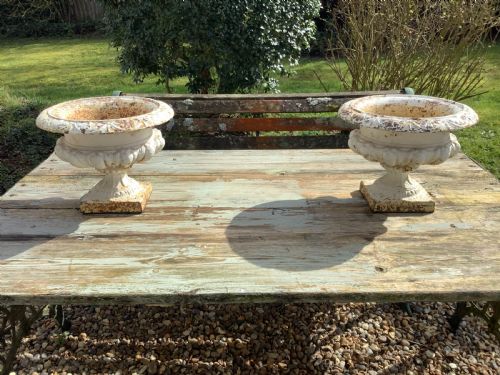
Pair of Iron Urns
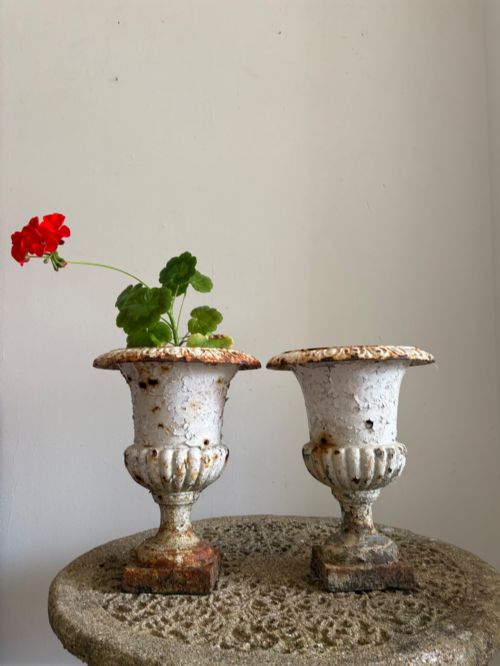
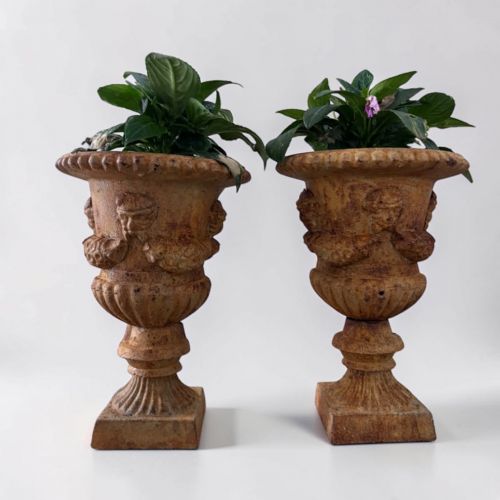
When you search for a pair of iron urns, you encounter robust garden ornaments and neoclassical planters cast in the nineteenth century.
How They Were Made
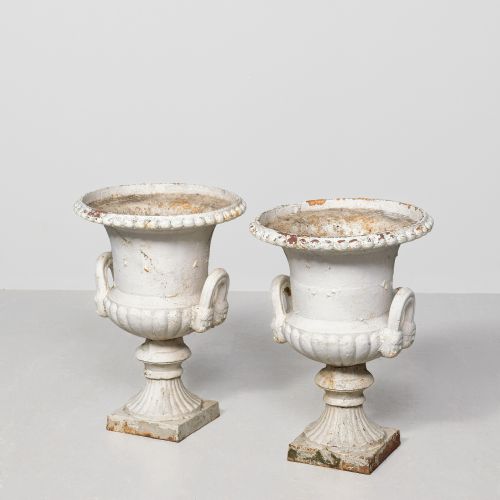
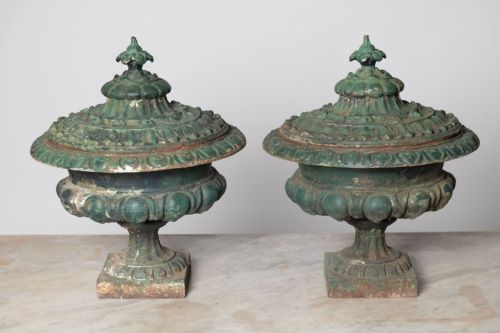
Foundries utilised traditional sand casting techniques to pour molten iron into elaborate multi-part moulds, creating crisp relief details and sturdy walls. This process allowed workshops to replicate classical motifs such as acanthus leaves, egg-and-dart borders, and twin handles with high fidelity.
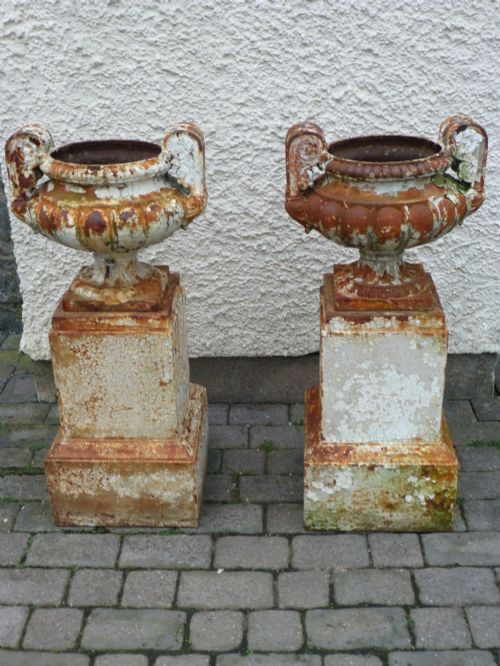
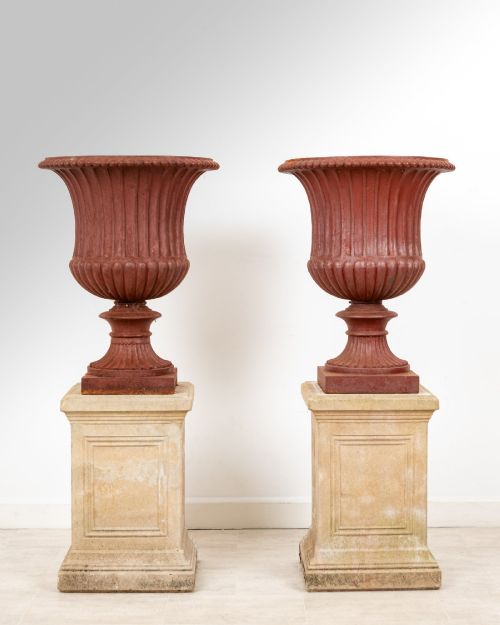
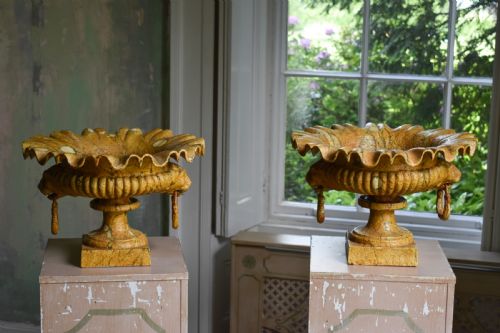
Many surviving examples retain traces of early paint schemes, protective coatings, or foundational primers applied to combat outdoor weathering. Certain exceptional pieces incorporate specialised foundry marks or rest on dedicated stone pedestals that elevate the composition.
What Varies in Quality
The distinction between ordinary utility castings and superior foundry work rests on the crispness of the chased detail and the proportional balance of the vessel. Master foundries produced cleaner lines, deeper relief, and more refined classical symmetry than routine commercial makers.
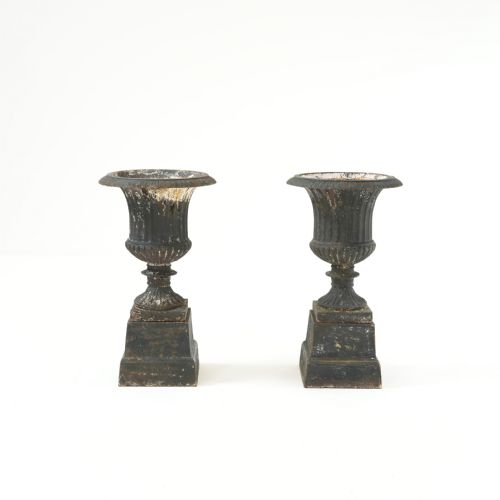
Surface integrity and structural completeness heavily influence desirability among collectors. Examples retaining original matching plinths, intact lids, or undisturbed early paint surfaces command greater attention than heavily pitted or structurally altered counterparts.
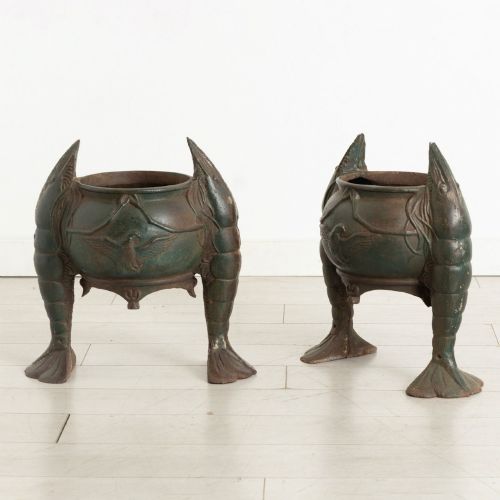
Cast iron planters modelled in the whimsical form of marine shrimp offer a surprising departure from solemn neoclassical urns.
Falkirk Carron Foundry·Coalbrookdale
The Pair of Iron Urns Glossary
- Campana Urn
- A bell-shaped garden vessel with an everted rim, tapering body, and footed base. This classic neoclassical form appeared frequently in nineteenth-century cast iron.
- Medici Urn
- A large flared garden urn decorated in low relief with classical figures or foliage, originating from Renaissance interpretations of ancient marble prototypes. Cast iron versions became staples of Victorian country house landscaping.
- Tazza
- A shallow cup or bowl mounted on a stem and foot, functioning as an ornamental garden urn. These elevated pieces display botanical planting with distinct architectural presence.
- Plinth
- A heavy base or pedestal supporting an urn to raise its height in a garden scheme. Original matching plinths significantly enhance the visual scale of iron planters.
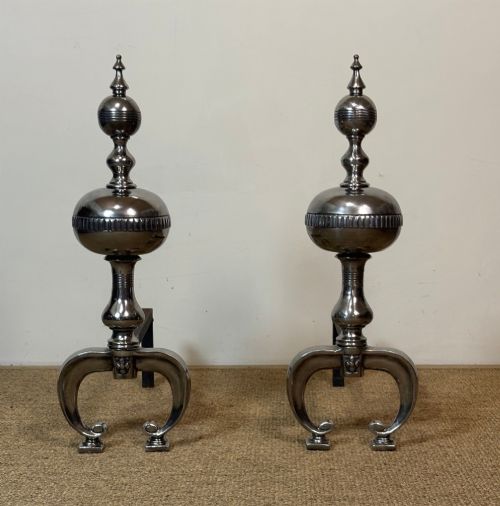
- Fire Dog
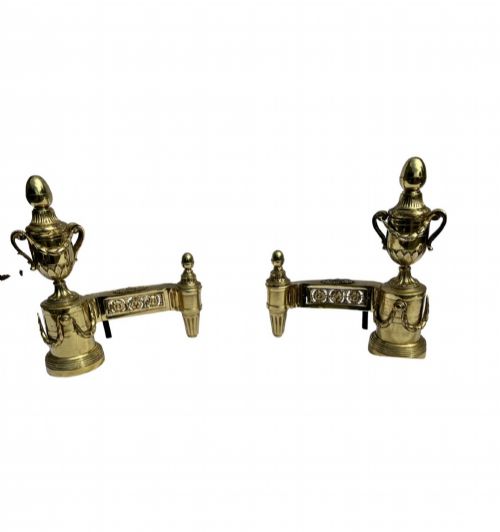
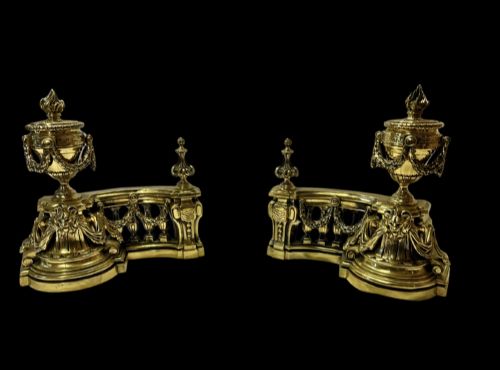
- An andiron used in pairs to support logs in an open fireplace, occasionally rendered in cast iron or steel with neoclassical detailing. These functional hearth accessories mirror the decorative vocabulary of garden urns.
Pair of Iron Urns: Frequently Asked Questions
Where should I place iron urns in a garden?
Heavy iron urns suit formal garden settings, terrace corners, and grand entranceways where their substantial weight provides stability.
They anchor architectural planting schemes particularly well when mounted on matching stone or iron plinths.
How do I protect cast iron urns from rust?
Maintaining a stable exterior coating of traditional paint prevents moisture penetration and ongoing oxidation.
Inspect the surface periodically for weathering and apply appropriate protective primers suited for outdoor cast metal.
Are original pedestals important for antique urns?
Original matching plinths complete the intended classical proportion and elevate the visual impact of the composition.
Pieces retaining their period bases command stronger historical integrity among collectors and landscape designers.
How can I distinguish nineteenth century castings?
Nineteenth century examples display heavier wall thicknesses, sharper relief work from worn-in foundry moulds, and authentic surface patination.
Closer inspection often reveals tool marks, older paint layers, or distinct foundry attribution stamps associated with the period.