



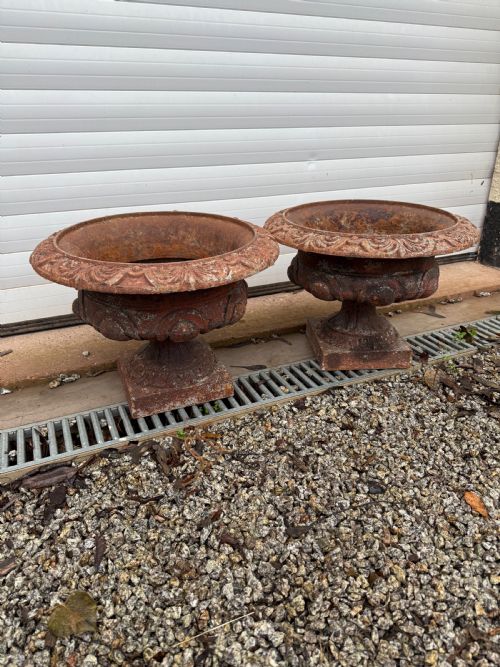


Outdoor Decorative Urns
Outdoor decorative urns bring classical form and enduring weight to gardens and patios through heavy iron casting and grand nineteenth century proportions.
Outdoor Decorative Urns
Outdoor decorative urns span garden urns, garden planters, and garden urns and planters designed to hold plants or stand as architectural focal points. When you search for outdoor decorative urns, you encounter substantial garden vessels shaped by Victorian, Neoclassical, and French nineteenth century design traditions.
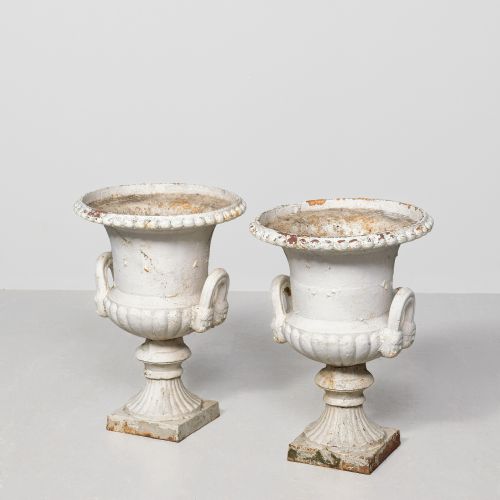
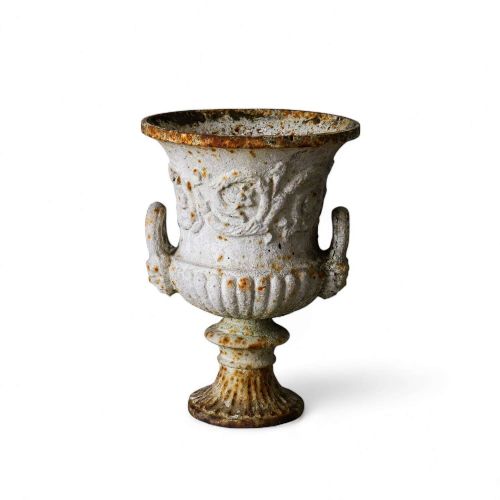
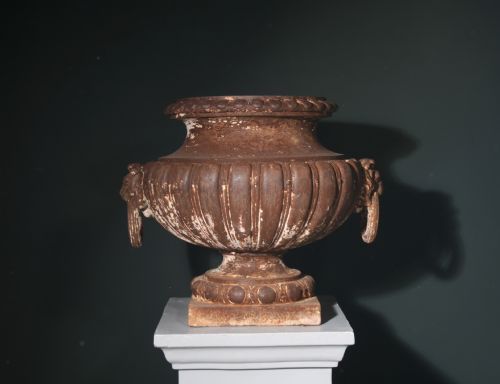
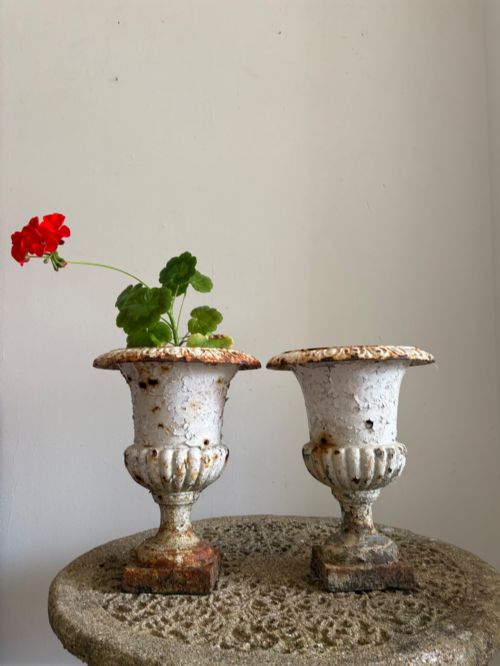
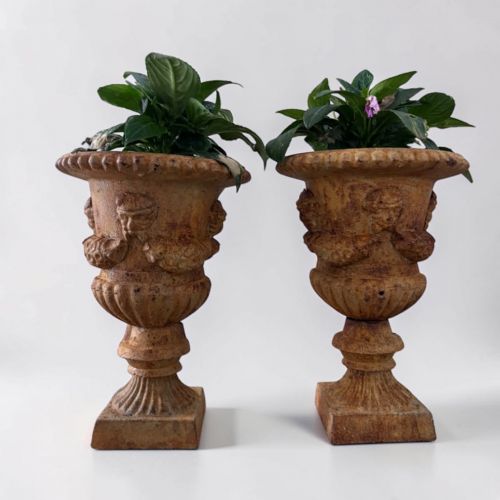
The most common versions on this page are cast iron Campagna urns and tazza urns dating from the nineteenth century, often found as pairs. These pieces frequently feature classical acanthus leaf details, pedestals, and original distressed paint surfaces.
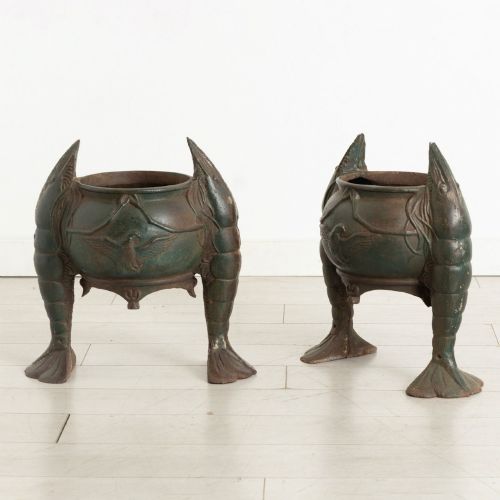
Origins represented in these listings include British and French foundries, encompassing works from makers such as the Val d'Osne Foundry and Andrew Handyside. Forms range from traditional classical profiles to Victorian novelty designs shaped like shrimp.
How they were made
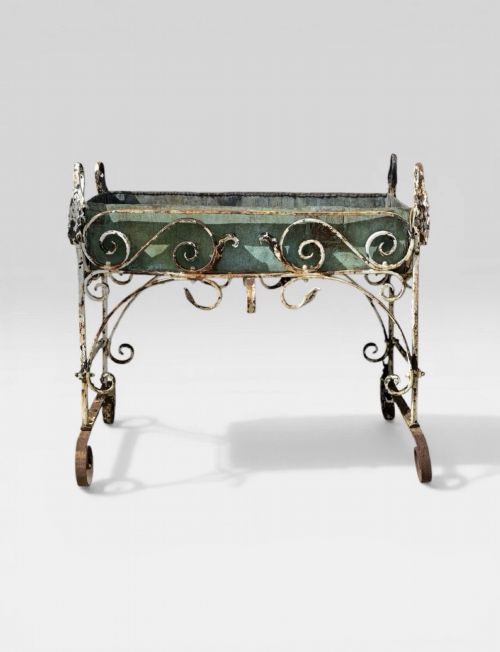
Makers produced these outdoor decorative urns primarily through iron casting, pouring molten metal into sand moulds to achieve crisp classical details like acanthus leaves and fluted bowls. Wrought iron and zinc also appear, shaped through hammering and fabrication for specific planter forms.
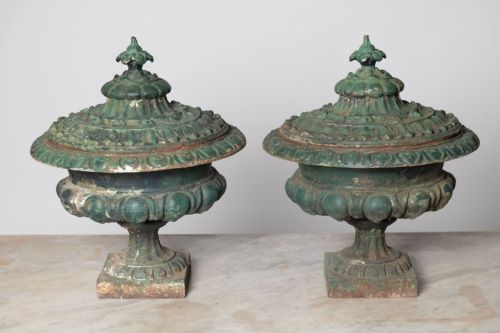
Surface finishes involved layered paint, which has weathered over decades to create authentic distressed patinas. Many items retain original lids, and heavier cast iron construction provided the durability required for permanent outdoor placement.
Victorian whimsy occasionally bypassed classical restraint, yielding cast iron planters shaped entirely like giant shrimp.
What varies in quality
Quality in outdoor decorative urns rests on the crispness of the casting and the prominence of the foundry work. Pieces bearing recognizable foundry stamps or complex sculptural details such as acanthus foliage demonstrate higher artistic ambition.
The survival of original elements like matching pedestals and original lids elevates an example above standard gardenware. Surface preservation also matters, particularly where weathered original paint survives intact on heavy cast iron bodies.
Andrew Handyside·Val d'Osne Foundry
The Outdoor Decorative Urns Glossary
- Campagna urn
- A bell-shaped garden urn on a pedestal, widely produced in the nineteenth century for classical landscape design. This form derives from ancient Roman marble excavations.
- Tazza urn
- A shallow bowl-shaped vessel on a high stem and base, often used as a garden planter. Victorian examples frequently feature cast iron construction and classical ornament.
- Acanthus leaf
- A classical ornament based on Mediterranean foliage, carved or cast onto urn bodies and pedestals. This motif defines Neoclassical and Victorian revival styles.
- Val d'Osne Foundry
- A prominent nineteenth century French iron foundry known for producing decorative architectural cast iron and garden urns. Their marked pieces represent high-level foundry production.
Outdoor Decorative Urns: Frequently Asked Questions
How do I identify a nineteenth century cast iron urn?
Nineteenth century cast iron urns display heavy metal weight, sand-casting textures, and classical motifs such as acanthus leaves or campana profiles. Look for foundry marks on the base or interior.
Matching pairs from this period often exhibit weathering patterns consistent with prolonged outdoor exposure and original painted surfaces.
Can these garden urns stay outside all year?
Cast iron and wrought iron urns withstand outdoor conditions due to their robust metal construction. They develop stable weathered patinas when left exposed to the elements.
Ensure proper drainage inside the bowl to prevent water accumulation and potential cracking during freezing temperatures.
What is the difference between an urn and a planter?
Garden urns typically feature a stemmed foot and a distinct classical profile designed for both ornament and planting. Planters encompass a broader range of vessels built specifically to hold earth and flora.
Many nineteenth century examples combine both functions under categories like garden urns and planters.
Are original lids important for antique urns?
Original lids add completeness to antique urns, though many pieces survived centuries without them. Lids altered the silhouette from an open planting bowl to a closed classical monument.
Finding a matched pair with original lids remains unusual in nineteenth century garden antiques.