



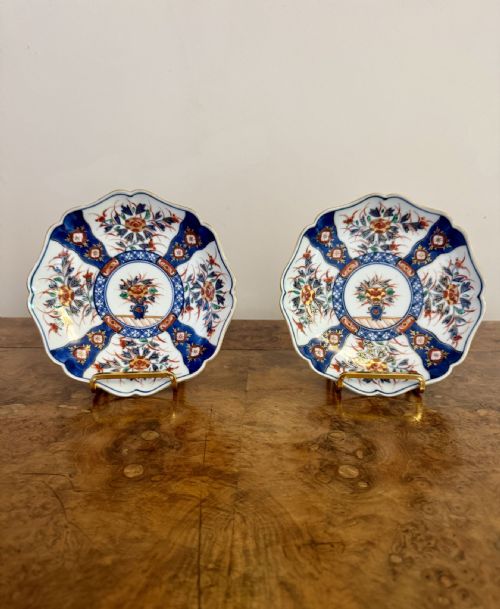
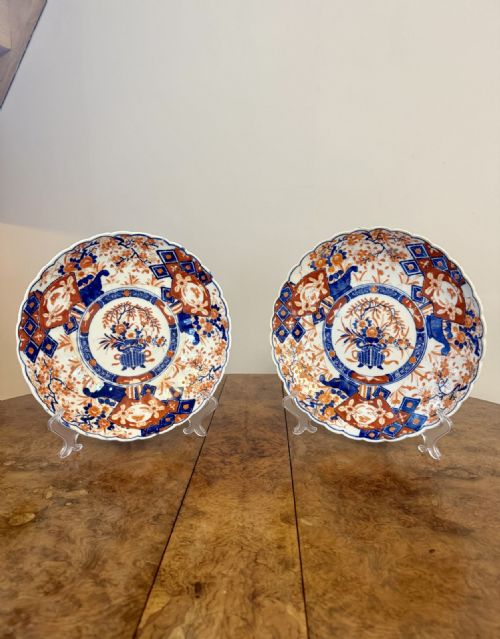
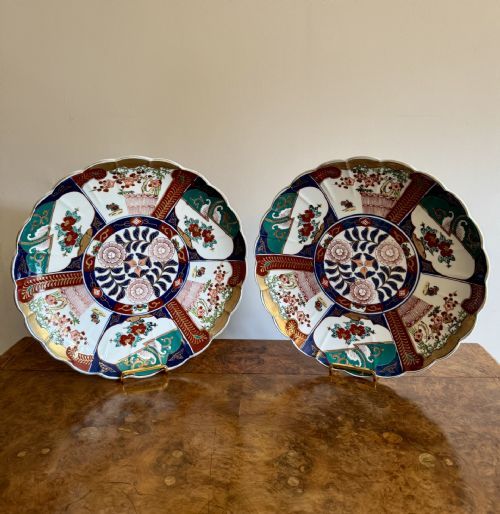
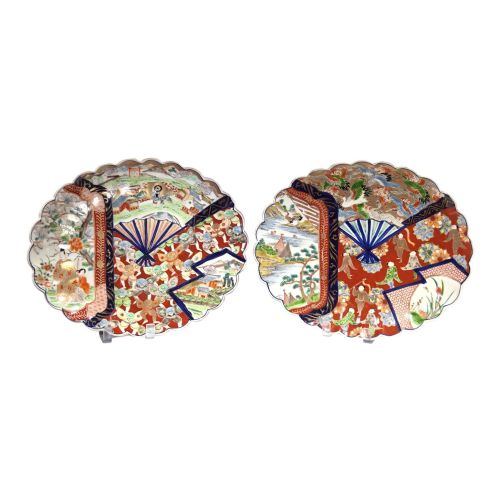
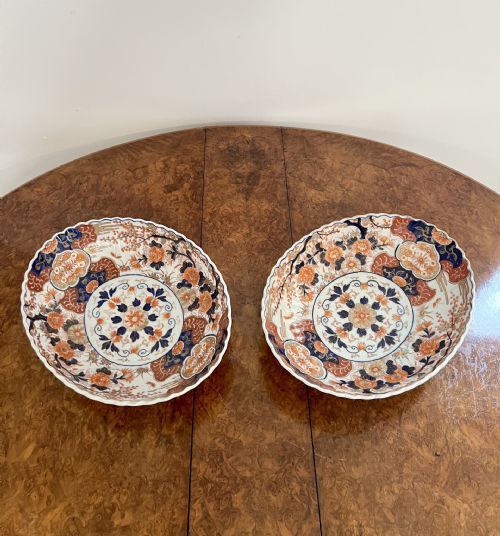


Pair of Imari Chargers
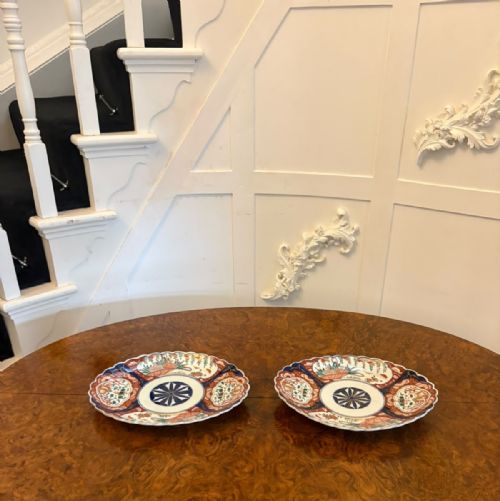
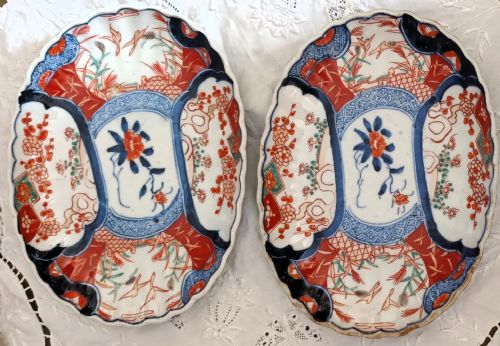
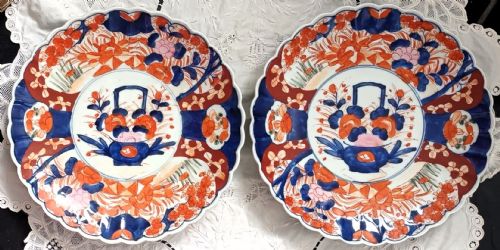
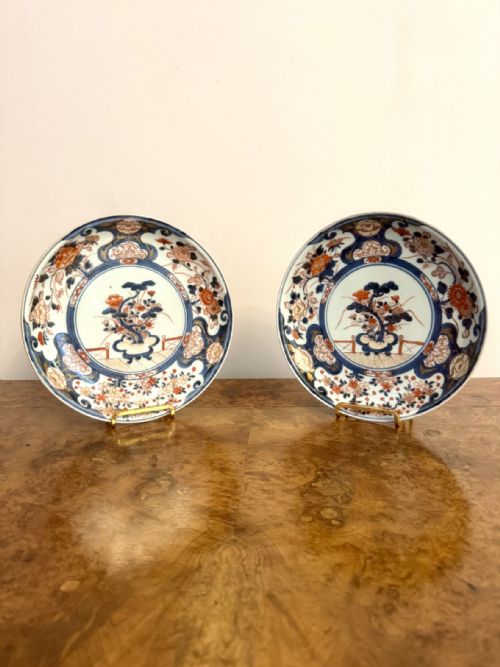
A pair of imari chargers brings vibrant iron-red, cobalt blue, and gilt porcelain display pieces into a room.
Pair of Imari Chargers
A pair of imari chargers consists of large decorative plates or shallow dishes produced in matching sets for display, primarily originating from Japanese kilns during the Meiji period and the nineteenth century. Buyers searching for a pair of imari chargers will most frequently encounter nineteenth-century Japanese porcelain pieces featuring traditional palettes and scalloped or round edges.
The inventory includes examples depicting scenes such as the Seven Lucky Gods and exotic birds alongside geometric and floral motifs. Alongside Japanese production, variations extend to Chinese export porcelain and nineteenth-century English ceramic interpretations bearing date marks.
Forms range from large round wall chargers to octagonal plates and deep decorative bowls designed to command attention on surfaces. These matched or near pairs demonstrate the historic demand for symmetrical display arrangements in interior decoration.
How they were made
Potters shaped these chargers from porcelain and ceramic bodies before applying cobalt pigment beneath the glaze to establish the foundational blue designs. Enamel glaze colours, notably iron-red and other pigments, were added in subsequent firings over the glaze.
Gold leaf and rich gilding were often painted onto the surface to highlight intricate details and enrich the overall palette. Hand painting ensures subtle variations exist between individual pieces, even within matched sets produced during the same period.
Pair of Imari Chargers Retail Price Guide 2026
Typical asking prices for pair of imari chargers among the pieces listed under this phrase on Sellingantiques today, from the lower quarter to the upper quarter. They describe what is for sale here now, not the wider market.
Listings feature porcelain pieces spanning the eighteenth century, the Victorian era, and the Meiji period, incorporating gold leaf and cobalt pigment.
What varies in quality
The crispness of the hand-painted brushwork and the complexity of the narrative or decorative scenes determine the upper tier of these chargers. Superior examples exhibit precise cobalt tones and carefully registered enamel glaze work that remains vibrant across both plates.
The weight and finish of the porcelain body, along with the preservation of the gold leaf and gilding, separate standard production from exceptional nineteenth-century and earlier pieces.
The Pair of Imari Chargers Glossary
- Imari
- A style of Japanese porcelain featuring a distinct palette of underglaze blue, iron-red, and supplementary gilt highlights. This decorative tradition originated in Arita and was widely exported to Europe.
- Charger
- A large decorative plate or dish historically used for ceremonial service or prominent display on walls and sideboards. These pieces typically measure substantially larger than standard dining plates.
- Meiji Period
- The era of Japanese history lasting from 1868 to 1912, characterised by extensive international trade and the export of high-quality decorative arts. Many chargers encountered by collectors date from this prolific manufacturing period.
- Cobalt Pigment
- A mineral-based blue colouring agent applied directly to the unglazed porcelain body before firing. This material withstands high kiln temperatures to produce deep, permanent blue designs.
- Enamel Glaze
- Coloured glass-like paint applied over the fired glaze and fixed in a lower-temperature muffle kiln. This technique allows for vibrant reds, greens, and yellows to sit proud of the porcelain surface.
Pair of Imari Chargers: Frequently Asked Questions
How were pair of imari chargers displayed?
These large plates were traditionally arranged on sideboards, mounted on walls, or set into specialised display stands to showcase their rich colours. Their generous diameter made them focal points in formal rooms.
Pairs were intentionally matched to create symmetrical arrangements on opposite sides of a mantelpiece or within dedicated cabinet displays.
What is the difference between Arita and Imari?
Arita refers to the Japanese town and surrounding region where the porcelain clay was mined and fired. Imari was simply the port town from which these finished wares were shipped to Western markets.
Over time, the port name became synonymous with the specific blue, red, and gold decorative style produced in the inland kilns.
How do I date a pair of imari chargers?
Dating relies on examining the characteristics of the porcelain body, the vibrancy of the cobalt pigment, and the style of the hand-painted motifs. Nineteenth-century Meiji examples often display dense pictorial scenes and refined gilding.
Earlier eighteenth-century pieces tend to feature heavier potting and different compositional balances compared to later Victorian and Meiji outputs.
Are these chargers safe for food use?
Antique chargers of this age and decorative nature are intended strictly for display and decorative appreciation rather than culinary service. The overglaze enamels and gold leaf can wear down or sustain damage from frequent washing and utensil contact.
Preserving the surface requires keeping them on display stands or securely mounted away from high-traffic areas.