



Pair of Glass Lustres
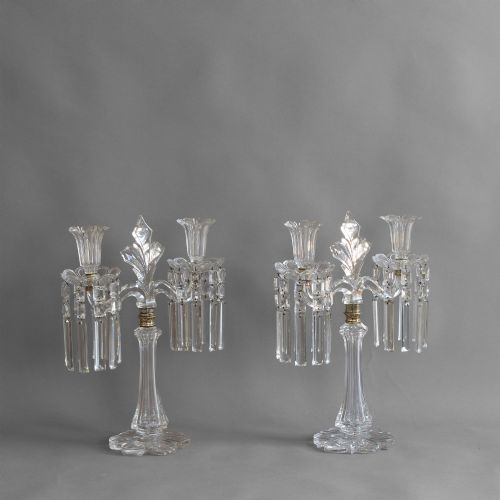
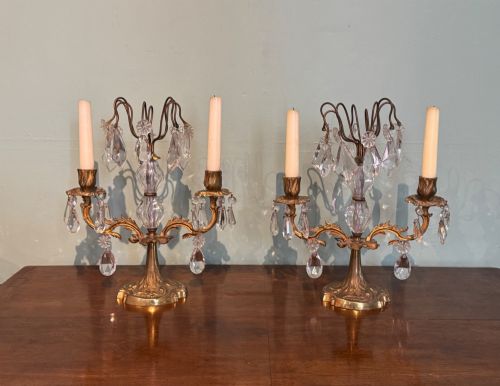
A pair of glass lustres brings glittering candlelight and prismatic drops to a mantelpiece, combining functional lighting with decorative glass.
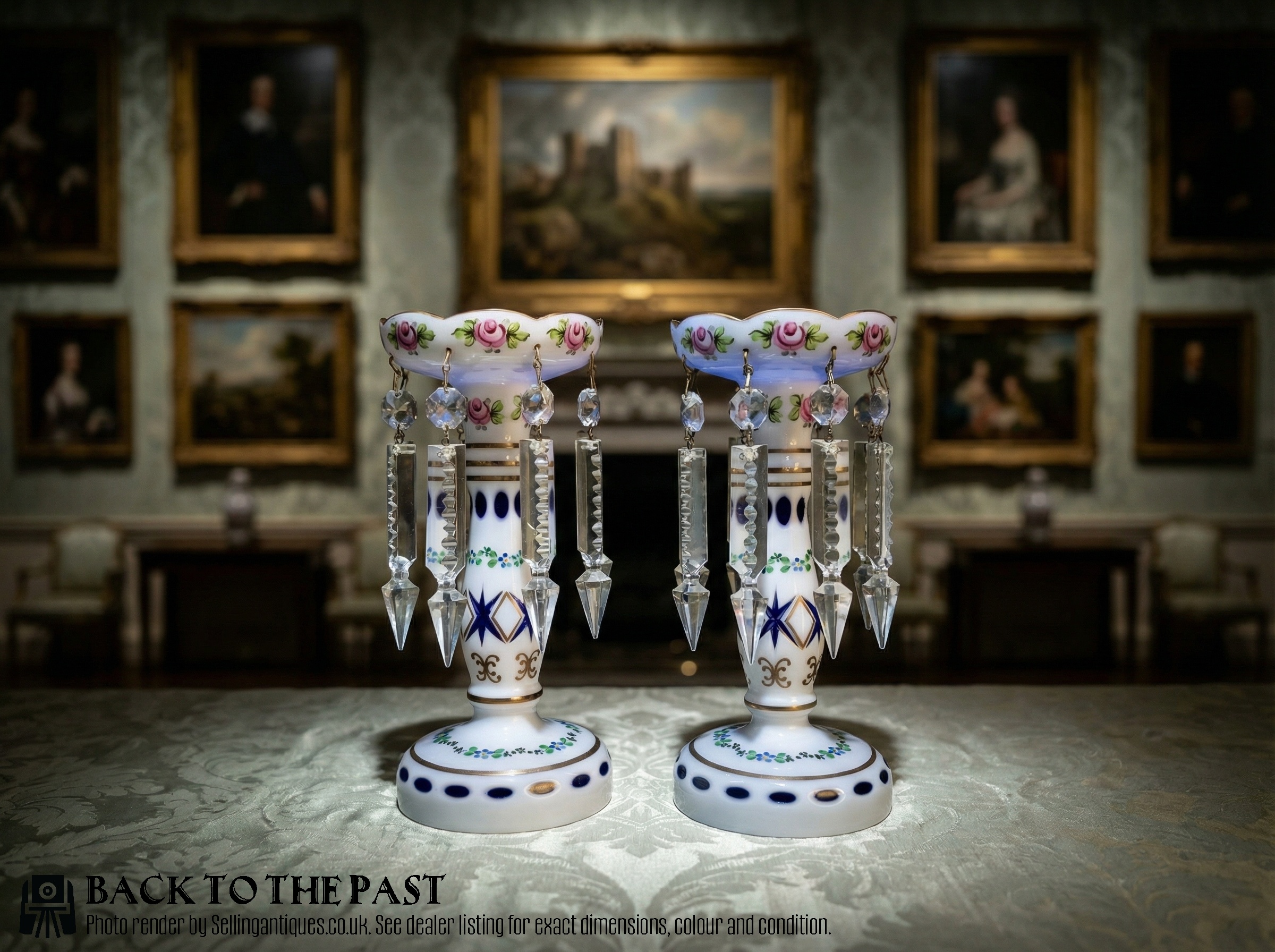
Pair of Glass Lustres
When you search for a pair of glass lustres, you encounter ornamental candle holders designed to catch and refract light through suspended crystal or glass pendants. These objects typically stand on mantelpieces or tables, serving as both functional lighting and decorative centrepieces.
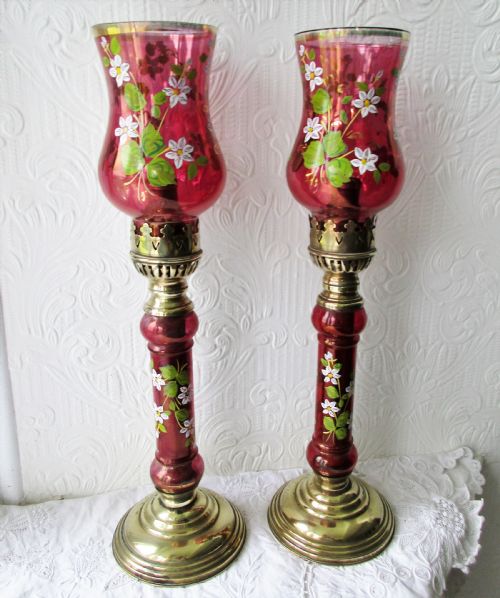
The selections span multiple eras, with Victorian examples appearing most frequently alongside Regency, Georgian, and Edwardian pieces. Formats range from simple mantel lustres to elaborate table candelabras fitted with glass drops and storm shades.
Materials and construction
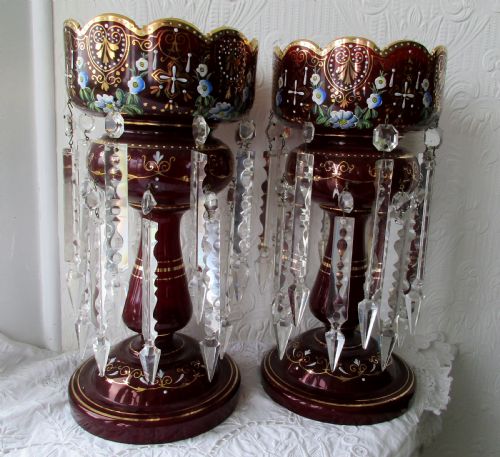
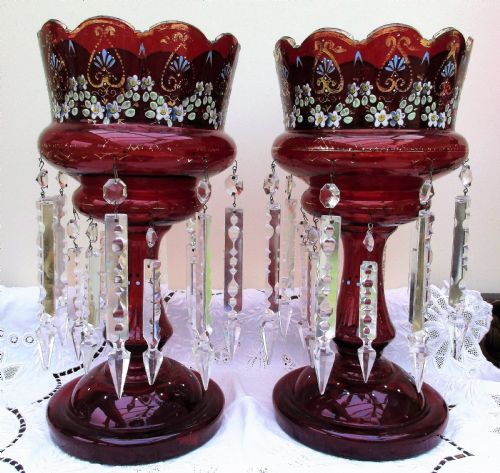
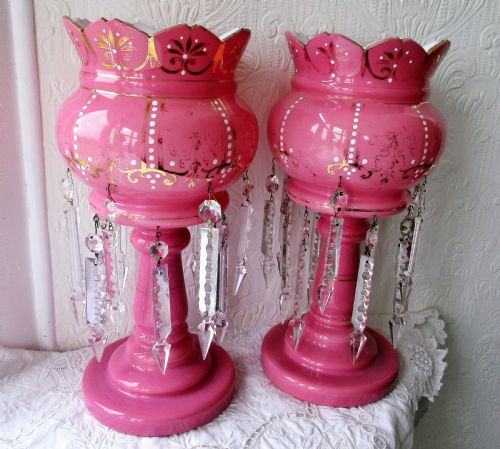
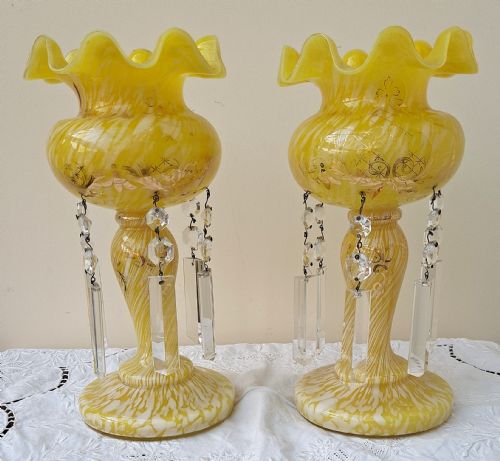
Maker operations combined glassblowing and cutting techniques, utilising crystal, ruby glass, opaline, milk glass, and overlay glass. Coloured glass layers were often cut back to reveal a contrasting white or clear interior, creating rich visual depth.
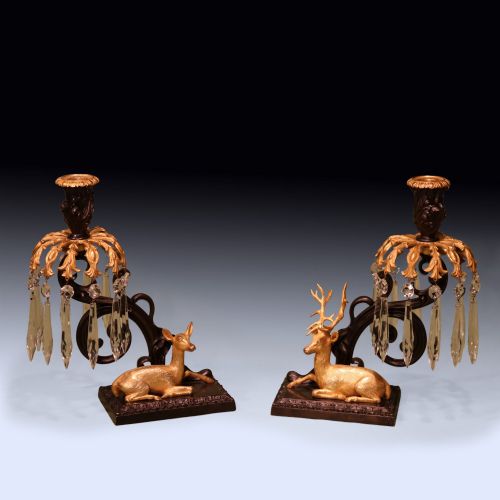
Metal components such as brass, bronze, ormolu, and gilt metal frequently form the bases and mounts. Prismatic glass drops hang from the central rims by wire loops, completing the reflective assembly.
Stag and doe figures occasionally support the candle sockets, turning standard mantel lighting into a woodland tableau.
Assessing quality and finish
Quality rests upon the clarity of the glass, the depth of the hand-cutting, and the weight of the metal mounts. Superior examples display sharp facets on the crystal drops and intricate hand-painting or gilding on the body.
The completeness of the hanging lustres and the matching nature of the pair dictate the integrity of the piece. Heavier brass casting and dense overlay glass distinguish finer production from simpler moulded wares.
Clarkes
The Pair of Glass Lustres Glossary
- Lustre
- An ornamental candlestick or vase hung with glass pendants designed to refract candlelight. These objects became popular centrepieces in nineteenth-century drawing rooms.
- Prismatic drop
- A cut glass pendant suspended from the rim of a lustre to scatter light. They are sometimes called crystal spears or icicles.
- Overlay glass
- A technique involving two or more layers of different coloured glass fused together. The outer layer is partially cut away to reveal the contrasting colour underneath.
- Flash glass
- A thin layer of coloured glass applied over a clear or white glass body before being cut. This method produces vivid hues without heavy glass mass.
Pair of Glass Lustres: Frequently Asked Questions
How were glass lustres used historically?
Owners placed them on mantelpieces and tables to amplify candlelight through suspended crystal drops during evening gatherings. The reflective prisms maximised the dim light of period rooms.
They served primarily as decorative status objects rather than heavy-duty reading lamps.
How do I style them at home?
Position the pair symmetrically on a mantelpiece, sideboard, or console table where ambient light can strike the hanging pendants. Ensure they sit away from heavy foot traffic to protect the delicate glass drops.
Pair them with complementary nineteenth-century brass or ceramic objects for a coherent historical display.
How do I identify Victorian examples?
Victorian pieces frequently feature rich coloured glass such as ruby, green, or opaline, often enhanced with enamel painting or gilding. They typically incorporate cut glass drops suspended by small wire loops.
Comparing the weight of the metal base and the precision of the glass cutting helps distinguish nineteenth-century production from later revivals.