





Cut Glass Prism Lustres
Cut glass prism lustres are glittering mantel ornaments that hold candles and suspend dangling crystal drops, bringing striking brilliance and movement to a room.
Cut Glass Prism Lustres
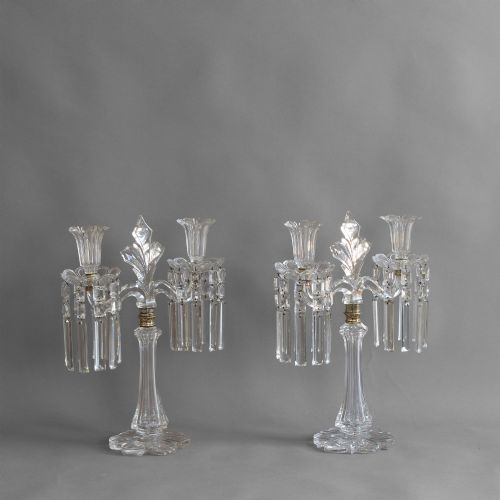
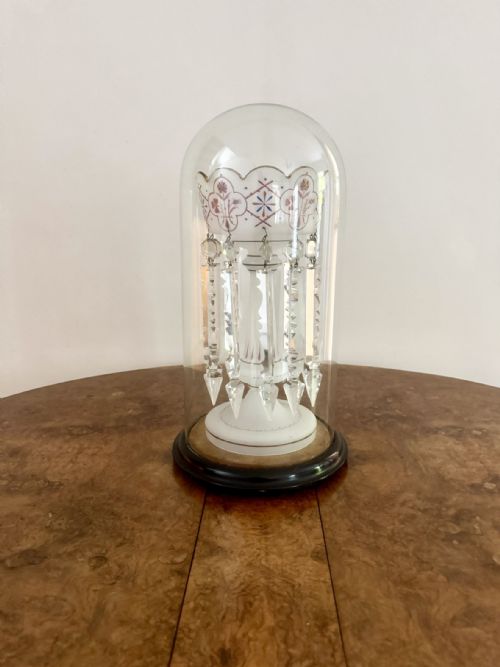
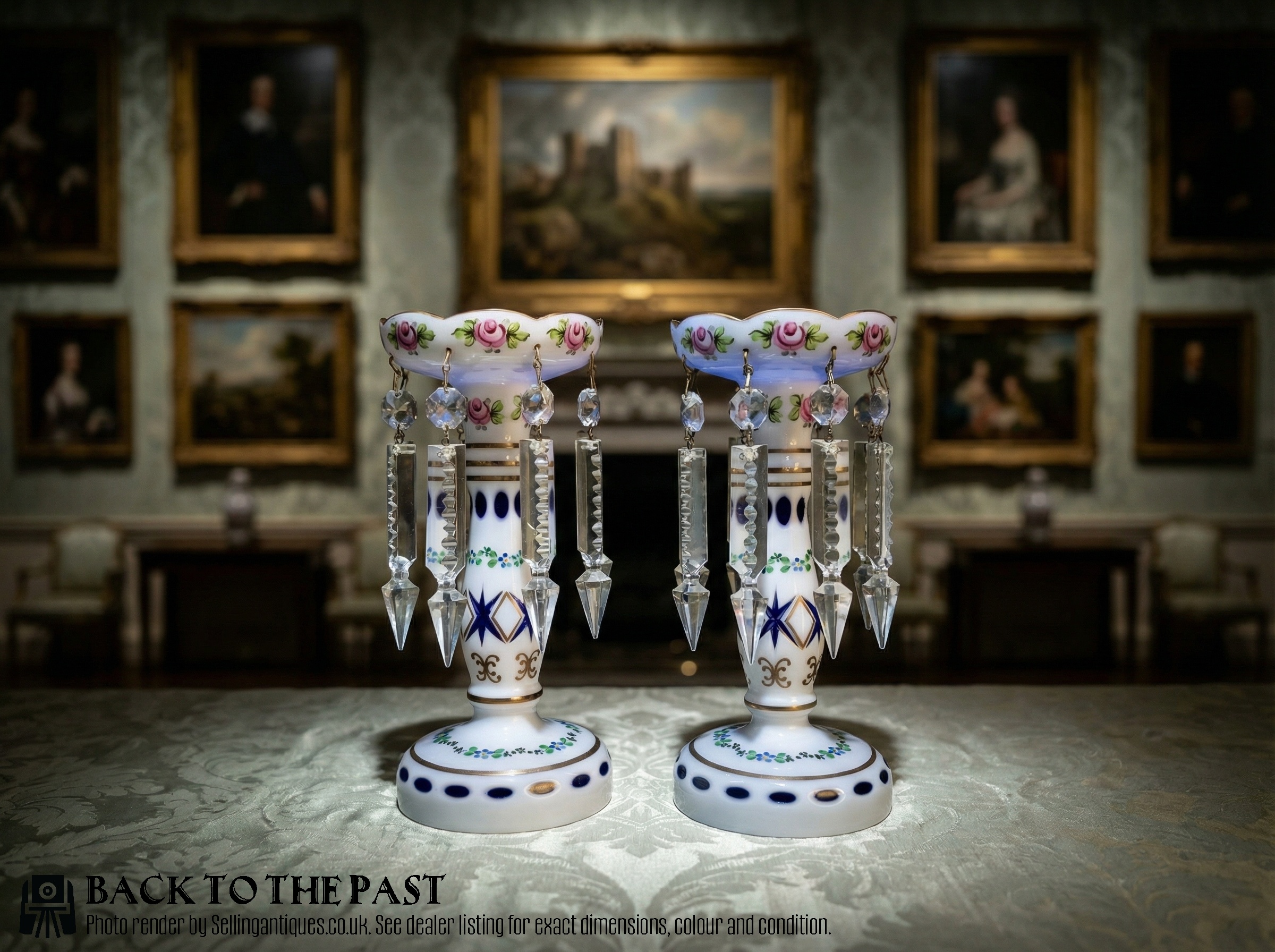
When you search for cut glass prism lustres, you encounter decorative mantel ornaments designed to hold candles while suspending faceted crystal drops from a central bowl or stem. These pieces emerge primarily from the Victorian and Regency periods, spanning the nineteenth century up to nineteen thirty.
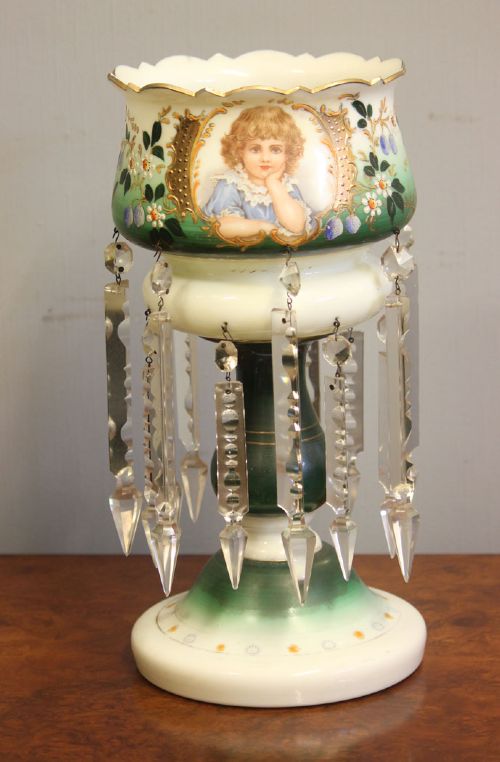
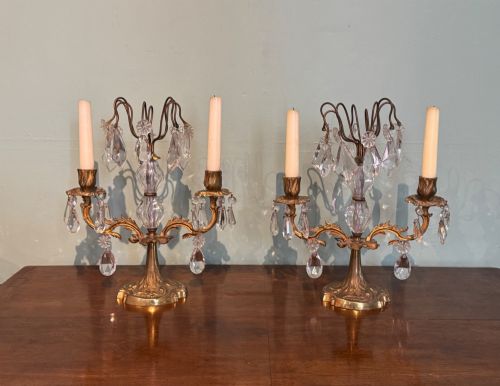
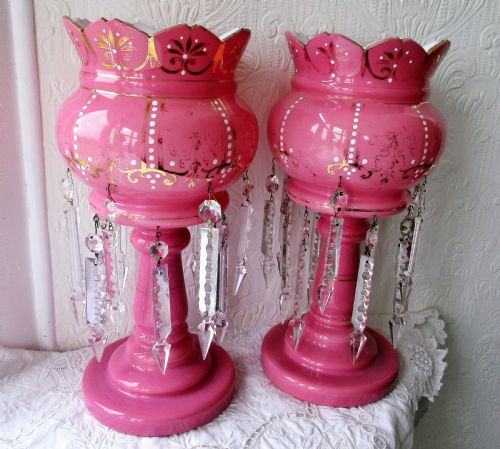
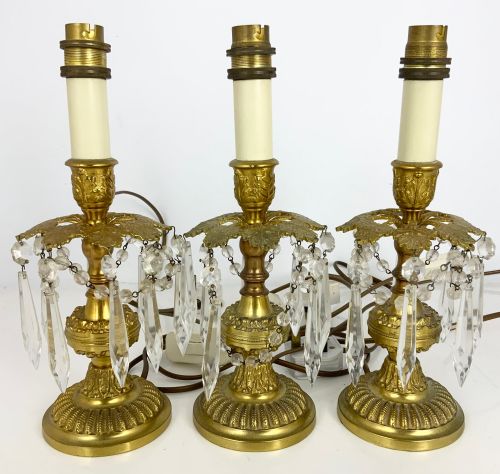
The most common forms on this page are pairs of mantel lustres and table lustres, often fashioned in coloured glass such as ruby, green, pink, and cranberry. They take the shape of candlesticks and candelabras, occasionally incorporating gilt metal, brass, bronze, or ormolu mounts.
Makers and designers drew on French Rococo Revival, Rococo, French Chateau, and French Empire styles to create ornate silhouettes. You also find Bohemian overlay and flash glass variations alongside clear cut crystal examples.
Materials and construction
Glassmakers utilised techniques of blowing, moulding, and heavy cutting to form the body and the hanging pendants. Crystal and glass received deep wheel-cut facets to maximise the reflection of candlelight.
Hanging prisms attach to the body via small pierced holes around the rim, secured by wire or metal pins. Brass, gilt, and ormolu components provide structural support and ornamental bases for the glass bowls.
Materials recorded across the inventory include crystal, glass, enamel, cut glass, cut crystal, brass, gilt, and gold leaf.
Assessing quality
Quality rests heavily on the depth and crispness of the glass cutting, alongside the clarity and resonance of the crystal. Superior examples feature well-matched sets of original cut pendants with sharp facets rather than rounded or later replacement drops.
The weight and stability of the metal mounts, whether brass, gilt metal, or ormolu, separate standard production from finer decorative pieces. Intricate moulding in the Rococo or French revival styles indicates higher craftsmanship.
The Cut Glass Prism Lustres Glossary
- Lustre
- A decorative tabletop or mantel ornament featuring hanging glass pendants designed to reflect light. These pieces double as candle holders.
- Prism
- A faceted glass drop suspended from the rim of a lustre to refract candlelight. Prisms are cut with geometric planes to catch the light.
- Overlay glass
- A technique where a layer of coloured glass covers a clear or contrasting base layer before being cut through to reveal the underlayer. This method creates rich visual depth.
- Ormolu
- Gilt bronze ornamentation applied to the base or stem of a lustre. The technique involves a mercury gold-gilding process common on Regency period pieces.
Cut Glass Prism Lustres: Frequently Asked Questions
Where should I place cut glass prism lustres?
These pieces sit traditionally upon a mantelpiece, sideboard, or console table where ambient light can pass through the hanging crystal drops.
Position them away from high-traffic areas to protect the delicate suspended prisms from accidental knocks.
How do I clean cut glass prism lustres?
Remove the hanging prisms gently and wash them in lukewarm soapy water, drying them thoroughly with a soft cloth before reattaching.
Wipe the main glass body with a damp cloth, taking care around gilt or brass mounts to preserve the finish.
Are all the hanging prisms original?
Many pieces retain their original hand-cut glass drops, though replacements occur frequently due to the fragile nature of hanging crystals.
Examine the age, wear patterns, and glass tint of the prisms to see if they match the central body.
How do I date a pair of lustres?
Dating relies on the glass colour, the intensity of the hand-cutting, and the metal mount styles typical of the Victorian and Regency eras.
Regency pieces often display bronze and ormolu elements, whilst Victorian examples frequently showcase vibrant ruby, green, or cranberry hues.