


Victorian Cased Glass Vases
Victorian cased glass vases combine layered molten colours with heavy nineteenth-century forms to brighten any mantelpiece.
Victorian Cased Glass Vases
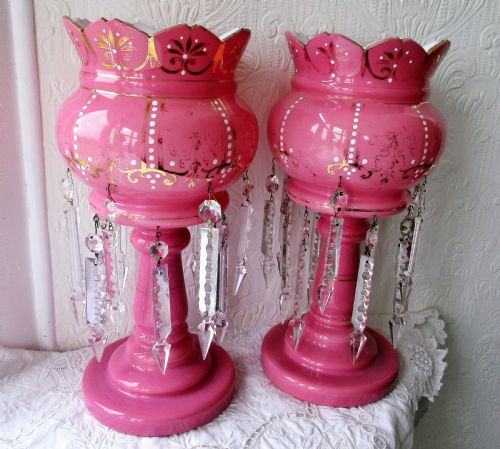
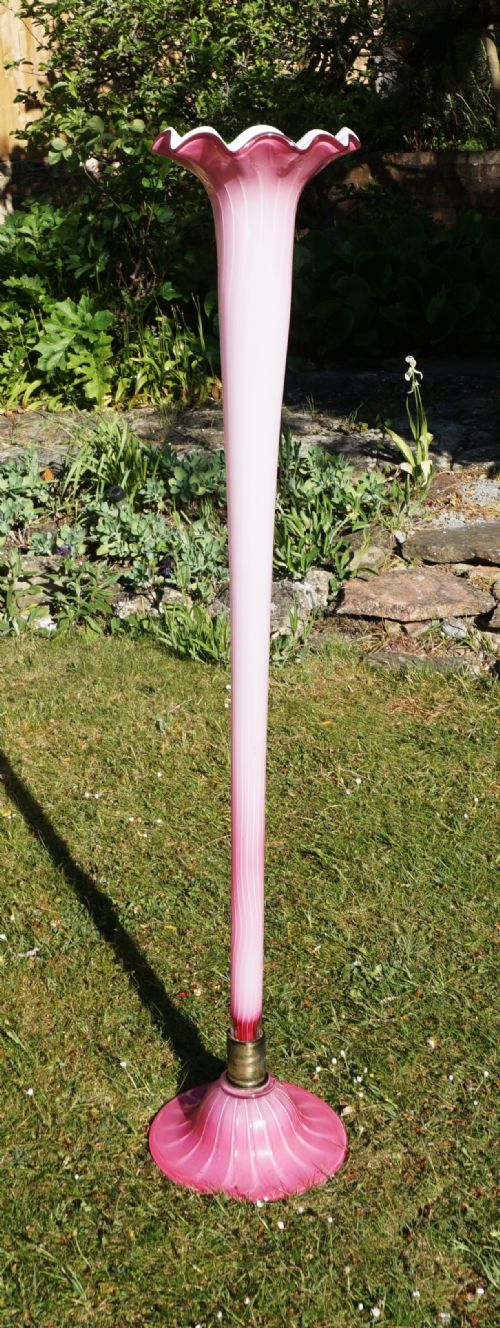
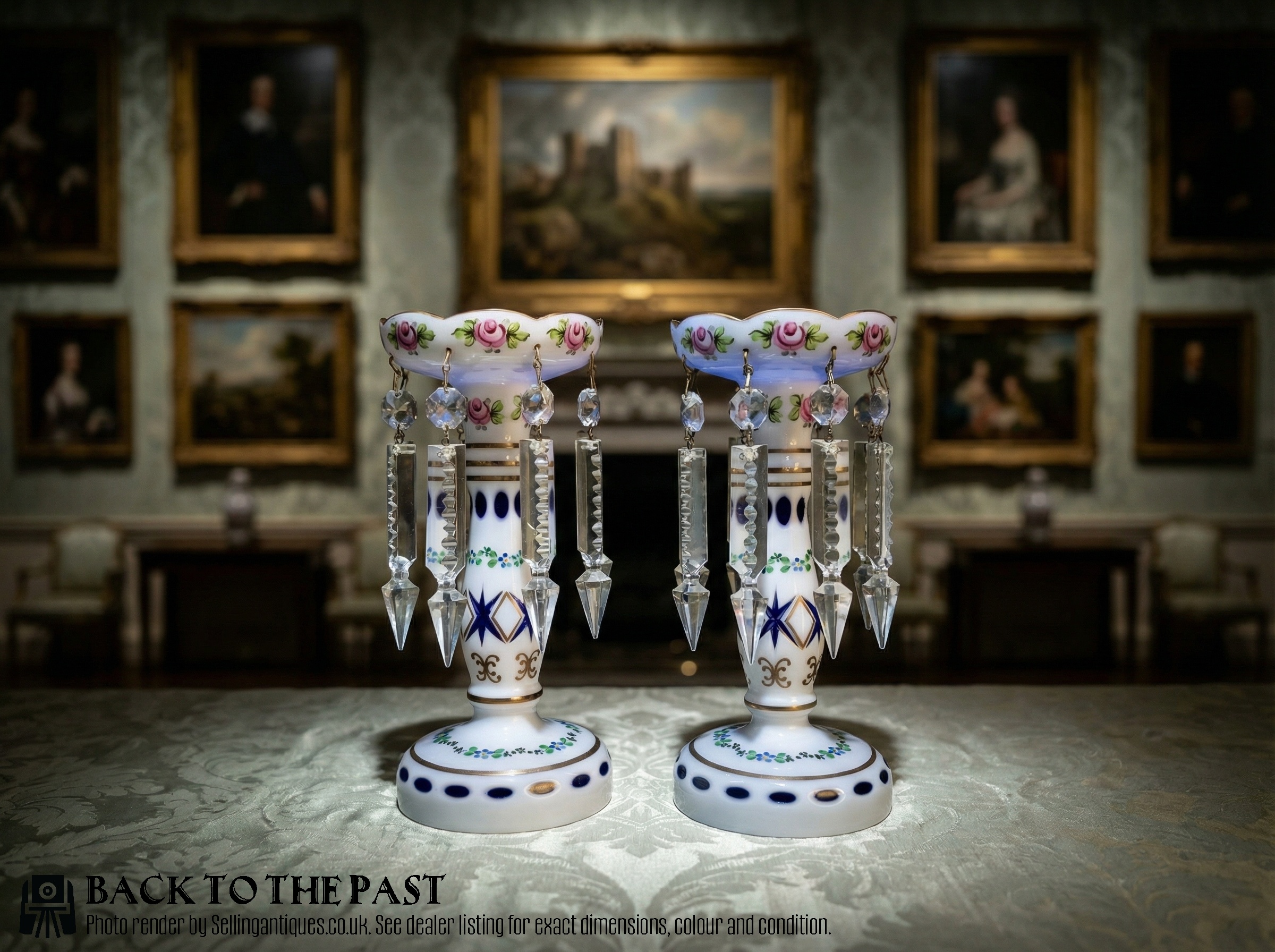
Victorian cased glass vases are nineteenth-century decorative vessels formed from multiple layers of contrasting glass fused together during manufacture. When browsing victorian cased glass vases, buyers encounter items dating from the 1880s and 1890s originating from English and Bohemian workshops. These pieces appear as single mantel vases, pairs of lustres fitted with hanging crystal drops, and large ovoid or lily forms.
The selection includes satin glass finishes alongside rich pink, blue, peachblow, and ruby colourways. Many examples feature applied enamel details or delicate gold leaf ornamentation upon the exterior body. Buyers frequently find matching pairs designed specifically for nineteenth-century mantel displays.
Materials and manufacture
Glassmakers created cased glass by gathering a core of one-colour glass on a blowing iron and dipping it into a second or third molten batch of a different colour. Artisans then blew and shaped the layered metal together, often cutting through the outer layer on a wheel to reveal the contrasting hue underneath. Workshops utilised crystal, ruby glass, and satin glass alongside applied brass elements and enamel highlights.
Makers integrated precious materials into the decorative scheme, including genuine gold leaf applied to the exterior surfaces. Bohemian and English craftsmen utilised overlay techniques to build thick walls of glass capable of supporting deep wheel-carved panels and intricate floral motifs.
Listings feature nineteenth-century items spanning the 1880s and 1890s periods, incorporating materials such as crystal, ruby glass, satin glass, and gold leaf.
Assessing quality and craftsmanship
Quality in these pieces rests upon the precision of the glass layering and the depth of the exterior glass cutting. Finer examples display an even thickness across the coloured strata without bubbles or cloudiness trapped between the fused layers. The skill of the hand-painting, particularly the crispness of the enamel work and the brilliance of the gilding, separates standard production from superior output.
Proportion and form dictate the desirability of larger vessels, such as tall lily vases or substantial mantel lustres complete with intact crystal droppers. The clarity of the crystal components and the clean execution of panel cutting reflect the expertise of the nineteenth-century glasshouse.
Webb's
The Victorian Cased Glass Vases Glossary
- Cased glass
- Glass formed from two or more distinct layers of different coloured glass fused together while molten. This layering technique allows artisans to cut through the exterior coat to expose the contrasting colour beneath.
- Satin glass
- A Victorian art glass type treated with hydrofluoric acid to produce a velvety, matte texture resembling satin. It appears frequently in pink and blue variations across the nineteenth-century pieces.
- Mantel lustre
- A decorative vase fitted with a rim hung with cut crystal prisms or drops, designed to sit on a fireplace mantel. These fixtures reflect ambient candlelight and daylight.
- Peachblow
- A shaded art glass type transitioning from white to a deep peach or pink tone, popular during the late nineteenth century. It is often found in Bohemian manufacture.
- Overlay glass
- Glass constructed with multiple opaque or transparent strata where the outer layer is partially cut away to create contrasting patterns. It is synonymous with nineteenth-century Bohemian production.
Victorian Cased Glass Vases: Frequently Asked Questions
What is a cased glass vase?
A cased glass vase is a vessel constructed from multiple layers of different coloured glass fused together during the blowing process. This method allows makers to create striking visual contrast by cutting away parts of the outer layer.
Nineteenth-century artisans utilised this technique to produce rich pink, blue, and ruby vessels adorned with enamel and gold leaf.
How do I date a Victorian glass vase?
Dating relies on stylistic markers, colour palettes, and manufacturing techniques recorded across the 1880s and 1890s periods. English and Bohemian pieces from this era frequently exhibit satin finishes or heavy overlay cutting.
Examining the pontil mark on the base also provides clues regarding the period and the production methods employed by the glasshouse.
What are mantel lustres used for?
Mantel lustres served as decorative shelf ornaments in nineteenth-century homes, traditionally placed upon fireplace mantels. The hanging crystal prisms were designed to catch and refract the light from oil lamps and candles.
Pairs of lustres formed symmetrical centrepieces for formal Victorian rooms alongside standard vases.
How should I clean antique glass vases?
Antique glass requires gentle hand washing in lukewarm water with mild soap to protect delicate enamel and gold leaf decoration. Submerging pieces or using abrasive brushes can permanently damage the exterior surface.
Items featuring applied brass or hanging crystal drops demand particular care to avoid loosening original mountings.