



Pair of Doulton Vases
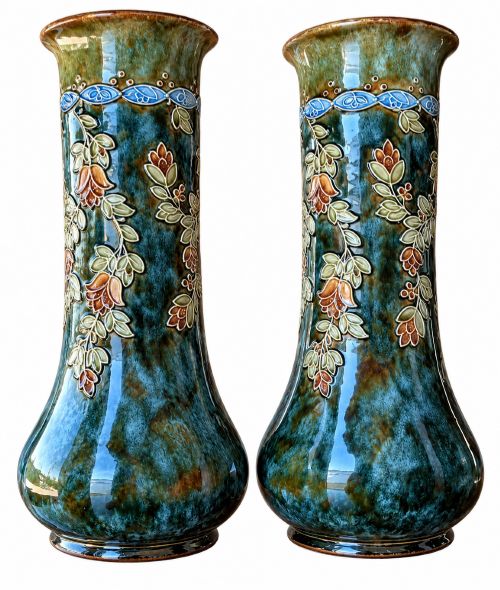
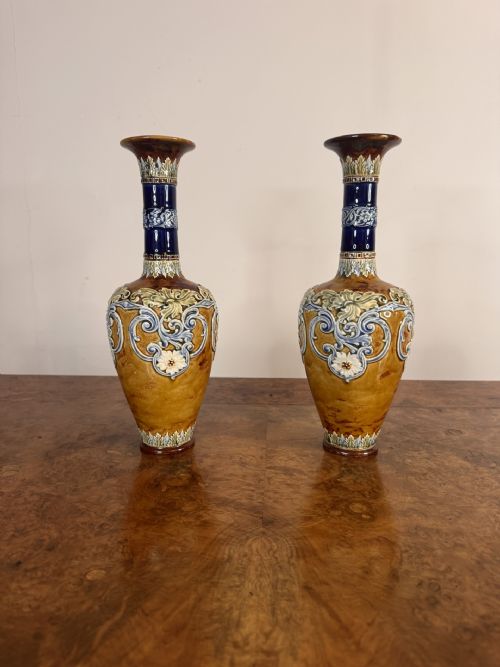
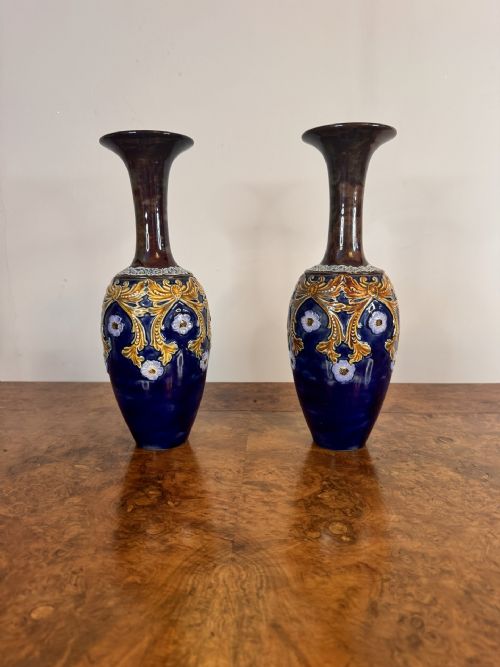
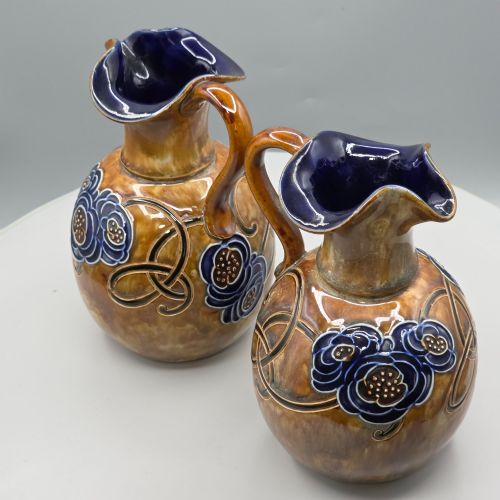
These pair of doulton vases bring together the distinctive studio pottery traditions and floral ornament of the late nineteenth and early twentieth centuries.
Pair of Doulton Vases
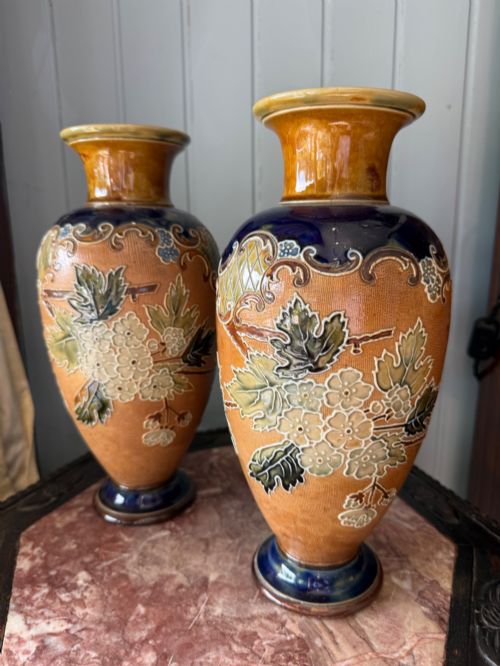
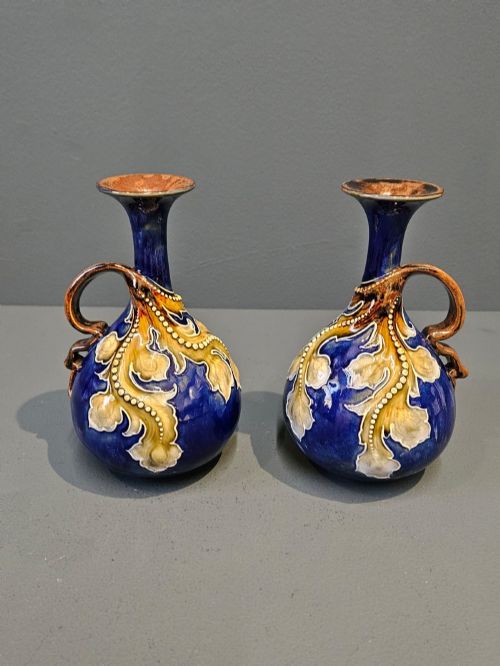
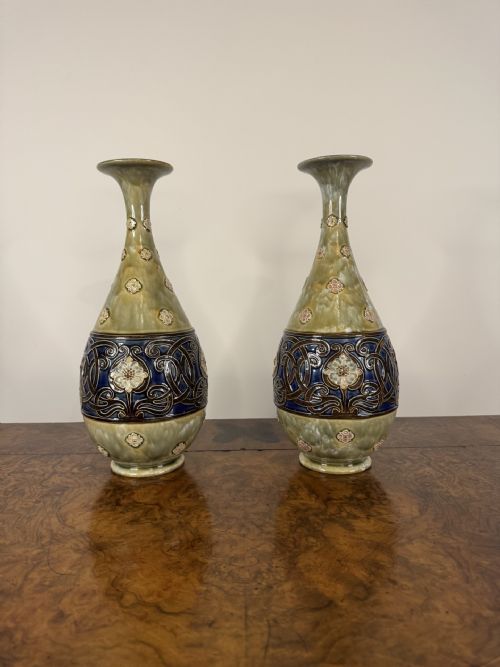
A pair of doulton vases comprises matching vessels shaped in stoneware, earthenware, and ceramic, originating largely from the Victorian era through the 1920s. The selection on this page centres heavily on Lambeth stoneware and Burslem productions, capturing the shift from Victorian historical revival styles towards organic Art Nouveau and Arts and Crafts forms.
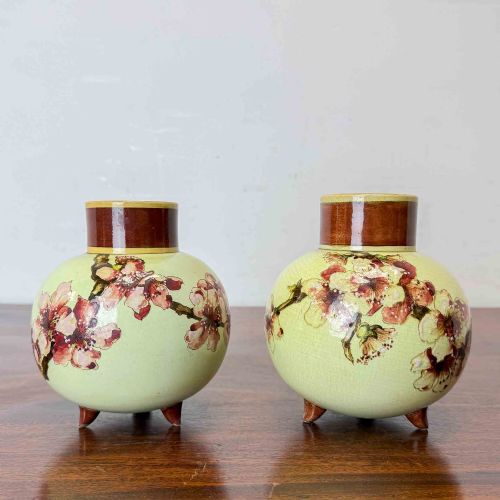
Buyers encounter varied silhouettes ranging from standard baluster and beaker forms to specialised jugs and three-dolphin bases. Many examples display the textured surfaces of Slater's Patent alongside hand-painted floral enamel or raised leaf patterns.
The origin spans iconic studio potteries where named artists decorated individual pots, resulting in matched pairs that share decorative schemes but reveal subtle hand-painted variations. These items served primarily as decorative interior ornaments for period homes.
How they were made
Potters shaped durable stoneware and earthenware clays on the wheel or into moulds to create baluster, beaker, and shaped vessels. Glaze and enamel were then applied by hand, often incorporating textured lace impressions via Slater's Patent techniques before kiln firing.
Individual artists painted botanical motifs, cherry blossoms, and abstract patterns directly onto the ceramic body. Salt glaze methods provided the hard, impervious finish characteristic of Lambeth wares.
Pair of Doulton Vases Retail Price Guide 2026
Typical asking prices for pair of doulton vases among the pieces listed under this phrase on Sellingantiques today, from the lower quarter to the upper quarter. They describe what is for sale here now, not the wider market.
Listings feature stoneware, ceramic, and earthenware materials decorated across the Victorian period, Art Nouveau, and Arts and Crafts styles.
What varies in quality
The distinction between standard factory production and exceptional work rests on the involvement of named studio artists and the complexity of the hand-painted enamel decoration. Pieces carrying distinct signatures or monograms from notable Lambeth decorators command higher regard than uncredited factory output.
Form and proportion dictate the visual appeal of a matched pair, with unusual silhouettes and intricate incised ornament representing the upper tier of the range. Uniformity in the salt glaze finish and the crispness of applied floral motifs further separate ordinary vessels from finer examples.
Royal Doulton·Doulton Lambeth·Doulton Burslem·Louisa Wakely·Emily Edwards·Ethel Beard·Alberta L Green·Eliza Simmance·Frank Butler
The Pair of Doulton Vases Glossary
- Stoneware
- A robust, vitrified pottery body fired at high temperatures until non-porous. It accepts salt glazes and rich surface incising particularly well.
- Lambeth
- The London district where Doulton established a major studio pottery centre. Pieces from this location frequently feature artist monograms and intricate stoneware designs.
- Slater's Patent
- A manufacturing technique utilising pressed lace or textiles onto moist clay surfaces to create textured patterns. This background was often filled with coloured enamel.
- Baluster
- A vertical architectural form swelling gracefully towards the lower centre. It remains a classic silhouette for ceramic display vessels.
- Faience
- Tin-glazed earthenware offering a smooth opaque surface for painted decoration. It allowed artists to work with broader colour palettes than standard salt-glazed stoneware.
Pair of Doulton Vases: Frequently Asked Questions
How do I style a pair of vases?
Place them symmetrically on a mantlepiece or sideboard where the matching glaze and form can be appreciated together. Ensure they sit away from heavy foot traffic to protect delicate enamel decoration.
Pair them with complementary period objects like Arts and Crafts metalwork or Victorian ceramics to build a cohesive room aesthetic.
Were these vases used for fresh flowers?
Many were designed strictly as decorative parlour ornaments rather than utilitarian vessels for water. Check the interior for unglazed surfaces or remnants of old use before filling them.
Using a small glass insert protects the historic interior surface if you decide to display fresh stems.
How do I identify a Lambeth piece?
Look for impressed factory stamps, specific model numbers, and hand-scratched artist monograms near the base. Lambeth pieces typically utilise heavier stoneware bodies with incised or salt-glazed finishes.
Compare the tactile, textured clay surface against smoother earthenware products from other Doulton factories.
What is the difference between stoneware and faience?
Stoneware is fired at higher temperatures until vitrified and hard, frequently featuring salt glazes and incised patterns. Faience uses an earthenware body with a tin glaze that provides a flat, opaque surface suited to detailed painting.
Stoneware handles heavier, tactile ornamentation while faience acts as a canvas for botanical illustration.