
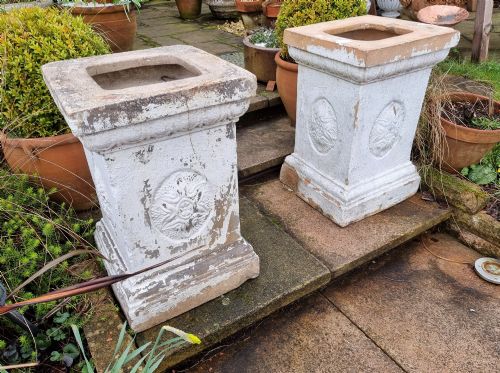
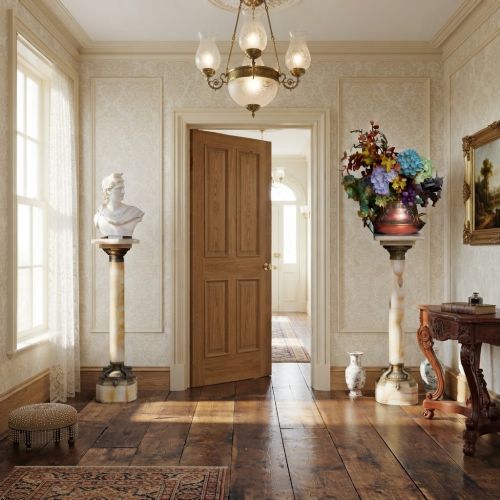
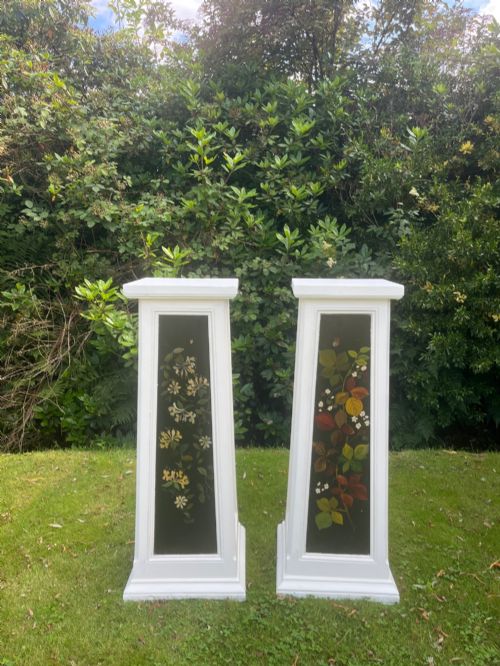
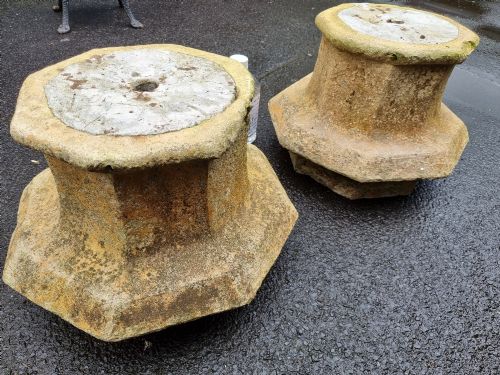
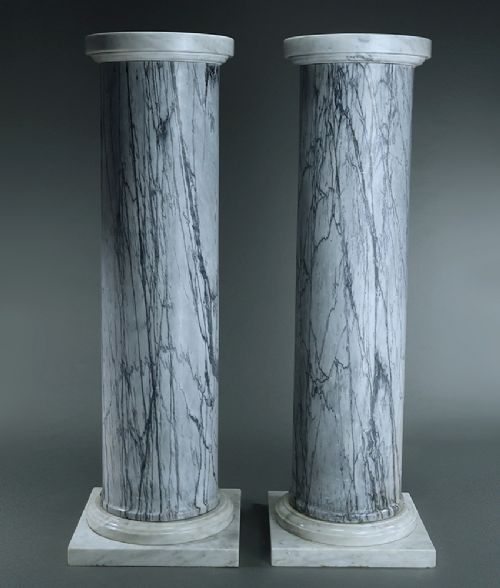
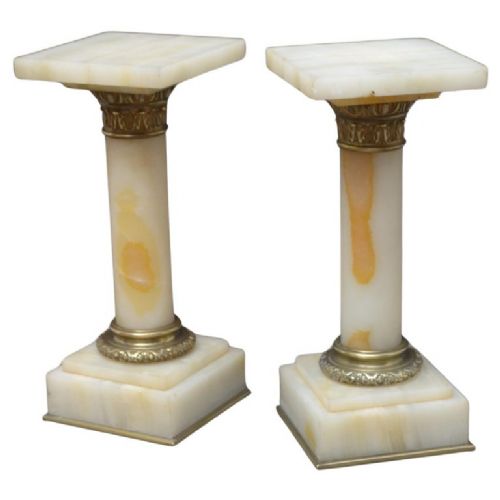


Pair of Display Plinths
These pair of display plinths raise sculpture and porcelain to eye level, bringing architectural balance to a room.
Pair of Display Plinths
When you search for a pair of display plinths, you encounter columns, pedestals, and torchere stands designed to elevate decorative objects. These items emerge primarily from the nineteenth century, encompassing Victorian and neoclassical aesthetics.
Makers utilised diverse woods such as satinwood, amboyna, rosewood, and beech alongside painted plaster and simulated marble finishes. Grand scale examples share space with lower pedestal cabinets and hexagonal stands.
Materials and Construction
Joiners and cabinetmakers built wooden columns using solid mahogany, oak, and exotic veneers like amboyna and rosewood, frequently incorporating carved details or parcel gilt accents. Stonemasons turned and polished natural varieties of marble, onyx, alabaster, and serpentine to form smooth shafts and capitals.
Foundries cast iron and bronze components, including ormolu collars and mounts, which decorators attached to stone or wooden bodies. Gesso and paint finishes were applied to plaster and wood surfaces to simulate richer materials or create classical patination.
One exceptional nineteenth century wooden pair includes a hidden compartment built directly into the column.
Material Selection and Proportion
The quality of a column rests on the choice of materials, such as solid figured marbles, rich exotic timbers, and crispness in hand-carved wood or cast metal ornament. Heavy gauge stones and dense hardwoods provide the structural stability required for supporting bronze busts and heavy vases.
Proportion and execution distinguish standard utilitarian stands from exhibition pieces designed with intricate marquetry, secret compartments, or finely chased ormolu mounts. The precision of the turning and the integrity of the surface finish dictate the standing of each piece.
Dunfermline Clay Company·Marguerite
The Pair of Display Plinths Glossary
- Ormolu
- Gilded bronze mounted onto furniture and columns. This technique involved applying mercury and gold amalgam to bronze.
- Torchere
- A tall decorative stand intended to hold a lamp or candle. These slender columns often feature circular tops.
- Neoclassical
- A style drawing inspiration from classical antiquity. It incorporates architectural orders, fluted shafts, and formal symmetry.
- Bardiglio
- A grey Italian marble characterised by darker veining. It appears frequently in nineteenth century columnar shafts.
Pair of Display Plinths: Frequently Asked Questions
How do I choose the right height?
Consider the height of the object you intend to place on top and the proportions of the surrounding room. Standard columns usually range from tabletop height upwards to grand architectural dimensions.
Shorter pedestals suit heavy bronze figures, whilst taller slender shafts work best for smaller urns or decorative vases that benefit from elevated placement.
Where should I place them?
Pair of display plinths function effectively in entrance halls, flanking fireplaces, or framing architectural doorways. Placing them symmetrically creates a formal focal point within a reception space.
Ensure adequate floor clearance around the base to prevent accidental knocks to the objects displayed above.
How do I identify nineteenth century pieces?
Nineteenth century examples display traditional joinery methods, hand-turned timber shafts, and natural patination on wood and stone surfaces. Construction details such as hand-cut screws and dense secondary woods indicate age.
Stylistic cues like neoclassical fluting, Victorian Gothic motifs, or French ormolu mounts align with nineteenth century manufacturing techniques.