


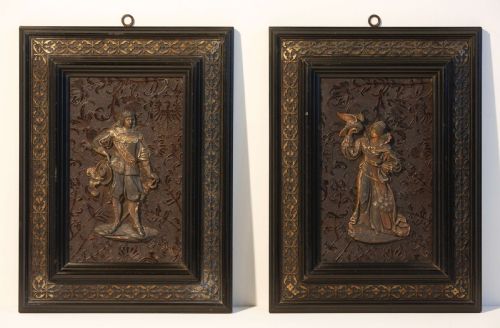


Pair of Decorative Plaques
These pair of decorative plaques bring centuries of craftsmanship to your walls, offering balanced symmetry and distinct historical character.
Pair of Decorative Plaques
A pair of decorative plaques encompasses matched sets of wall-hung art, panels, chargers, and plates created to display coordinated designs side by side. When searching for a pair of decorative plaques, buyers encounter an eclectic mix of forms spanning timber, ceramic, and metal mediums.
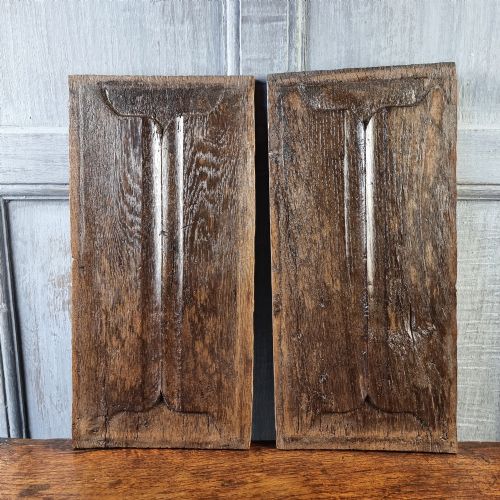
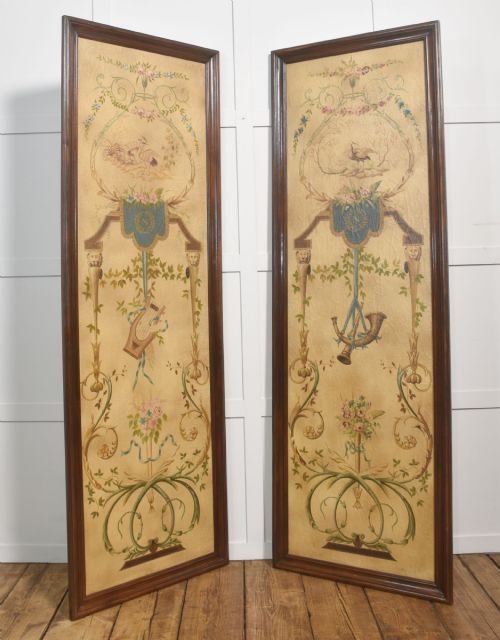
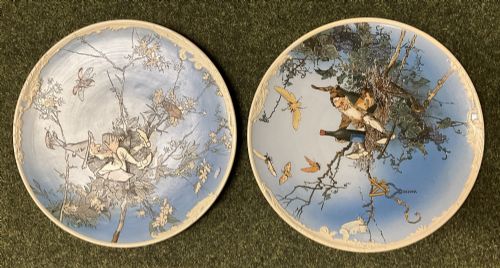
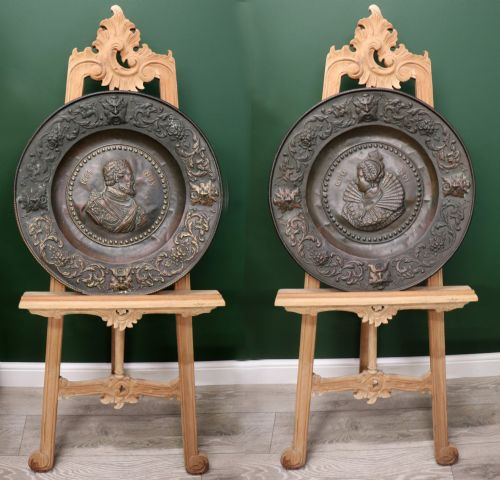
The selections on this page range from early carved wood linenfold panels and sixteenth-century fragments to nineteenth-century copper chargers, porcelain plates, and twentieth-century metalware. Many examples draw on historical revivals, incorporating Tudor, Gothic, Baroque, and Neoclassical motifs into symmetrical dual displays.
Makers utilised diverse materials to achieve surface texture and visual depth, pairing earthenware and porcelain with hand-hammered brass, white metal, and carved oak. These objects primarily function as architectural highlights or focal points within a room, designed to be hung in balanced pairs.
What separates the finest examples
Quality rests upon the crispness of the hand-carved detail in wood or the depth of the repoussé work in metal plaques. Superior examples exhibit deliberate, confident tool marks rather than soft, mass-produced uniformity.
The integrity of the matched pair dictates overall desirability, where both items maintain equal patination, uniform wear, and consistent colour across their surfaces. Finer ceramics and metals display careful kiln firing and secure mounts that have survived intact over centuries.
Mettlach·Minton Hollins·WMF
The Pair of Decorative Plaques Glossary
- Linenfold
- A style of wood carving representing folded linen, frequently seen on sixteenth and seventeenth-century panels. This motif creates a textile-like texture across rigid timber surfaces.
- Repoussé
- A metalworking technique where the artisan hammers the material from the reverse side to form a raised design in relief. It allows for intricate portraits and motifs on copper, brass, and pewter.
- Imari
- A style of Japanese porcelain decorated in underglaze blue and overglaze red, gold, and other colours. These plates were widely imported and imitated in the West during the nineteenth century.
- Jugendstil
- The continental European art movement equivalent to Art Nouveau, prominent around nineteen hundred. It emphasises flowing, organic lines and natural forms.
- Chandelier
- A branch-like hanging light fixture holding multiple candles or bulbs. While unrelated to wall panels, the term appears in broader antique contexts.
Pair of Decorative Plaques: Frequently Asked Questions
How do I hang heavy wall plaques safely?
Ensure your fixings match the weight and substrate of the wall, utilising appropriate anchors for plaster or masonry.
Verify that the hanging loops or brackets on the reverse of the plaque are secure before mounting.
Can these plaques be displayed outside?
Most antique plaques use traditional finishes and untreated woods or metals intended strictly for indoor interior environments.
Exposure to moisture and temperature fluctuations outdoors will damage the glaze, lacquer, and timber.
How should I clean antique metal plaques?
Dust gently with a soft, dry cloth to remove surface particles without disturbing the historic patina.
Avoid chemical polishes and abrasive cleaners that strip away the aged surface character accumulated over centuries.
Why are these items sold as pairs?
Symmetrical display traditions dictated that decorative panels and plates be hung together to balance interior wall spaces.
Matched pairs preserve the original aesthetic intent of the maker or the decorative scheme of the period.