
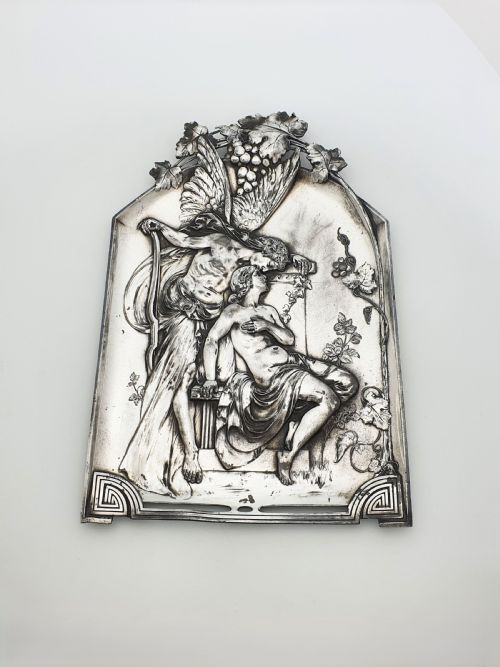


Art Nouveau Wall Plaque
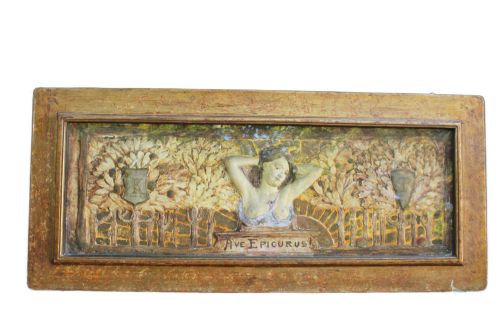
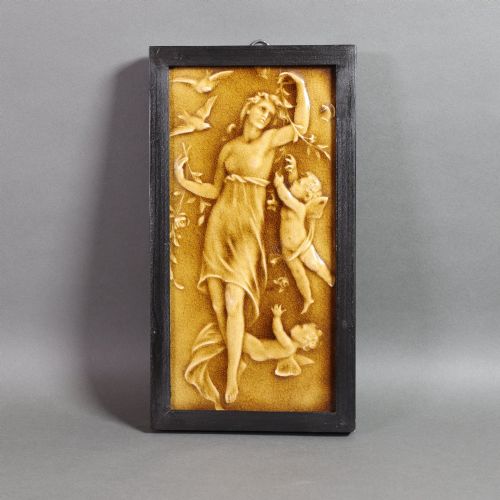
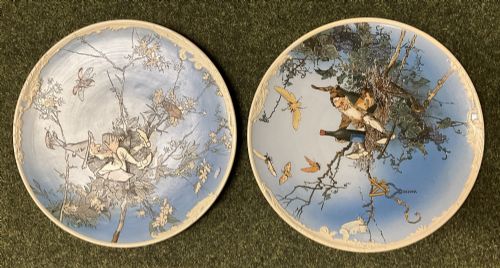
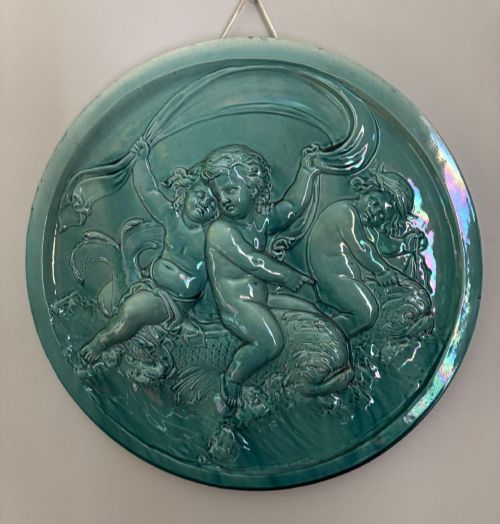
These art nouveau wall plaque examples capture the fluid organic curves and natural motifs that defined the turn of the century decorative arts.
Art Nouveau Wall Plaque
An art nouveau wall plaque brings sculptural relief and decorative ceramics directly onto interior walls, utilising forms inspired by natural flora and fauna. Buyers searching for an art nouveau wall plaque will encounter diverse interpretations ranging from French figurative compositions to British plaster reliefs and Austrian earthenware.
The objects span the late nineteenth century into the Edwardian era, encompassing distinct regional movements such as Jugendstil and the Arts and Crafts aesthetic. Forms vary from glazed ceramic tiles and majolica pottery to cast metal plaques and carved wooden panels.
How they were made
Maker workshops utilised earthenware, terracotta, and plaster to build dimensional relief surfaces, often finished with polychrome pigments or glossy glazes. Ceramic pieces required careful kiln firing to fix the liquid glazes onto the clay body.
Metal versions relied on silver plating over base metals or casting in bronze and copper to achieve crisp linear details. Wood pieces were shaped through traditional hand carving techniques to display organic vegetal patterns.
The listings on this site incorporate materials ranging from earthenware and terracotta to silver plated metal and carved wood.
What varies in quality
Quality rests in the crispness of the modelling and the depth of the sculptural relief, distinguishing mass production from master craftsmanship. Finer examples display meticulous hand finishing in the painted glazes or chased metal surfaces.
The reputation of the producing pottery or metal foundry heavily influences desirability. Well executed French and Austrian pieces often demonstrate superior artistic ambition in their figural subjects compared to simpler utilitarian versions.
Clement Messier·Ernst Wahliss·WMF·Longwy·Mettlach
The Art Nouveau Wall Plaque Glossary
- Majolica
- A type of earthenware decorated with opaque coloured glazes fired on a tin enamel base. This technique produced vivid hues popular in late nineteenth century decorative wares.
- Relief
- Sculptural work where the figures project from a flat background. High relief elements create dramatic shadow play across the wall plaque.
- Jugendstil
- The German manifestation of the new art movement, named after the Munich art magazine Die Jugend. It shares the characteristic flowing linear rhythm of French art nouveau.
- Terracotta
- Unglazed or glazed fired clay modelled into sculptural forms. The porous material accepts intricate modelling for figurative wall reliefs.
- Polychrome
- The practice of decorating architectural elements or sculptures in a variety of colours. Polychrome plaster and ceramic pieces highlight the sculptural contours.
Art Nouveau Wall Plaque: Frequently Asked Questions
How do I hang a heavy ceramic plaque safely?
Most heavier pieces feature integrated wire or sturdy rear mounting brackets designed to distribute the weight evenly across solid wall fixings.
Consult a professional wall specialist if you are mounting cast bronze or large terracotta plaques onto plasterboard walls.
Are these plaques suitable for outdoor display?
These domestic interior decorations were made for sheltered rooms rather than external garden exposure. Moisture and frost will damage glazed earthenware, plaster, and silver plated surfaces over time.
Keep them away from direct sunlight to prevent fading on polychrome paintwork.
How should I clean silver plated metal plaques?
Use a soft dry cloth to remove surface dust without disturbing delicate patination or the underlying metal finish. Avoid harsh chemical dips that strip away the original silver plating.
Gentle care preserves the intended appearance created by the original metalworker.
What is the difference between Arts and Crafts and Art Nouveau?
Arts and Crafts design emphasises honest hand craftsmanship and medieval inspired simplicity. Art Nouveau focuses on fluid, sinuous plant tendrils and asymmetrical organic curves.
Both movements overlapped during the turn of the century and influenced domestic wall art.