





Pair of Bronze Lions
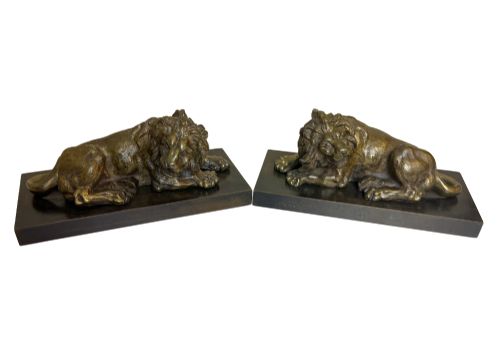
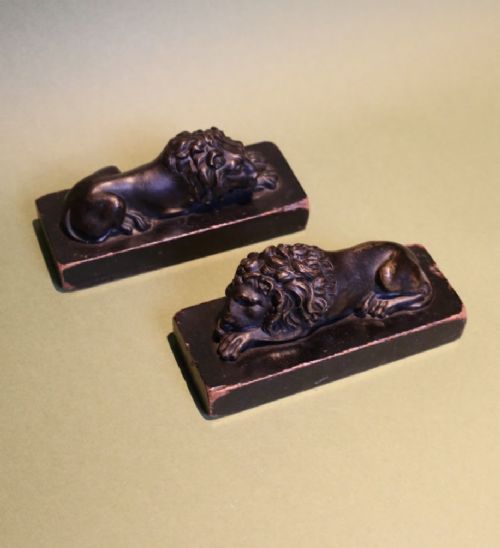
A pair of bronze lions brings sculptural weight and classical authority to a mantelpiece, desk, or table.
Pair of Bronze Lions
A pair of bronze lions encompasses heavy sculptural models, furniture mounts, and functional mantel ornaments originating primarily from the eighteenth and nineteenth centuries. These pieces draw heavily on classical antiquity, frequently replicating famous monuments such as the Canova lions, the Medici lions, and the Capitoline lions encountered by travellers on the Grand Tour.
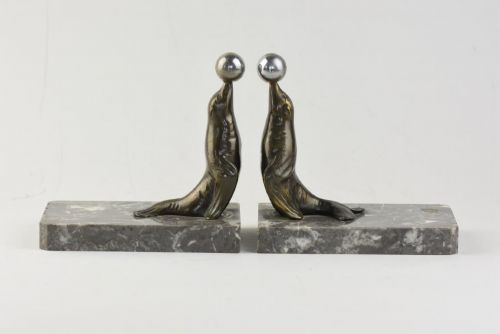
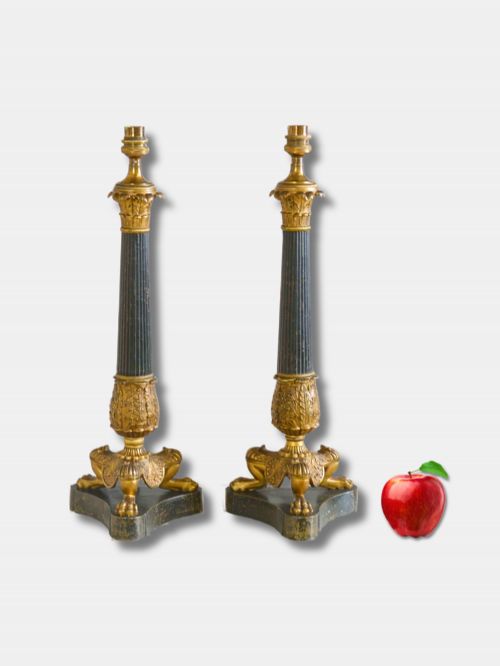
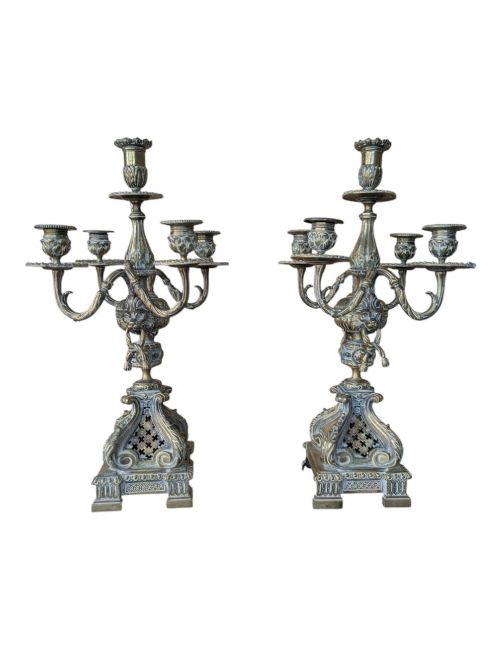
The selection ranges from small desk accessories like bookends and candlesticks to large temple figures and architectural door stops. Most examples date from the nineteenth century, drawing on French Empire, Regency, and Victorian aesthetics to anchor decorative schemes.
How they were made
Foundries utilised traditional lost-wax or sand-casting methods to shape molten metal into complex feline forms, often finishing the surface with dark patination or gilding. Many nineteenth-century items combine cast bronze with contrasting materials such as marble plinths, ormolu accents, and brass components.
Makers achieved varied surface textures through careful chasing and cold-painting techniques. Plinth bases frequently incorporate decorative stones like verde antico and portoro marble to elevate the metalwork.
Some bronze lions double as door stops and andirons, standing guard by the hearth after a long day of holding doors.
What varies in quality
The integration of the bronze figure with its supporting base determines the overall balance of the piece. Heavy, well-fitted marble plinths and secure mounting indicate higher workshop standards.
Louis Riche·C Omin·Bergman
The Pair of Bronze Lions Glossary
- Grand Tour
- A nineteenth-century educational journey across Europe undertaken by the wealthy, resulting in the acquisition of souvenir bronzes modelled on classical antiquities.
- Ormolu
- Finely ground high-carat gold applied to a bronze base through a mercury amalgamation process, yielding a brilliant golden surface.
- Patination
- The natural or chemical alteration of the bronze surface over time, creating distinctive coloration and depth.
- Plinth
- The solid architectural base or block upon which a bronze sculpture or ornament is securely mounted.
Pair of Bronze Lions: Frequently Asked Questions
Where should I place them?
These figures suit prominent symmetrical placements such as mantelpieces, flanking a fireplace, or anchoring either end of a long sideboard.
Heavier examples with marble bases function well as bookends or desk ornaments on sturdy timber surfaces.
How do I clean bronze?
Dust the surface regularly with a soft, dry cloth to prevent the accumulation of grit within the detailed recesses of the mane.
Avoid chemical polishes or water, as harsh cleaning agents can strip the historical patination from the metal.
What is a Grand Tour lion?
These are nineteenth-century souvenir castings reproducing famous Italian monuments like the sculptural lions carved by Antonio Canova for the tomb of Pope Clement XIII.
Travellers purchased them abroad to bring classical sculpture into domestic British interiors.
Are marble bases original?
Many nineteenth-century bronzes were deliberately paired with contrasting marble plinths, such as verde antico or portoro, to enhance their visual weight.
Original mounts fit the underside of the bronze casting precisely without excess adhesive or gaps.