
Pair of Bronze Lamps
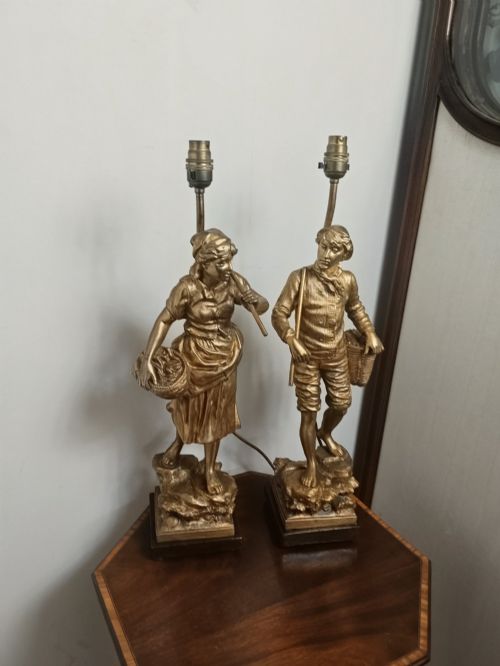
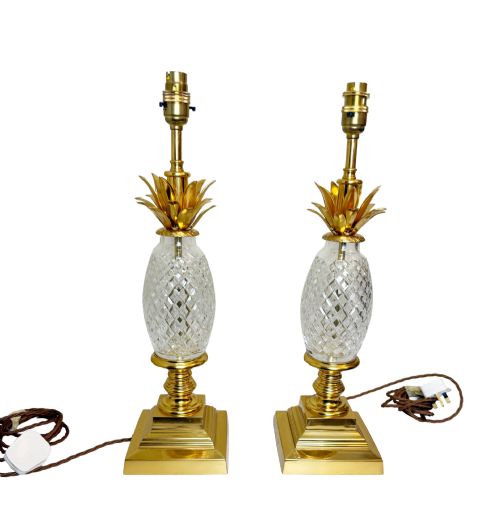
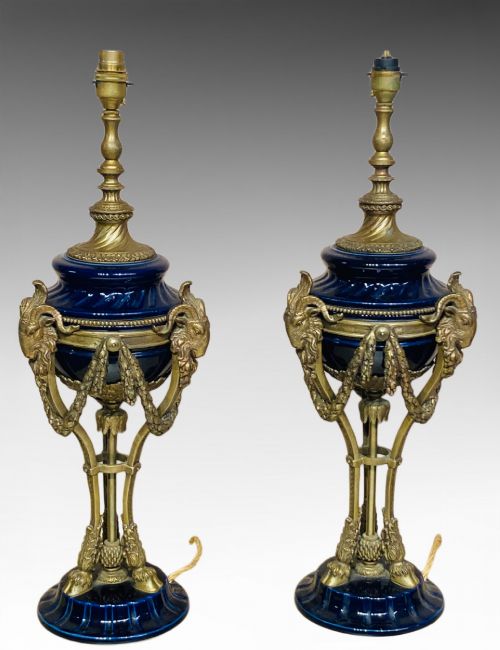
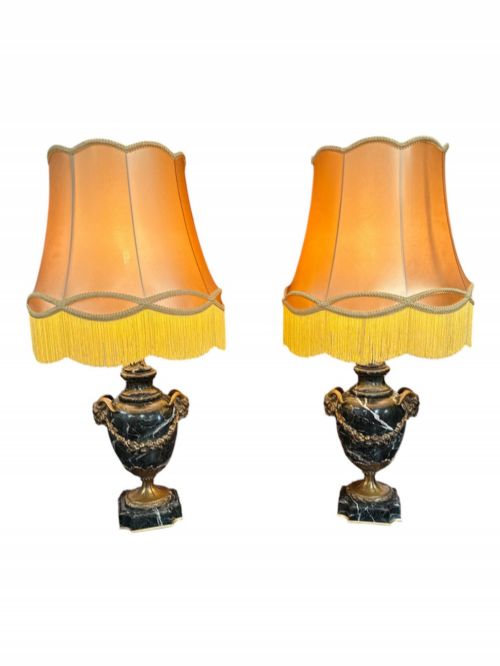
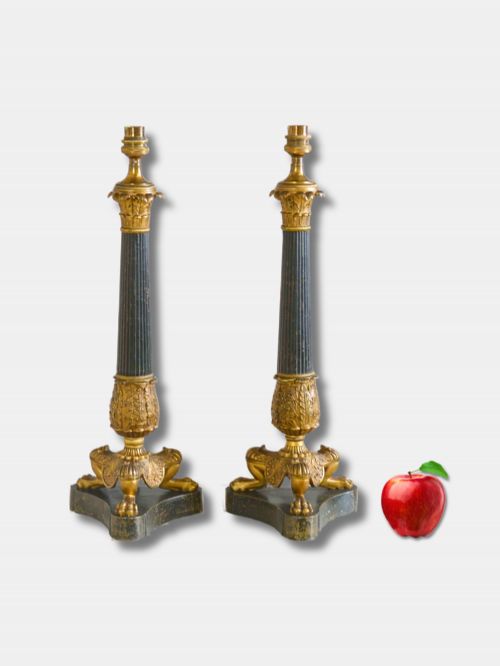
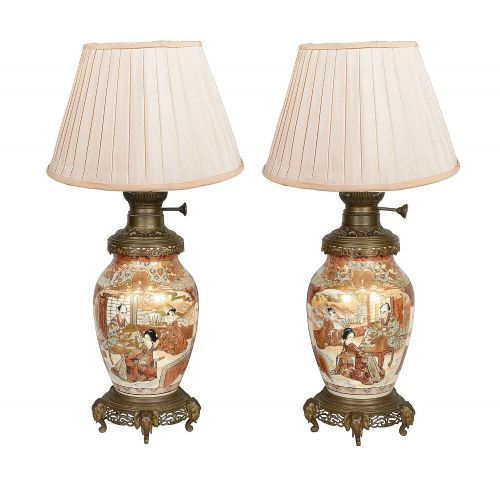
A pair of bronze lamps brings symmetry and warmth to a room, grounding an interior with substantial weight and historic design.
Pair of Bronze Lamps
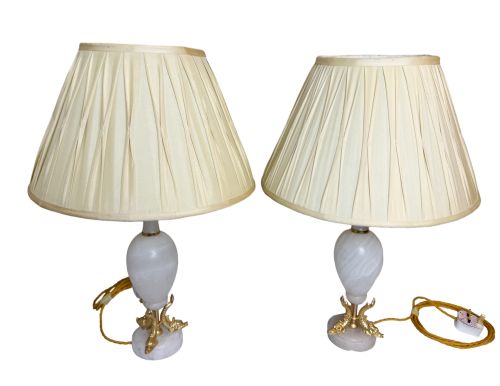
When searching for a pair of bronze lamps, buyers encounter lighting fixtures designed to sit symmetrically on tables, sideboards, or mantelpieces, often serving as the focal point of a room.
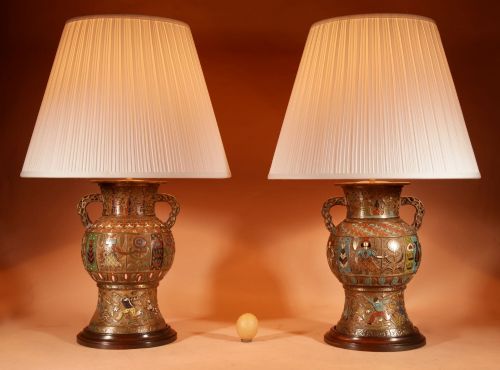
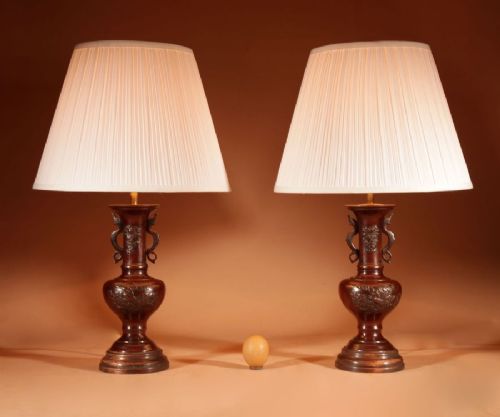
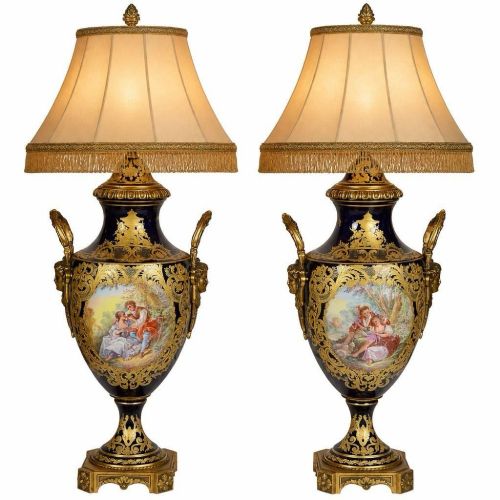
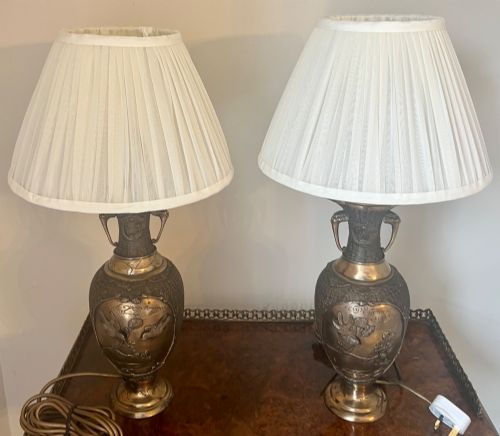
The selections on this page predominantly feature French Neoclassical, Rococo, and Louis XVI styles, alongside Japanese Meiji period bronzes and Chinese ceramic vessels fitted with metal mounts.
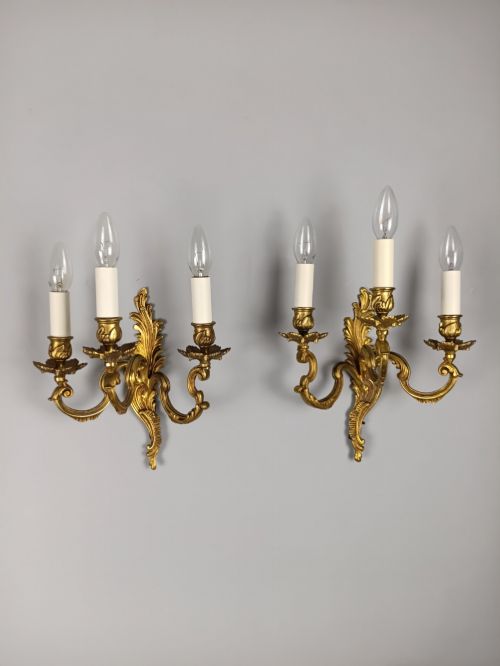
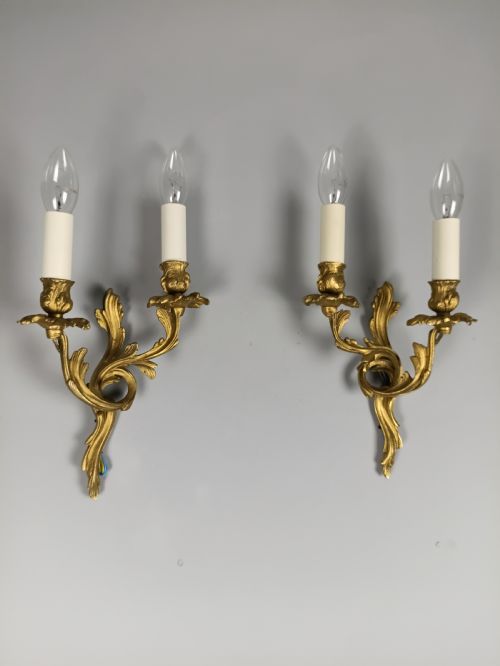
Table lamps dominate the inventory, accompanied by matching wall lights, wall sconces, and tall torchères intended for ambient or task lighting.
Materials and construction methods
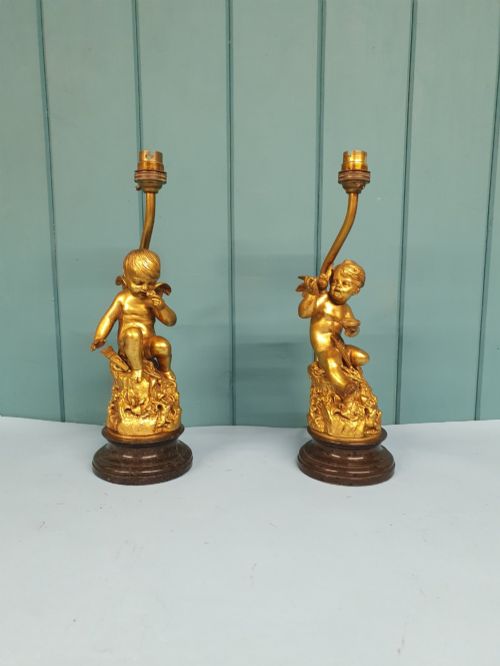
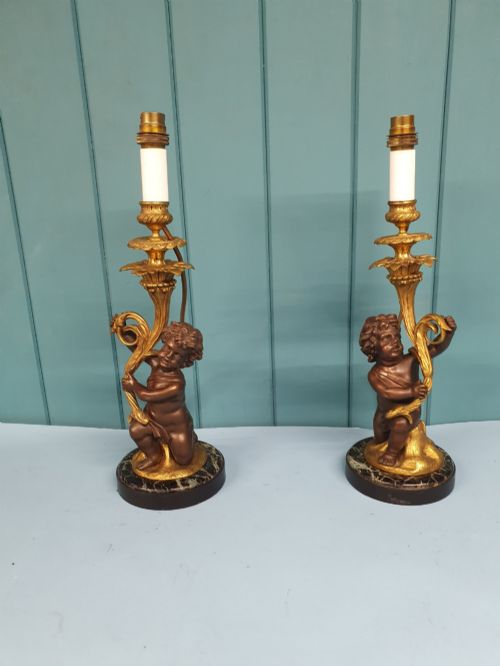
Foundries cast bronze and brass into complex figural and architectural forms, applying fire-gilding known as ormolu to create contrasting golden highlights across the dark metal surface.
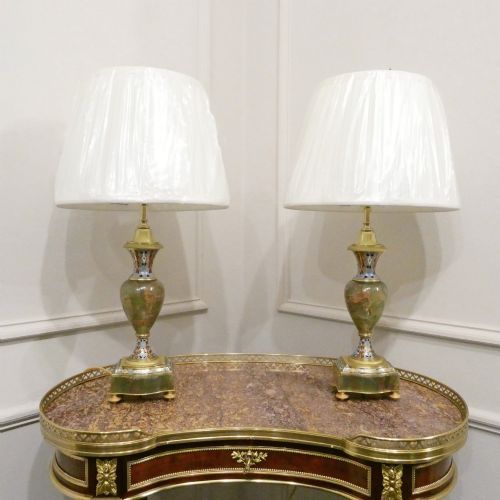
Many examples incorporate natural elements such as marble, onyx, crystal glass, and Sevres or Satsuma porcelain, joined together with threaded rods and hidden screws.
Artisans chased the cast metal by hand with chisels and gravers to sharpen details like acanthus leaves, cherubs, and fluted columns before assembly.
Listings demonstrate a strong preference for nineteenth-century French designs, particularly those combining bronze with marble, crystal, and porcelain.
Distinctions in quality
The choice of secondary materials dictates overall worth, with dense rouge royal marble, heavy crystal drops, and hand-painted porcelain bodies indicating higher production standards.
Original mercury gilt surfaces display a soft, multifaceted warmth that chemical plating cannot replicate, while unified matching between both halves of the set preserves design integrity.
E Rousseau·F and C Osler·F De Luca
The Pair of Bronze Lamps Glossary
- Ormolu
- Gilt bronze produced by applying a mixture of mercury and gold to a bronze base and heating it until the mercury vaporised. This finish yields a durable golden sheen characteristic of French decorative arts.
- Cassolette
- A decorative vase or urn featuring a reversible lid that functions either as a solid vessel or a candleholder. These often form the bodies of converted table lamps.
- Champlevé
- An enamelling technique where troughs are dug into the metal surface and filled with vitreous enamel powder before firing. The resulting patterns frame the bronze sections.
- Torchère
- A tall ornamental stand or floor lamp designed to hold lights pointing upwards. Antique versions frequently depict figures holding torches.
- Meiji
- A Japanese imperial period spanning from 1868 to 1912 noted for intricate bronze casting exported to Western markets. These pieces often feature naturalistic bird and flora motifs.
Pair of Bronze Lamps: Frequently Asked Questions
Were these always electric lamps?
Most older examples started life as oil lamps, candlesticks, or decorative urns before being converted to electricity during the twentieth century.
Rewiring is common practice to ensure modern safety standards while retaining the original metal body.
How do I identify French styles?
French pieces often display classical motifs like lions' paw feet, fluted columns, and acanthus leaves derived from Louis XVI and Neoclassical design.
Rococo examples favor asymmetrical scrolling, cherubs, and natural curves.
What is the difference between bronze and ormolu?
Bronze is the copper alloy base metal used for casting the structural forms and figures of the lamp.
Ormolu refers specifically to the gold-gilt surface treatment applied to portions of that bronze to create a two-tone decorative effect.
Where should I place large torchères?
Large figural torchères and column lamps work best in spacious entrance halls, grand living rooms, or flanking a substantial fireplace.
Their height requires stable placement on the floor rather than on furniture.