
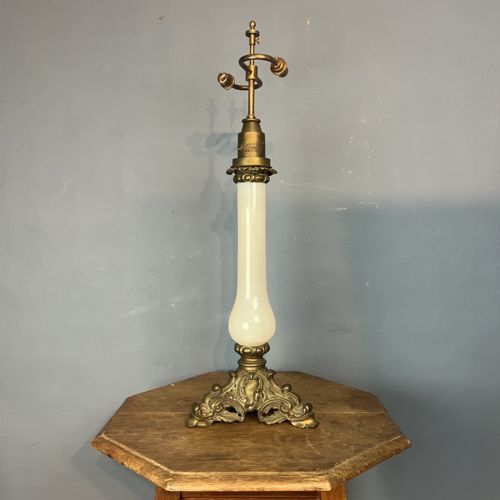


Mid 19th Century Lamps
These mid 19th century lamps bring period character to a room, ranging from grand bronze torchères to cut glass table lighting.
Mid 19th Century Lamps
Mid 19th century lamps encompass a diverse group of lighting and furnishings produced during the Victorian era, including table lamps, floor lamps, lanterns, and chandeliers. Many examples reflect the prominent design movements of the period, such as Neoclassical, French Second Empire, and rustic country aesthetics.
How they were made
Makers utilised metals like brass, copper, iron, and bronze, often combining patinated and gilt finishes to create decorative contrast. Glass elements included hand-cut glass and opaline, shaped into specific lamp bodies and shades.
Wood constructions incorporated mahogany, walnut, birch root, and alder root, frequently shaped into occasional tables designed to support lighting or display objects.
Cheer up your hallway by hanging a ceiling candle light fitting that once illuminated a mid-Victorian ceiling.
What varies in quality
Quality depends on the precision of the metal casting and the clarity of the cut glass or opaline components. Finer pieces display crisp detailing in bronze figural work and secure construction in brass and gilt mounts.
Material selection also dictates distinction, with superior examples featuring well-figured hardwoods, substantial bronze castings, or specialised patents recorded by period makers.
Mc Gary·François Christophe Armand Toussaint
The Mid 19th Century Lamps Glossary
- Gilt brass
- Brass treated with a thin layer of gold or gold-coloured finish to give a rich metallic appearance. This technique was frequently utilised on Victorian lighting components.
- Opaline glass
- A type of semi-translucent white glass popular during the nineteenth century. It diffuses light softly and often appears paired with gilt mounts.
- Torchère
- A tall ornamental stand or candlestick designed to hold a light source. Mid-nineteenth century versions often took the form of figural bronze sculptures.
- Cut glass
- Glass decorated by grinding facets or patterns into the surface using a wheel. This method maximises light refraction in table lamps.
- Patinated bronze
- Bronze that has developed a surface sheen or intentional chemical coloration over time. This finish highlights the sculptural details of period pieces.
Mid 19th Century Lamps: Frequently Asked Questions
How do I wire an antique lamp?
Most period lamps can be professionally fitted with modern electrical flex and internal components to meet current safety standards without altering the external metal or glass body.
A qualified electrician should handle the rewiring to ensure the antique fittings accommodate modern plugs and bulbs safely.
What rooms suit these lamps?
These pieces fit well in studies, drawing rooms, or hallways where period character adds depth to the interior scheme. Table lamps sit comfortably on side tables or desks, while larger bronze torchères suit high-ceilinged spaces.
Matching the scale of the lamp to the surrounding furniture ensures the piece anchors the room effectively.
How do I clean antique brass?
Dust brass components gently with a soft, dry cloth to prevent the accumulation of dirt in the cast details. Avoid harsh chemical polishes that strip away the historical surface finish.
Preserving the natural patination maintains the character and visual depth accumulated over the nineteenth century.
Are all these lamps electrified?
Lighting from the mid-nineteenth century was originally designed for oil, candles, or gas before many were later converted to electricity. Some items retain their original mounting or conversion fittings from their period of use.
Checking the current fitting type helps determine whether a simple bulb addition or a full rewiring is necessary.