
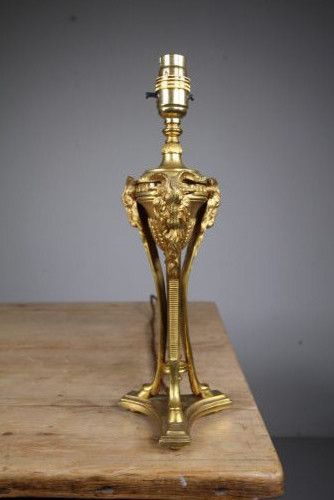


Empire Style Urn Lamp
These empire style urn lamp designs bring classical proportion and rich metalwork directly to the table.
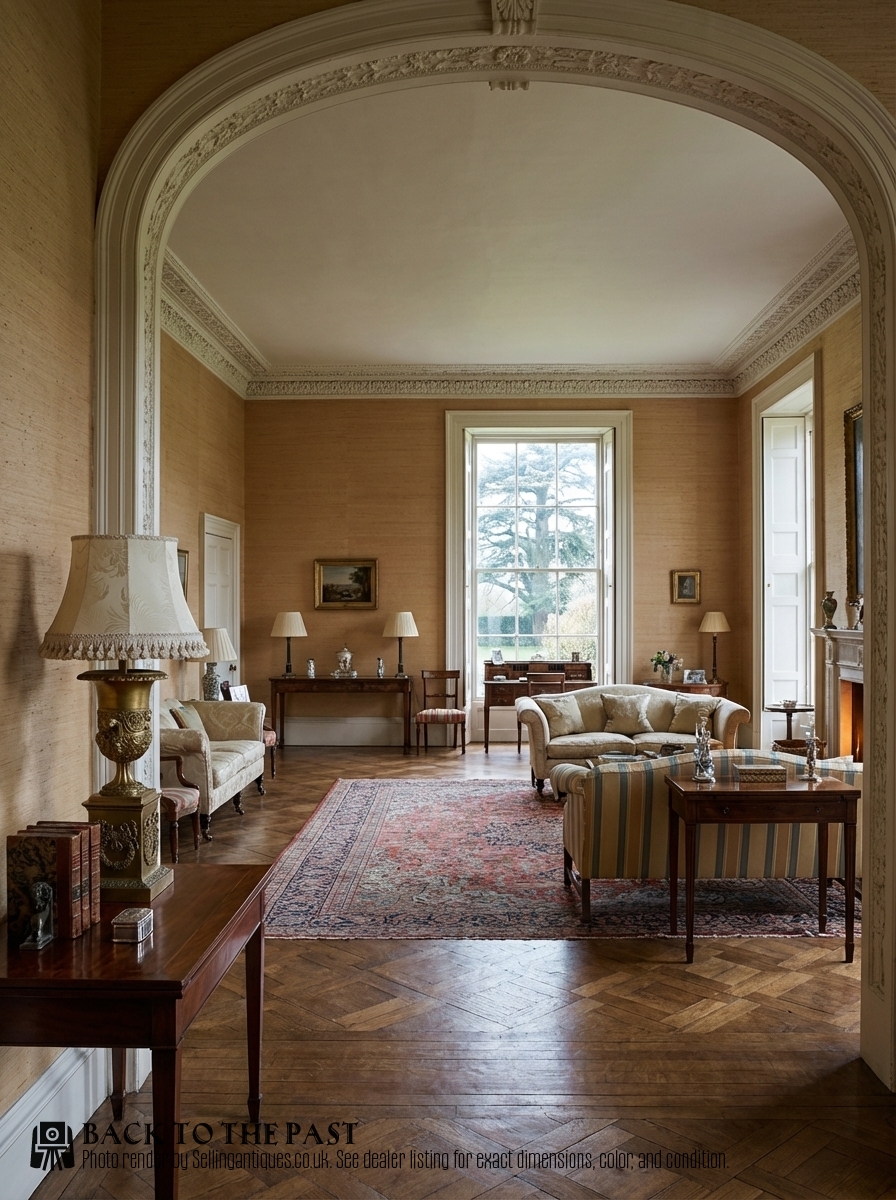
Empire Style Urn Lamp
An empire style urn lamp takes the classical vessel form and adapts it for interior lighting, usually functioning as a table lamp. These objects draw heavily upon Neoclassical and French Empire design vocabularies, turning decorative urns into functional pieces.
The selections available here span the nineteenth century, including Victorian examples, alongside pieces from nineteen twenty and nineteen thirty. Formats range from single statement lights to matched pairs featuring classical mounts and urn-shaped bodies.
How empire style urn lamp bodies were made
Maker workshops utilised cast metals such as brass, bronze, ormolu, and gilt metal to build the primary urn structures. These metallic elements often received fire gilding or surface finishing to achieve a bright, reflective sheen.
Marble frequently formed the heavy, stable bases for these metal vessels, anchoring the classical proportions. Shades constructed from fabric and silk complete the assemblies, softening the direct illumination.
What varies in quality
The refinement of the cast mounts and decorative details largely determines the standing of an individual piece. Crisp chasing on rams' heads, classical masks, and bronze handles indicates superior workshop skill.
The integration of materials also sets standards across the range, particularly where weighty marble meets finely gilded bronze. Cohesion between the urn body and the chosen base structure defines the more accomplished examples.
The Empire Style Urn Lamp Glossary
- Ormolu
- Gilded bronze produced by applying a mercury and gold amalgam to a bronze casting before heating. This technique creates a durable, luminous surface finish found on many classical mounts.
- Neoclassical
- A style spanning architecture and decorative arts that revives classical Greek and Roman motifs. Expect to see symmetrical lines, urns, and architectural friezes.
- Gilt Bronze
- Bronze metal that has been coated with a thin layer of gold leaf or gold paint. It provides the appearance of solid gold while utilising a stronger base metal.
Empire Style Urn Lamp: Frequently Asked Questions
How do I place an urn lamp?
These lamps suit side tables, mantelpieces, or grand desks where their classical silhouette commands attention. Their vertical proportions work well against panelled walls or traditional interior schemes.
Ensure the surrounding surface provides adequate stability for heavy marble and metal bases. Pairing a matched set on either side of a sideboard creates a balanced focal point.
What periods do these lamps span?
The selection encompasses nineteenth-century productions, including Victorian items and pieces dated around nineteen hundred. Later twentieth-century examples from nineteen twenty and nineteen thirty also appear.
Earlier nineteenth-century pieces often display heavier cast bronze and detailed ormolu mounts. Later variations retain the classical urn vocabulary while reflecting twentieth-century lighting adaptations.
Are silk shades original?
Fabric and silk elements on antique lighting are frequently later replacements due to the perishable nature of textiles. Original shades from the nineteenth or early twentieth centuries survive only rarely.
Replacement shades are usually chosen to complement the historical style of the metal base. Neutral fabrics or pleated silks help maintain the classical aesthetic.
What materials make up the base?
Bases are frequently constructed from solid marble to add necessary weight and contrast with the metal urn above. Brass, bronze, and ormolu form the primary body components.
Combinations of polished marble and gilt metal are standard across French Empire and Neoclassical designs. This mix of stone and metal enhances the architectural quality of the object.