


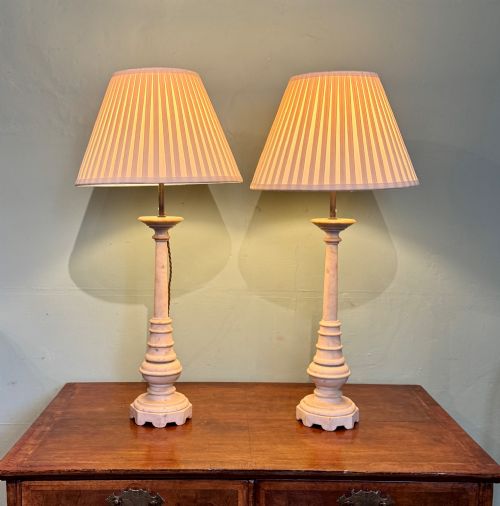
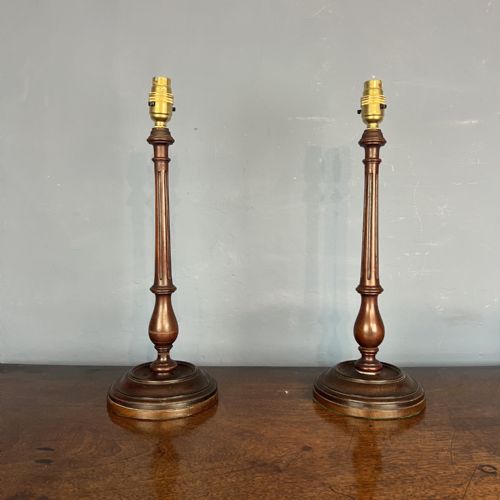
Pair Classical Table Lights
Pair classical table lights bring formal symmetry and period illumination to a room, uniting refined proportions with warm metallic finishes.
Pair Classical Table Lights
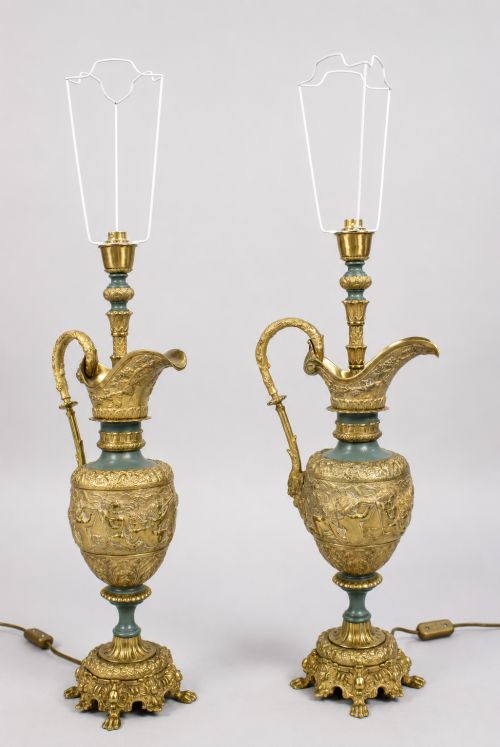
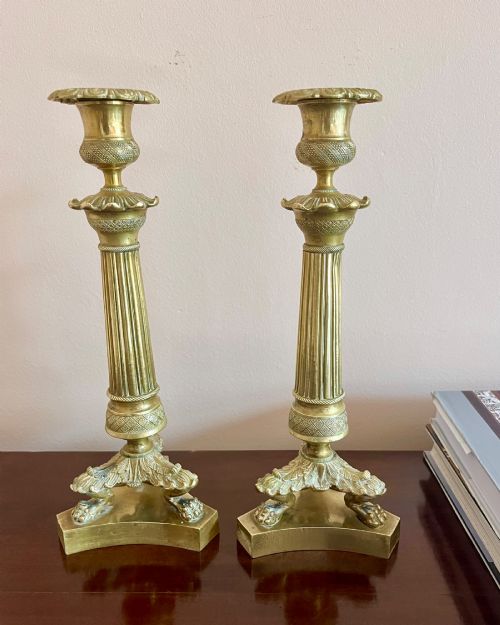
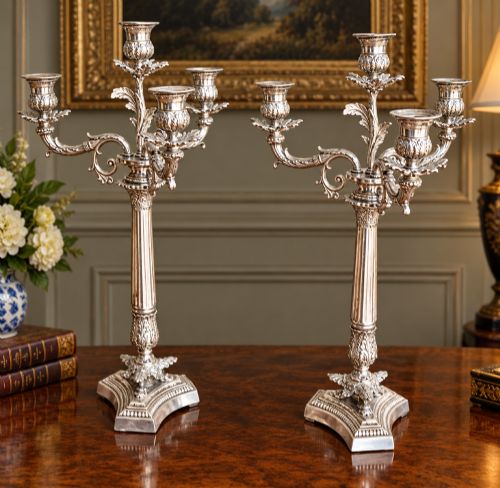
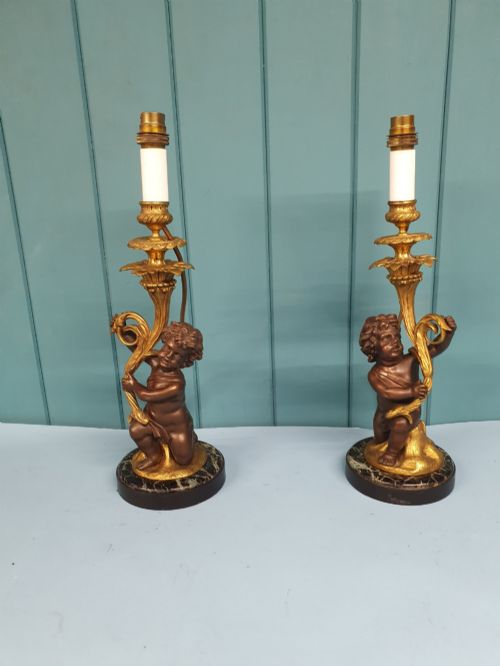
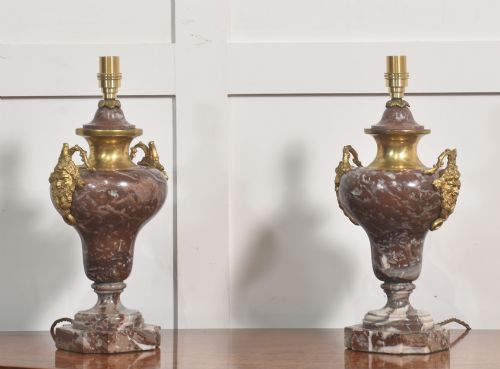
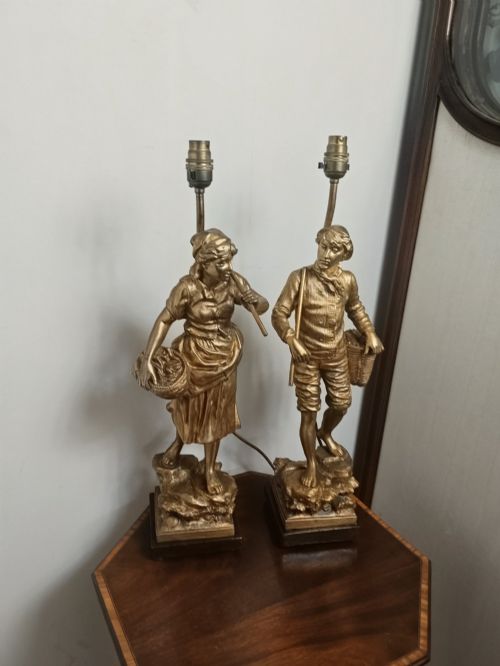
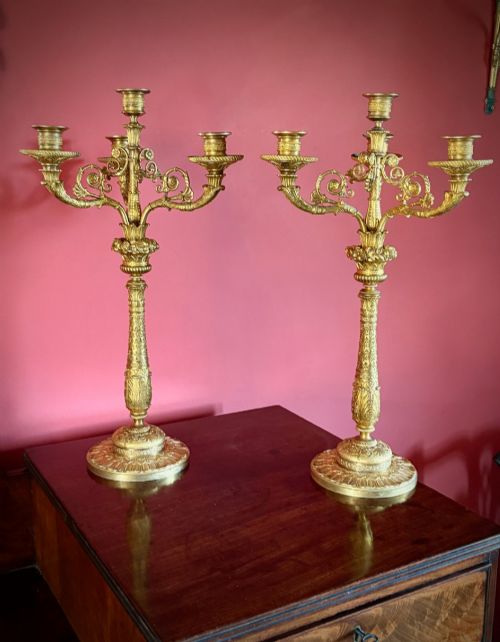
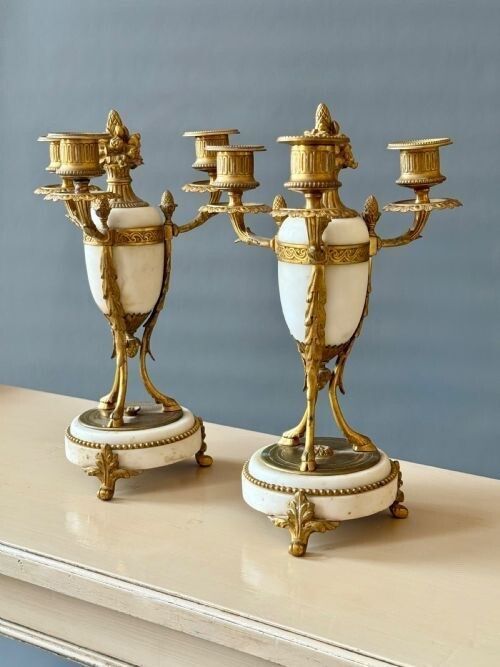
When searching for pair classical table lights, one encounters matched sets drawn primarily from the nineteenth century, alongside Edwardian and early twentieth-century examples. These pieces typically take the form of table lamps, converted candelabra, urns, or columns designed to sit symmetrically in a room.
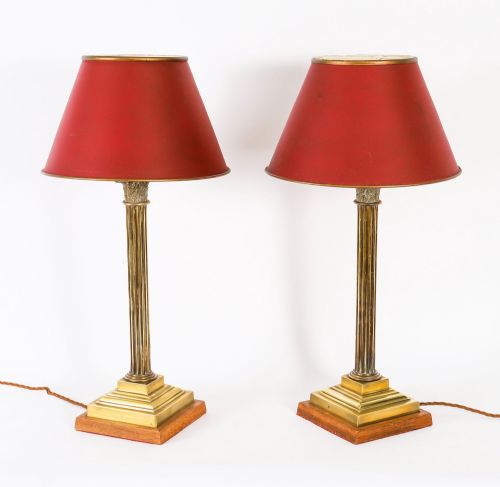
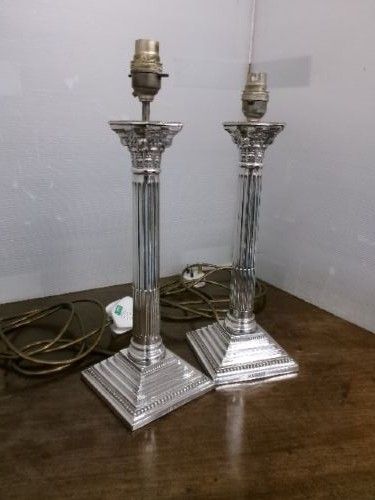
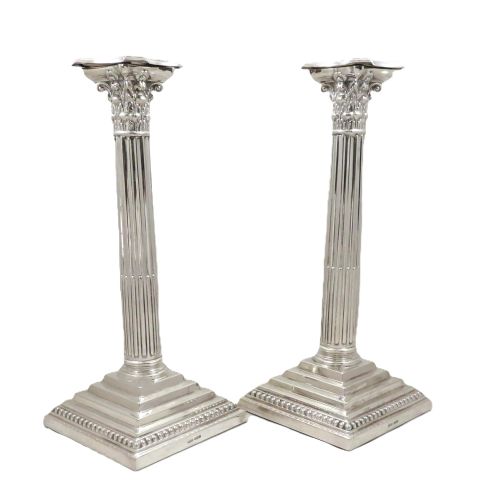
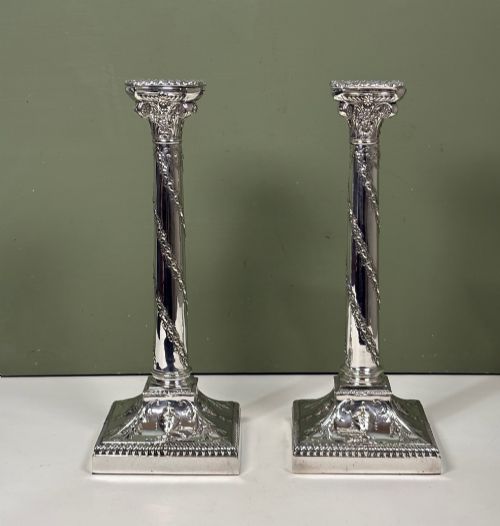
The aesthetic leans heavily toward Neoclassical, Regency, Louis XVI, and French Empire styles. Common interpretations include Corinthian columns, ewer-form lamps, and figural or architectural bases that reflect classical antiquity.
How they were made
Makers utilised cast and chased metals including brass, bronze, ormolu, and silver plate, frequently pairing them with white, rouge, or dark marble bases. Ormolu mounts and gilded bronze details highlight architectural elements and figural motifs.
Construction methods involve heavy metal casting combined with turned stone and occasional carved timber or mahogany elements. Many pieces began as oil lamps or candleholders before receiving later conversions for electrical illumination.
What varies in quality
The distinction between standard examples and the finest work lies in the crispness of the casting and the depth of the gilding. Superior pieces exhibit finely chiselled details on bronze and ormolu mounts, weighty marble plinths, and balanced proportions.
Makers whose workshops employed skilled modellers and casters achieved a sharper definition in acanthus leaves, columns, and figures, whereas lesser pieces display softer surface definition and simpler assembly.
Pierre Philippe Thomire·Rabiat·Hawksworth Eyre·E Rousseau
The Pair Classical Table Lights Glossary
- Ormolu
- Gilded bronze produced by applying a mercury-gilding technique to cast bronze. This finish gives a deep, golden lustre that resists tarnishing over time.
- Candelabra
- A branched candlestick holder designed to support multiple candles. Many historical examples were later adapted to hold lamp fittings.
- Corinthian column
- An architectural column style featuring an ornate capital decorated with acanthus leaves. It is frequently seen on nineteenth-century metal lamp bases.
- Cassolette
- A decorative vessel shaped like an urn or vase, often reversible to serve as a candleholder or incense burner. In lamp form, it retains the classical urn silhouette.
- Tole-peinte
- Painted or lacquered sheet metal used for decorative objects and lamp bodies. This technique allowed makers to introduce colour and hand-painted motifs.
Pair Classical Table Lights: Frequently Asked Questions
How do I wire antique lamps safely?
Most older fixtures require modern rewiring to meet current electrical standards. A qualified electrician can replace aged internal cords while preserving the original metal or stone body.
Professional rewiring ensures the lamp operates safely without altering the exterior period character of the base.
Were these originally electric lights?
These pieces originate from an era before electricity, having started life as candleholders, oil lamps, or candelabra. Conversion to electrical fittings generally occurred later in the twentieth century.
Such adaptations are standard practice for this category, allowing historical decorative objects to function as practical daily lighting.
How do I clean gilt bronze safely?
Gilt bronze and ormolu require gentle dusting with a soft dry cloth to remove surface particles. Harsh chemical cleaners will strip the delicate historical gilding.
Maintaining the metal involves avoiding abrasive materials and keeping the surface away from excessive moisture.
How do I distinguish French Empire from Regency style?
French Empire pieces often incorporate heavier classical military motifs, rich ormolu mounts, and dark patinated bronze figures. Regency designs lean toward British interpretations of classical antiquity, frequently utilising simulated bronze, brass inlay, and rosewood or mahogany.
Both styles share a devotion to symmetry and ancient architectural forms, yet differ in regional casting techniques and decorative vocabulary.