

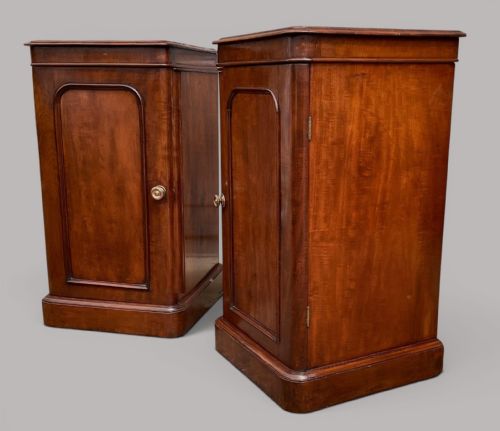


Pair Nineteenth Century Cabinets
These pair nineteenth century cabinets bring symmetry and period presence to a room, offering practical storage disguised as fine furniture.
Pair Nineteenth Century Cabinets
A set of matched or harmonised pair nineteenth century cabinets primarily comprises bedside tables, commodes, and side cabinets designed to balance a room. These pieces emerge from periods such as the Georgian, Victorian, and Regency eras, reflecting diverse regional tastes.
Bedside cabinets and pot cupboards dominate the selection, though larger side cabinets and commodes also appear. Buyers encounter materials ranging from traditional mahogany and walnut to exotic kingwood and amboyna.
The forms span straightforward architectural pedestals to elaborate French revival designs with marble tops. Each pair demonstrates the nineteenth-century preference for matching furniture in domestic settings.
How they were made
Cabinet makers utilised dense hardwoods such as mahogany, walnut, and satin birch as foundational structures, often applying fine veneers like burr walnut or kingwood. Construction relied on traditional joinery, ensuring stability across bedside tables and commodes.
Decoration involved applied brass, ormolu, and gilt bronze mounts, alongside intricate marquetry and porcelain plaques. Marble tops, including Belgian Sainte-Anne, were fitted to French and continental pieces to provide durable surfaces.
Surface finishes included French polishing to enhance the grain of woods like mahogany and birds'-eye maple. Specialised workshops also employed painted finishes and parcel-gilt detailing to echo Louis styles.
Mahogany and walnut appear frequently across nineteenth-century cabinet listings, alongside exotic veneers like kingwood and amboyna.
What varies in quality
The distinction between ordinary and exceptional pair nineteenth century cabinets rests on the choice of timber and the precision of the veneer work. Master craftsmen selected highly figured grains, such as burr walnut or birds'-eye maple, matching the patterns across both doors or drawers.
Hardware and mounts indicate the level of investment in a piece, with heavy hand-chased ormolu or gilt bronze marking out superior French work compared to simpler brass fittings. The integration of quality materials like Belgian marble tops further elevates a matched pair.
Proportion and restraint in revival styles separate workshop highlights from standard commercial production. Subtle details, such as delicate marquetry inlays or fine carving on mahogany and satin birch, reveal the hand of skilled makers.
Holland & Sons·Henry Ward London·Bright And Sons·Joseph Zwiener·Jean-Henri Riesener·Thomas Dickson
The Pair Nineteenth Century Cabinets Glossary
- Ormolu
- Gilt bronze mounts cast and chased to adorn furniture. This technique was widely utilised on French nineteenth-century pieces.
- Marquetry
- The art of applying pieces of veneer to a structure to form decorative patterns. Craftsmen used various coloured woods to create pictorial designs.
- Commode
- A low chest of drawers or cabinet with doors. These pieces often feature marble tops and elaborate mounts.
- Pedestal
- A support or base beneath a cabinet or table. Pedestal cupboards often feature a single door enclosing internal shelving.
- Biedermeier
- A central European style emphasising clean lines and minimal ornamentation. This aesthetic flourished during the first half of the nineteenth century.
Pair Nineteenth Century Cabinets: Frequently Asked Questions
Where should I place pair nineteenth century cabinets?
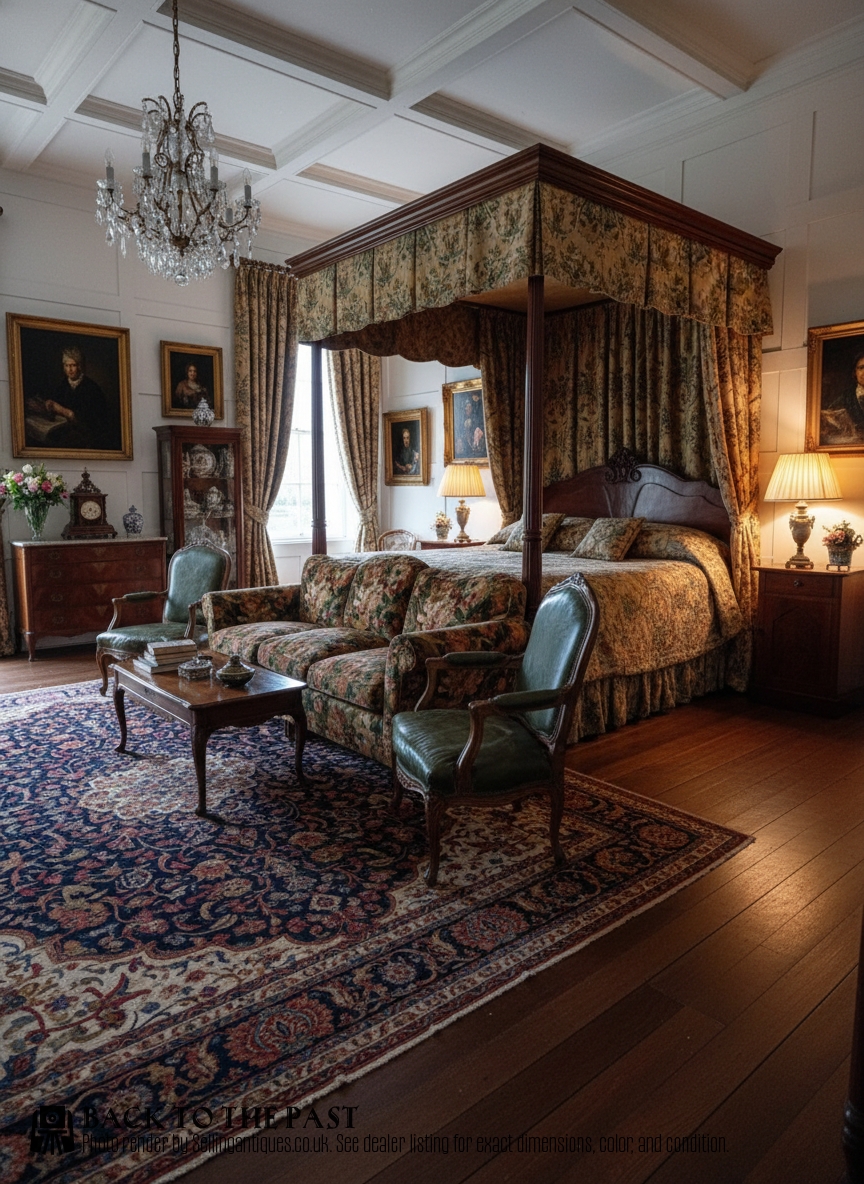
These cabinets work naturally flanking a bed, though smaller side cabinets also suit a hallway or drawing room. Their matched nature provides visual balance on either side of a fireplace or window.
Ensure the dimensions suit the wall space, as nineteenth-century proportions can vary from compact bedside tables to larger commodes. Placement should protect delicate surfaces like marble and gilt bronze from heavy daily traffic.
How do I care for mahogany and walnut cabinets?
Dust the wood regularly with a soft, dry cloth and avoid placing pieces in direct sunlight or near heat sources. Maintaining stable room humidity prevents timber from splitting and veneers from lifting.
Apply a traditional wax polish sparingly to nourish the grain without building up a sticky residue. Treat marble tops gently to avoid staining from acidic liquids.
Are matched pairs original or assembled later?
Some pairs are created together in the workshop, while others are matched later based on similar dimensions, timber, and style. Close inspection of the interior construction and timber ageing helps reveal their history.
Both original pairs and thoughtfully assembled matched sets serve the same decorative purpose in a room. Look at the uniformity of the grain and hardware to understand how closely the two pieces align.
What distinguishes French revival styles from English designs?
French nineteenth-century cabinets often incorporate elaborate ormolu mounts, marquetry, and marble tops reflecting Louis XV and Louis XVI aesthetics. These pieces prioritize decorative curves and gilt details.
English designs from the Georgian and Victorian periods typically emphasise structural timber, such as mahogany or satin birch, with architectural forms. The focus remains on the quality of the wood grain rather than applied metal mounts.