




Pair Meiji Bronze Vases
These pair meiji bronze vases bring Japanese metalwork from the late nineteenth and early twentieth centuries into modern rooms.

Pair Meiji Bronze Vases
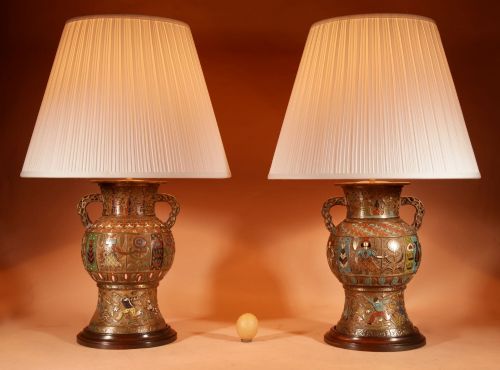
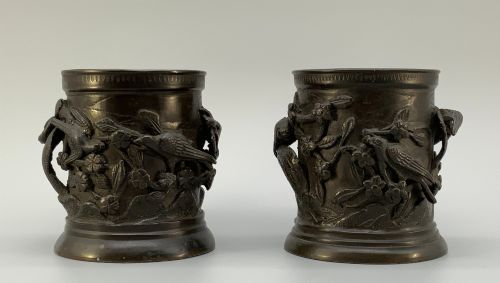
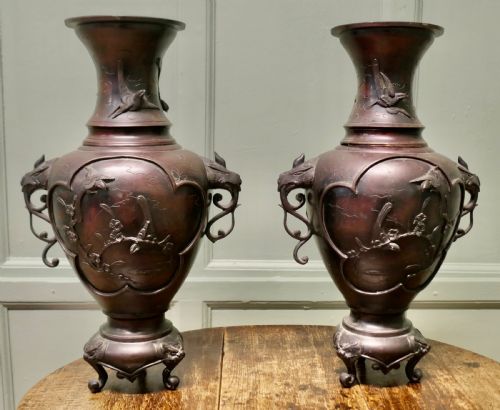
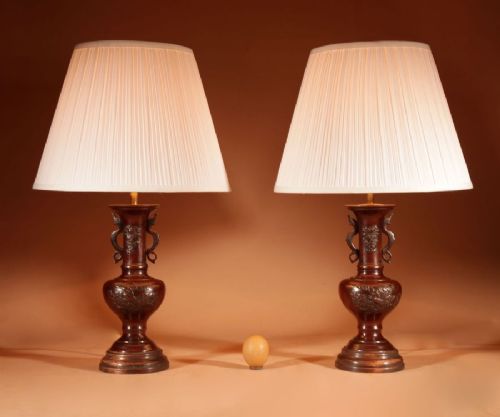
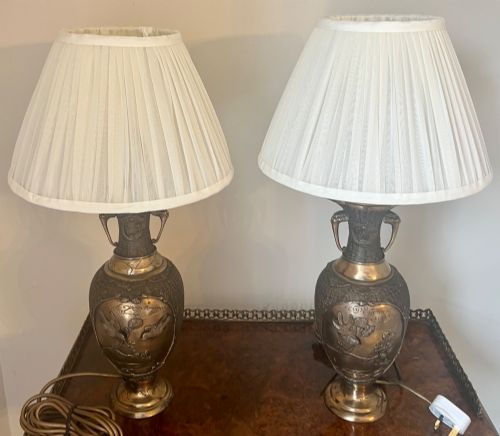
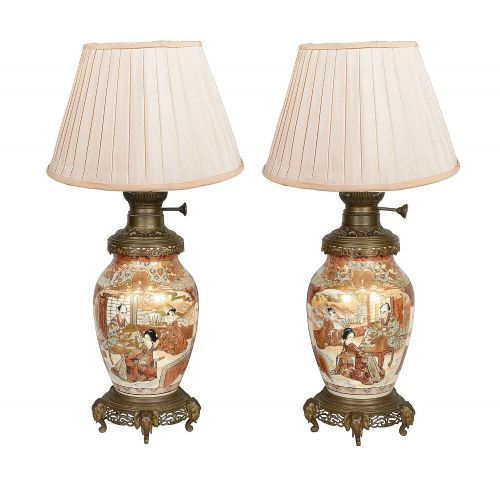
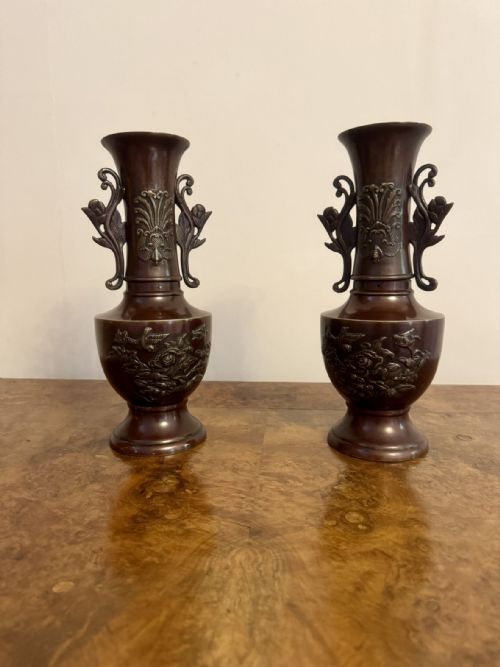
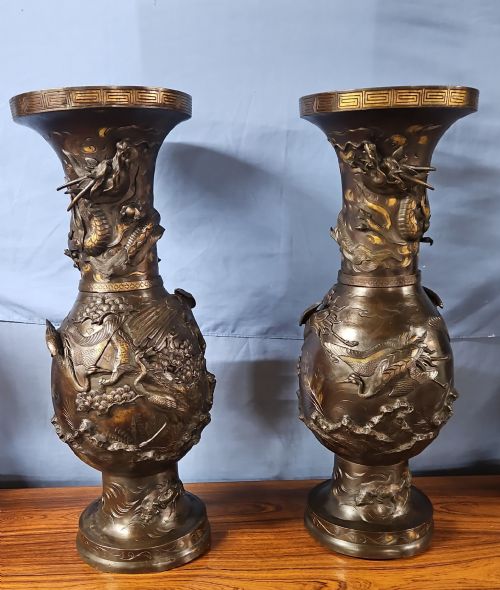
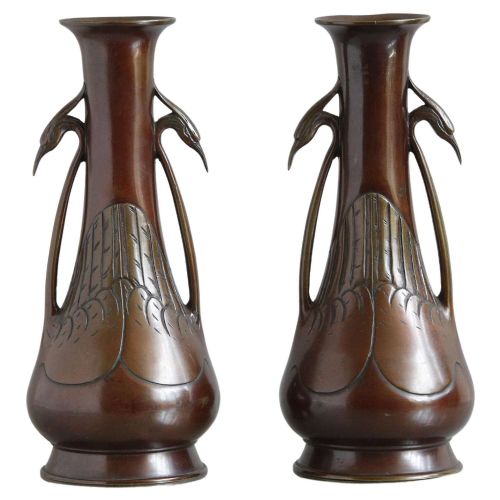
When you search for pair meiji bronze vases, you encounter symmetrical sets of metal vessels originating from Japan during the Meiji period and surrounding decades. The pieces on this page span forms such as baluster urns, ginger jars, and decorative vases, alongside later adaptations fitted as table lamps.
The physical scale ranges from miniature cabinet pieces to massive garden urns weighing multiple kilograms. Many examples incorporate twin handles, often styled as birds, egrets, or elephants, marking them out as distinct decorative objects from the era.
How they were made
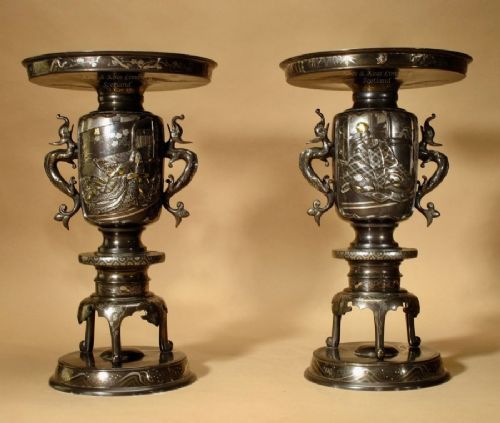
The makers utilised cast bronze as the primary structural material, frequently enhancing the surfaces through patination, gilding, or mixed metal overlays. Artisans applied inlaid metals, enamel work, and champlevé techniques to build up intricate floral, bird, and raised detail patterns.
Vessels also integrated supplementary elements including copper, brass, wood, and fabric components, particularly on pieces later converted for lighting. The combination of casting and surface decoration reflects the high standards of Japanese metalworking traditions of the time.
Materials recorded across the inventory include patinated bronze, gilt bronze, copper, brass, enamel, wood, and fabric.
What varies in quality
The distinction between standard production and the finest work lies in the crispness of the casting and the execution of the surface details. Pieces featuring delicate mixed metal inlays, secure animal handles, and deep patination demonstrate superior craftsmanship.
Larger examples maintain their proportional balance and structural integrity despite heavy weight, whereas lesser items show simpler surface treatment with minimal decorative enrichment.
The Pair Meiji Bronze Vases Glossary
- Meiji Period
- The era in Japanese history spanning from 1868 to 1912. This period produced the majority of the bronze decorative arts found on this page.
- Champlevé
- An enamelling technique where troughs or cells are sunk into the bronze surface and filled with vitreous enamel before firing. It creates colourful patterns alongside the exposed metal.
- Mixed Metal
- A decorative approach combining different metallic alloys such as copper, brass, and silver onto a bronze body to create contrasting tones and textures.
- Baluster
- A vase form with a rounded body that tapers toward the base and swells near the lower centre. It is one of the most common silhouette shapes recorded in the listings.
- Usubata
- A specific type of Japanese bronze container traditionally utilised for flower arrangements. They frequently appear as large garden or floor urns.
Pair Meiji Bronze Vases: Frequently Asked Questions
Were these vases made for export?
Many bronze vessels from this era were produced specifically for international exhibition and export markets following the opening of Japan to Western trade. European buyers eagerly acquired these decorative items to display in period drawing rooms.
Over subsequent decades, a portion of these vases underwent conversion into table lamps to suit changing domestic interior lighting requirements while preserving the original metal body.
How do I identify the Meiji period?
The Meiji period corresponds directly to the reign of Emperor Meiji between 1868 and 1912. Pieces from this timeframe often display naturalistic motifs such as birds, blossoms, and floral arrangements.
Signatures or character marks stamped or engraved on the base can occasionally provide further context regarding the workshop or maker, though many export items remain unmarked.
Can I use these lamps safely today?
Many survivors from the era function as table lamps, having been wired during the twentieth century or more recently. It is advisable to have any vintage electrical wiring checked by a qualified professional before regular home use.
The original bronze or brass structure remains independent of the internal wiring, allowing modern fittings to be installed without altering the antique body.
What is mixed metal decoration?
Mixed metal work involves applying contrasting metals like copper, brass, and silver onto the primary bronze surface to highlight specific design elements. Artisans used this technique to render natural scenes with distinct tonal variations.
This labour-intensive method is a primary indicator of finer quality among late nineteenth-century Japanese decorative objects.