
Pair Marquetry Bedside Tables
When choosing pair marquetry bedside tables, you select small decorative cabinets featuring intricate wood veneers that add symmetry and French decorative character to a bedroom.
Pair Marquetry Bedside Tables
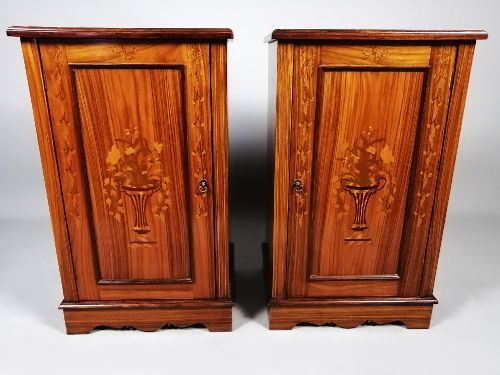
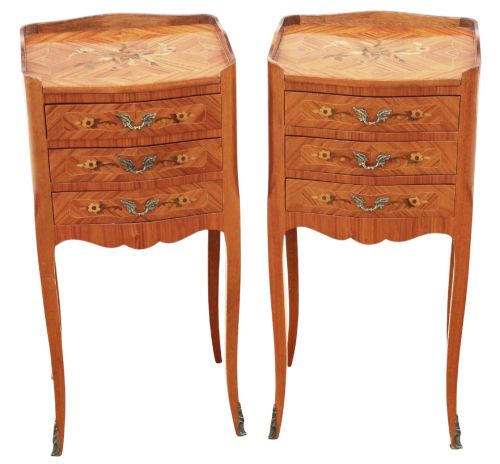
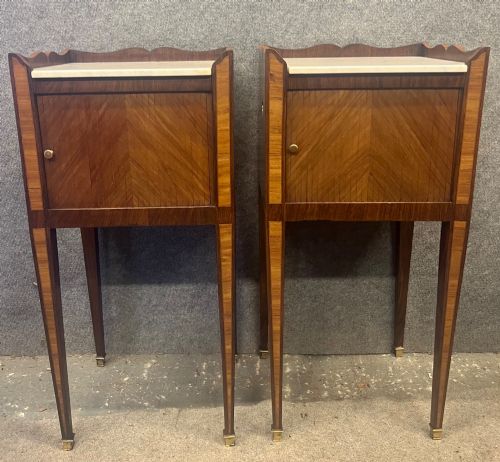
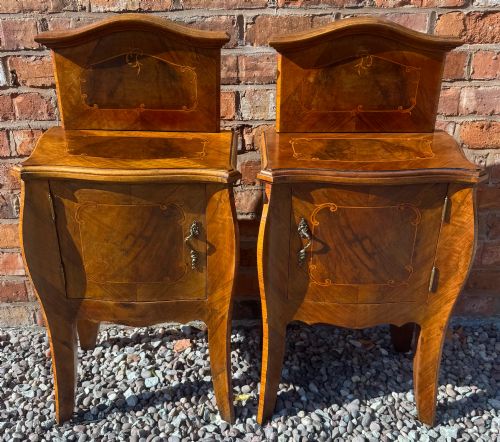
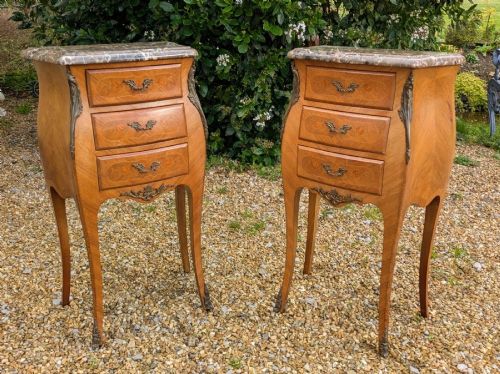
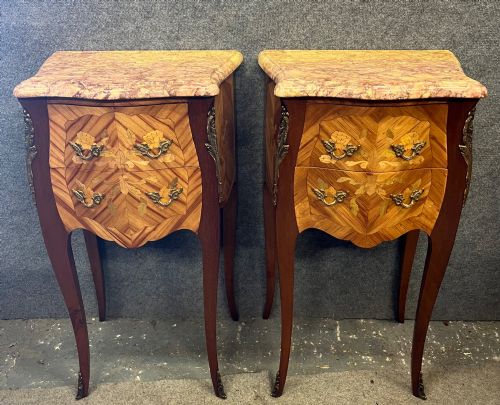
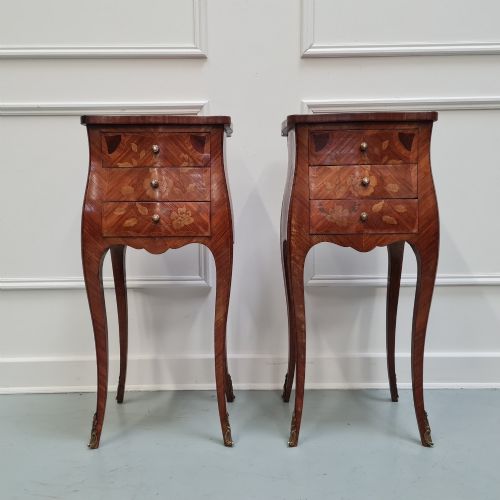
Pair marquetry bedside tables comprise matching small cabinets, chests of drawers, and lamp tables designed to sit beside a bed. The most frequent examples encountered on this page originate from the late nineteenth century through to the 1930s, often drawing on French Louis XV and Louis XVI revival styles.
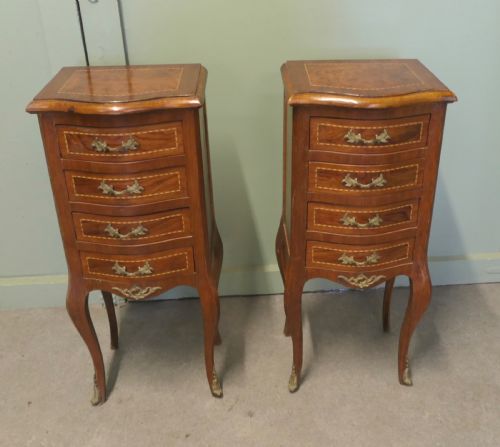
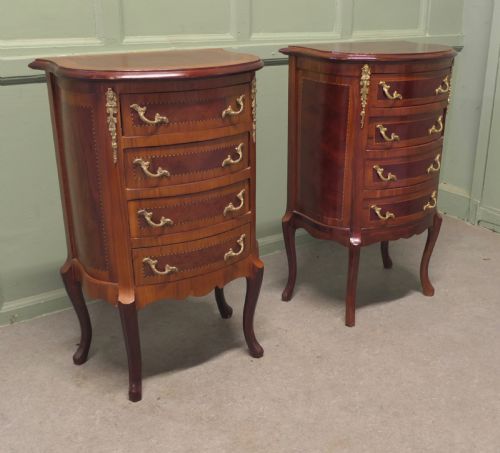
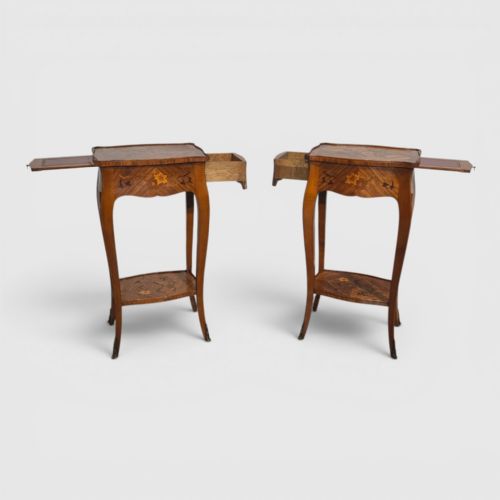
Makers constructed these pieces as bedside cupboards, small commodes, and open lamp tables to provide enclosed storage and display space. Their dual nature means they function equally well as miniature chests of drawers or decorative side tables in domestic interiors.
Originating largely from French workshops and cabinet-makers working in the continental taste, these pairs display balanced proportions designed for matching placement on either side of a bed. Walnut, kingwood, rosewood, and satinwood form the structural and decorative foundation of these matched items.
Materials and construction
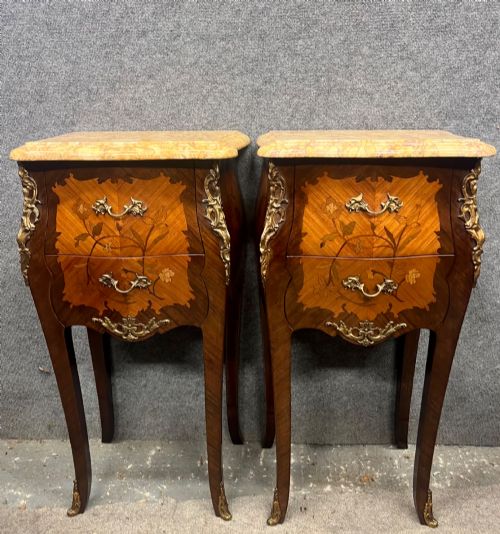
Craftsmen built carcass structures using solid hardwoods like walnut, mahogany, and rosewood, applying fine veneers over the primary timber. Marquetry patterns utilise contrasting timber sections cut and fitted together to form floral, pictorial, or geometric motifs across the surface.
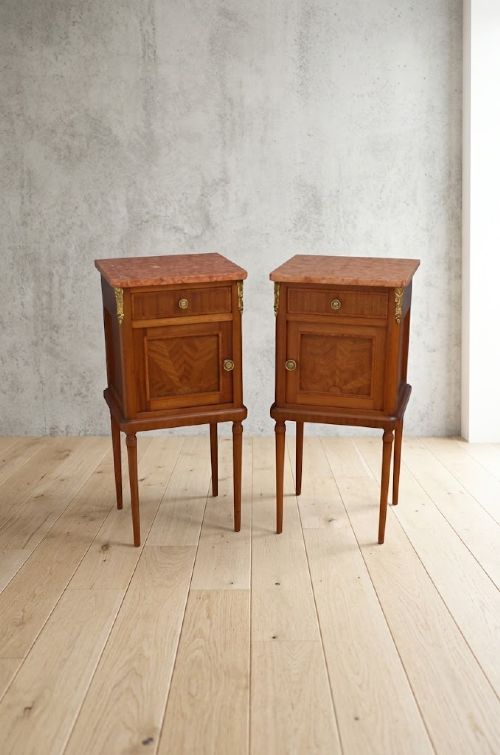
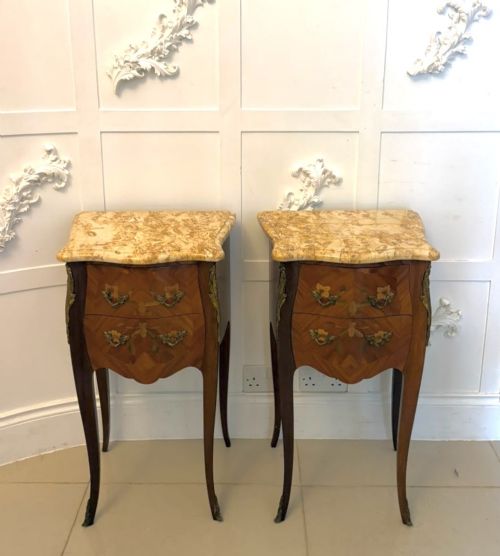
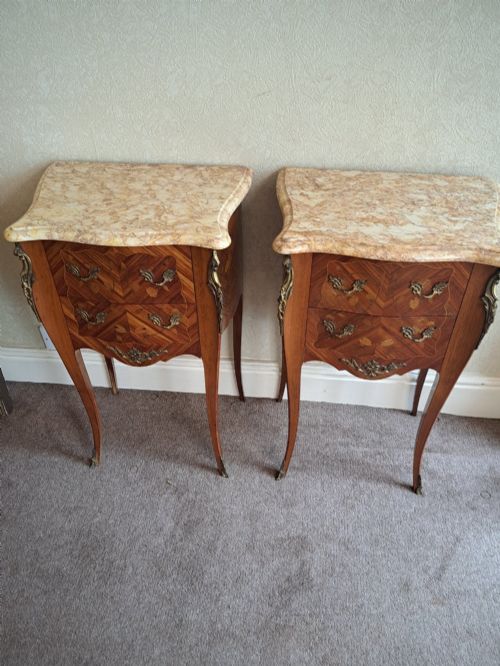
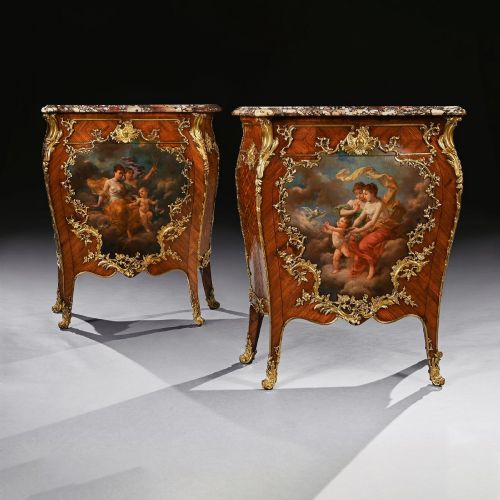
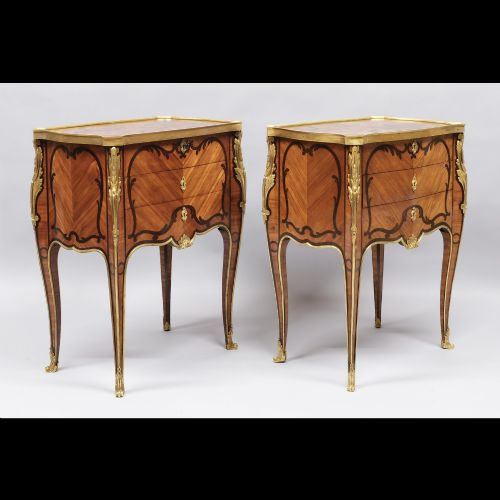
Many examples incorporate thick slabs of marble, often white or Sienna varieties, fitted precisely to the top surface above the veneered body. Gilt bronze, ormolu, brass handles, and mounts accent the corners, drawers, and key escutcheons.
Some pairs are explicitly catalogued as his-and-her bedside companions, proving that matching nightstands have long required careful domestic negotiation.
Assessing the execution
The precision of the veneer work dictates the standing of an individual pair, where tightly fitted joints and complex pictorial marquetry denote superior workshop output. Simpler geometric parquetry or looser floral panels appear on less ambitious examples from the period.
The choice of secondary materials marks the graduation between standard commercial production and finer atelier pieces. Heavy cast ormolu mounts, genuine marble tops with shaped profiles, and select timbers like kingwood and satinwood elevate the execution.
Sormani
The Pair Marquetry Bedside Tables Glossary
- Marquetry
- Decorative veneer work where small pieces of varied coloured wood are assembled to create pictures or patterns on a furniture surface. This technique contrasts with simpler strip parquetry.
- Ormolu
- Gilded bronze mounts and decorative accents applied to furniture corners, feet, and handles. The term derives from the French for milled gold.
- Kingwood
- A dense, richly figured Brazilian timber utilised extensively for fine cabinet-making in French revival furniture. It displays dark violet-brown tones with lighter streaks.
- Commode
- A low chest of drawers or cabinet with doors, originating in France. Many bedside pieces scale down this traditional form for domestic sleeping quarters.
- Chevets
- The French term for small bedside tables or nightstands. Listings occasionally employ this designation for continental imports.
Pair Marquetry Bedside Tables: Frequently Asked Questions
What is the difference between marquetry and parquetry?
Marquetry involves cutting diverse veneers to form pictorial or floral scenes across the wood surface. It requires precise hand-cutting of multiple timber types to fit together seamlessly.
Parquetry relies on geometric arrangements, such as cubes, chevrons, or squares, to form repeating patterns. Both techniques decorate the exterior surfaces of the bedside cabinets seen here.
Are these tables French or English?
The vast majority of examples on this page reflect French design, styling themselves after Louis XV or Louis XVI periods. Makers across France produced these cabinets in large quantities from the nineteenth century into the 1930s.
English interpretations also appear, though continental workshops dominated the use of kingwood, satinwood, and elaborate marquetry for bedroom suites.
How do I date these bedside cabinets?
Dating relies on combining the construction methods, timber choices, and revival styles present in each piece. Victorian and Edwardian examples from the late nineteenth century often feature heavier rosewood construction and traditional hand-cut dovetails.
Pieces marked as 1920 or 1930 frequently display lighter proportions, distinct veneer treatments, and specific hardware associated with early twentieth-century revival taste.
Do marble tops indicate an earlier date?
Marble tops appear across multiple decades, from nineteenth-century commodes to 1930s lamp tables. Their presence signifies a quality finish designed to protect the wood surface from water or cosmetic bottles.
Thick, shaped Sienna or white marble slabs are typical of French output throughout the Victorian and Edwardian eras, remaining popular into the interwar period.